Getty Center’s Major Renovations: Key Details Revealed
By Darren Smith, Arts Reporter
April 10, 2026
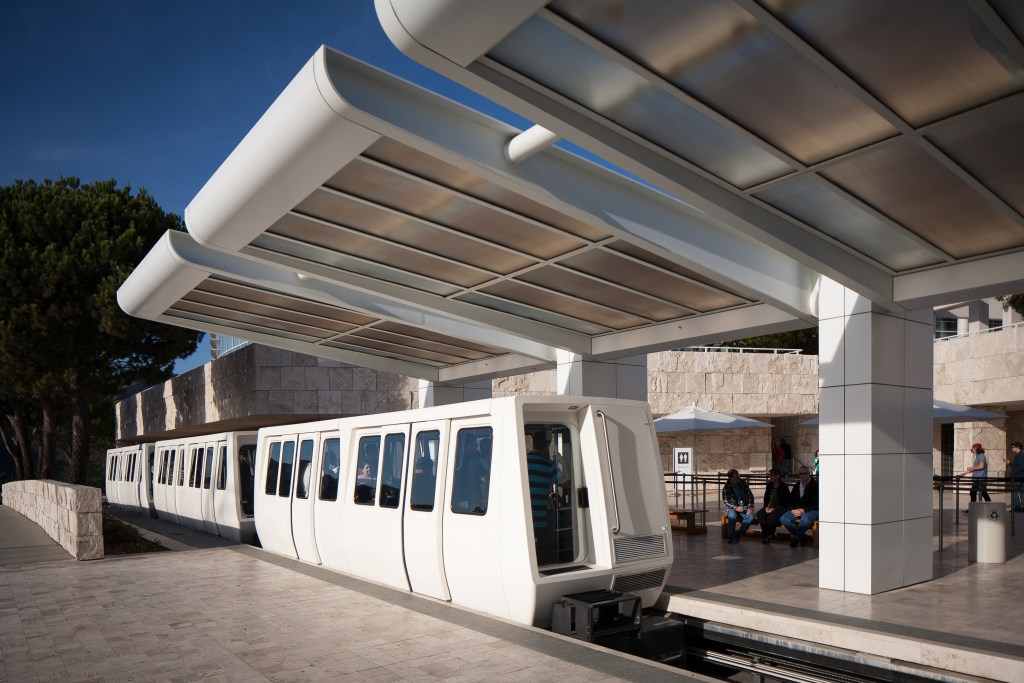
LOS ANGELES — The J. Paul Getty Center will shutter its doors to the public on March 15, 2027, for approximately one year of renovations, citing the need to replace its aging tram system and modernize galleries. Officials frame the project as the most significant modernization since the Richard Meier-designed campus opened in 1997. Yet with an endowment estimated near $9 billion and annual attendance around 1.3 million visitors, the full-year closure of one of Los Angeles’ top free attractions raises pointed questions about priorities, timing, and transparency in an institution insulated from the financial pressures facing most museums in 2026.
The upgrades target the tram that ferries visitors up the Brentwood hill, gallery reconfigurations to better integrate “art in dialogue with nature,” a redesigned Welcome Hall with new cafe, bookstore, and retail spaces, improved Wi-Fi, cell service, HVAC systems, and accessibility features. Some preparatory work, including gallery closures for HVAC upgrades, has already begun. The Getty Villa will remain open with expanded programming. Reopening is slated for spring 2028, conveniently ahead of the Los Angeles Olympics.
Getty President and CEO Katherine E. Fleming described the project in the official release as advancing visitor experience, accessibility, energy resilience, and long-term stewardship. The timing aligns with broader LA infrastructure pushes for the Games, similar to other cultural sites refreshing their facilities.
Yet the announcement offers limited specifics on costs or scope. Independent reporting places the estimated price tag between $600 million and $800 million. For context, the original Getty Center construction exceeded $1.3 billion in 1990s dollars. The Trust’s endowment, drawn from oil fortune roots and grown through investments, provides extraordinary insulation—drawing roughly 5% annually for operations while maintaining one of the largest art collections and research programs globally.

In a 2026 art market marked by selective buying, gallery closures, and uneven auction performance, the Getty’s move stands apart. While mid-tier institutions grapple with deficits, staff cuts, and attendance volatility post-wildfires and economic caution, the Getty leverages its resources for a comprehensive refresh rather than incremental fixes. The tram, operational for nearly 30 years, has faced reliability discussions in past safety reviews, but no public data indicates acute failure justifying a full-year campus shutdown over phased work.
A senior curator at a comparable West Coast institution, speaking on condition of anonymity due to ongoing funding relationships, offered a supportive view: “The Getty has the rare luxury of planning decades ahead. Updating mechanical systems and accessibility now prevents costlier emergencies later, especially with climate pressures on a hilltop site vulnerable to wildfires and earthquakes.”
Skeptical voices within the LA arts ecosystem push back on the narrative. One longtime collector and former museum trustee, also requesting anonymity to avoid alienating major funders, noted: “When the wealthiest player in the field takes a year offline for what reads like cosmetic and retail enhancements alongside necessary infrastructure, it signals priorities skewed toward visitor metrics and Olympic optics over sustained public access. Many smaller organizations would kill for that endowment to keep doors open during tough cycles.”
The closure will redirect 1.3 million annual visitors elsewhere in a city still recovering from 2025 wildfire disruptions that hammered regional attendance figures. The Getty Center ranked among the top U.S. art museums by visitation in 2025 despite minor fluctuations. Questions linger about lost revenue from ancillary services (though admission remains free) and the impact on local tourism during peak seasons.
This episode fits a broader 2026 pattern: elite institutions with deep pockets invest in physical plants and experiential upgrades while the wider market shows caution—evident in selective high-end sales and primary market strain. The Getty’s scale allows it to treat a near-billion-dollar project as routine stewardship. What remains unaddressed is whether the full-year blackout, rather than targeted sequencing, best serves the public mandate of an endowment-backed trust.
In an era of heightened scrutiny over cultural resource allocation, the Getty’s decision underscores a core contradiction: unparalleled financial security paired with a choice to limit access for an extended period. The renovated campus may deliver smoother tram rides and shinier retail, but the real test will be whether these changes meaningfully advance the institution’s core mission—or simply position it as a more polished backdrop for international events
Darren Smith is an Arts Reporter at Art Chain News covering contemporary art, digital art and NFTs, body art, and the intersections between these fields.
This article is based on direct examination of materials, market data, background interviews, and independent analysis.