Richard Prince Exhibition at Albertina: A Retrospective Insight
By Darren Smith, Arts Reporter
April 29, 2026
In the hushed galleries of Vienna’s Albertina Museum, a major new exhibition has thrust one of contemporary art’s most polarizing figures back into the global spotlight. Richard Prince, the master of appropriation whose rephotographed Marlboro cowboys and Instagram “portraits” have long challenged notions of originality, authorship, and the very boundaries of copyright, is the subject of a sweeping retrospective spanning from the 1970s to the present.
Opening on April 17 and running through August 16, 2026, the exhibition assembles approximately 150 works, with a strong emphasis on Prince’s photographic practice—his foundational medium. Curated by Walter Moser, chief curator of photography at the Albertina, the show features iconic series such as Cowboys, Fashion, and Gangs, alongside rarely exhibited pieces drawn from rural upstate New York and intricate collages of found materials.
“Prince does not tire of approaching issues of appropriation from ever-new perspectives,” Moser notes in exhibition materials. The presentation reveals how consistently Prince’s oeuvre is steeped in photographic thought, functioning at the interface of photography, painting, and sculpture.
A Career Built on Borrowed Images
Born on August 6, 1949, in the Panama Canal Zone and raised in Maine, Prince moved to New York in 1973. He worked in the clippings department at Time-Life Inc., where he sorted magazine tear sheets—an experience that profoundly shaped his artistic vision. Surrounded by the endless stream of commercial imagery, Prince began rephotographing advertisements, cropping out logos and text to isolate and elevate the visual codes of consumer culture.
This technique propelled him to prominence as a key figure in the Pictures Generation, alongside artists like Cindy Sherman, Sherrie Levine, and Barbara Kruger. Prince’s early works from the late 1970s, such as Untitled (The Same Man Looking in Different Directions) (1978) and sequenced fashion and luxury motifs, exposed the semiotics of masculinity, success, and desire embedded in mass media.
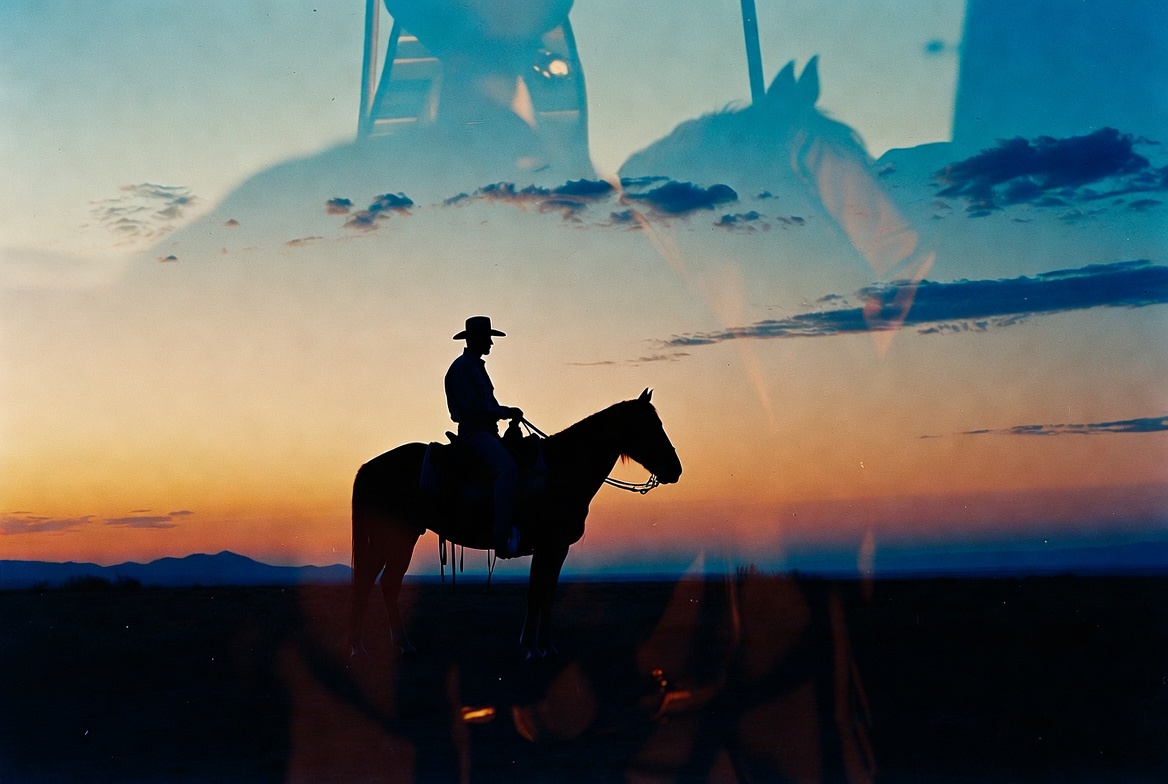
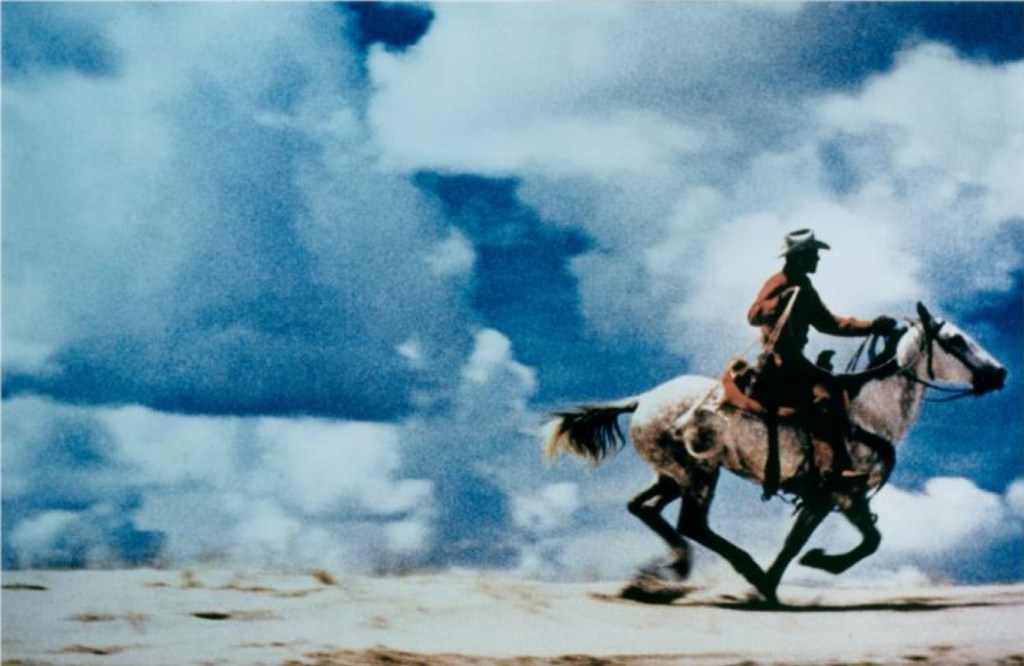
His Cowboys series (1989–1995) remains perhaps his most iconic. By rephotographing Marlboro cigarette advertisements—removing commercial identifiers—Prince transformed slick marketing into mythic evocations of the American West, freedom, and rugged masculinity. Yet these works also critique the very myths they embody, especially in the context of 1980s Reagan-era America. One standout, Untitled (Cowboy) from 1989, captures a lone rider against a dramatic sky, its grain and blur testifying to the reproductive process that defines Prince’s practice.
“Prince could be described as someone brought up through cinema and television,” Moser observes. His art dissects how images—already circulated and consumed—shape identity, desire, and perception.
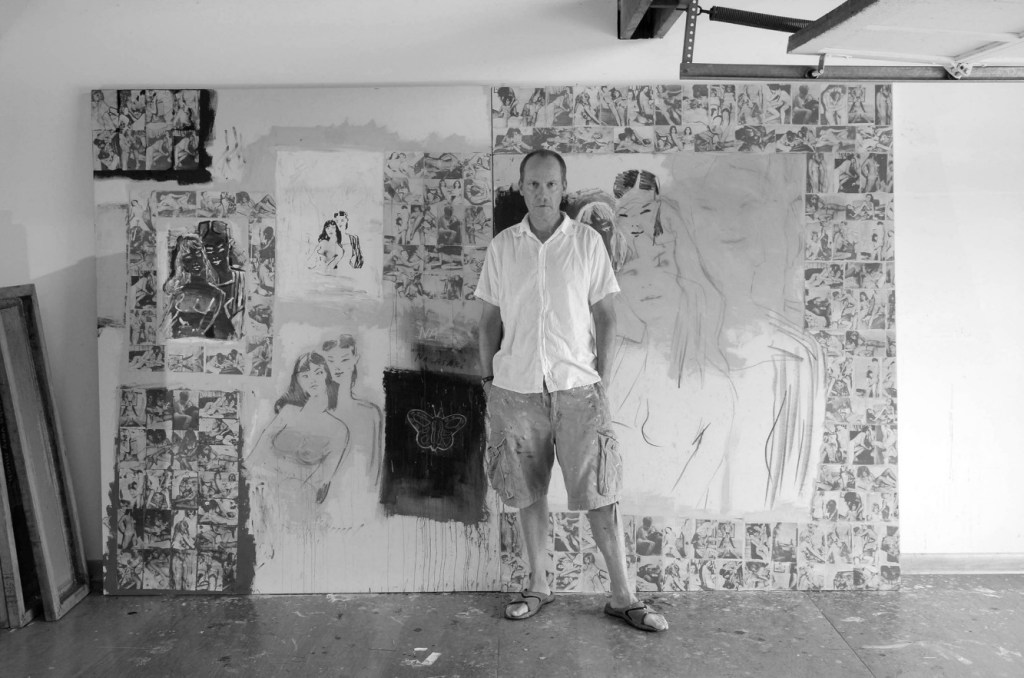
The Albertina show highlights lesser-seen works, including autobiographical images from rural upstate New York and complex collages. It also addresses Prince’s broader output: nurse paintings inspired by pulp fiction covers, joke paintings with handwritten gags on monochromatic backgrounds, and sculptures that blur media boundaries.
Controversies That Define the Legacy
No discussion of Prince is complete without addressing the legal and ethical storms his work has provoked. His practice of appropriation has repeatedly tested copyright law, sparking debates that resonate far beyond the art world.
In the early 1980s, Spiritual America (1983) appropriated a controversial nude photograph of a 10-year-old Brooke Shields by Garry Gross. Prince’s restaging and reframing ignited outrage over exploitation and consent. Later works revisited similar themes, allowing reflection on agency and image history.
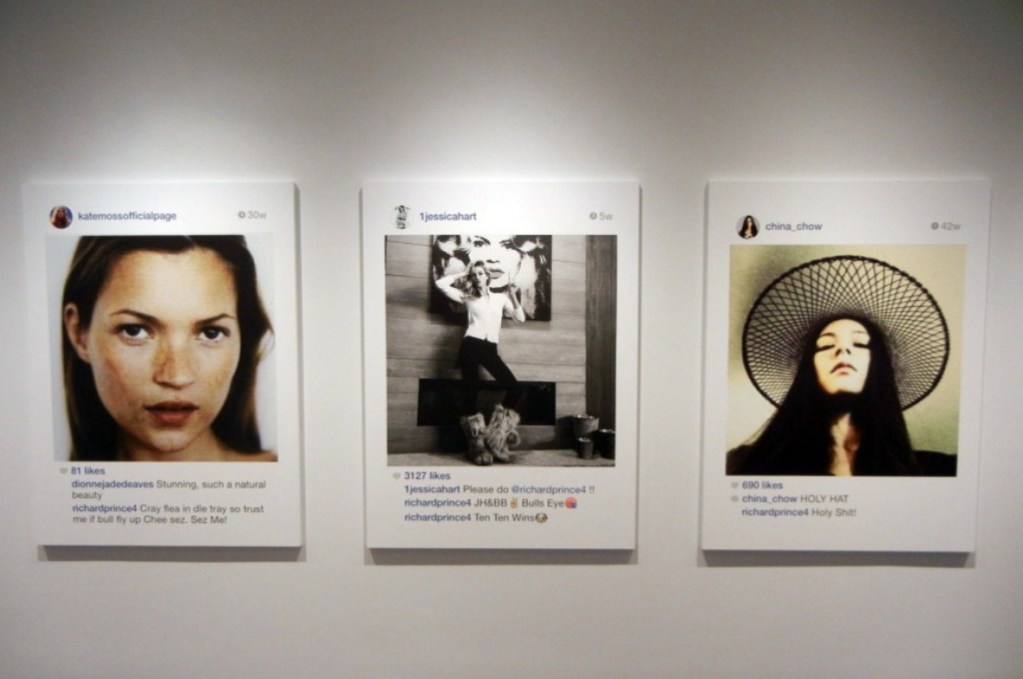
More recently, Prince’s 2014 New Portraits series—enlarged screenshots of Instagram posts, complete with his own cryptic comments—led to high-profile lawsuits. Photographers Donald Graham and Eric McNatt alleged infringement. In January 2024, after years of litigation, Prince and involved galleries were ordered to pay substantial damages (approximately $650,000 to the photographers plus costs) and cease certain reproductions. These cases highlighted tensions between transformative fair use and straightforward copying in the digital age.
Critics and supporters alike note that Prince’s provocations force society to confront uncomfortable questions: In an era of infinite digital reproduction, memes, and AI-generated imagery, what constitutes originality? “If the copy is the original, what does that make the original?” the exhibition implicitly asks.
Prince has embraced controversy as integral to his practice. His near seven-hour video deposition from a copyright case was itself exhibited as artwork, blurring the lines between legal testimony and artistic performance.
Market Power and Cultural Impact
Despite—or because of—the debates, Prince’s market remains robust. Works from the Cowboys and Nurses series command millions at auction. Major galleries like Gagosian continue to represent him, with recent exhibitions exploring folk motifs and collaborations.
The Albertina retrospective arrives at a moment when appropriation feels more relevant than ever. In a world saturated with social media filters, deepfakes, and remixed content, Prince’s half-century investigation into image circulation offers prescient insights. As Moser notes, photographs do not merely reflect reality—they construct it.
The exhibition’s open layout allows visitors to trace thematic threads across decades: the instability of meaning, the seduction of images, and the blurred boundary between artist and consumer. Rarely shown Gangs works group disparate photographs within single frames, demonstrating how context alters interpretation—a technique that prefigures today’s algorithmic feeds.
Broader Context: Prince Among Peers
Prince’s influence extends to generations of artists grappling with media, identity, and authorship. His work dialogues with Pop Art predecessors like Andy Warhol while anticipating digital-native practices. The Albertina show positions him not merely as a provocateur but as a documentarian of late 20th- and early 21st-century visual culture.
Visitors to Vienna can also explore related programming, including talks with curators and opportunities to engage with the catalogue, a 256-page publication featuring contributions from scholars like Eva Kernbauer and Sydney Stutterheim.
For more on the exhibition, visit the official Albertina page: https://www.albertina.at/en/exhibitions/richard-prince/. Additional context on Prince’s practice is available through Gagosian’s artist page. Insights into the Pictures Generation appear in resources from Another Magazine’s review. Prince’s official site offers further primary materials: http://www.richardprince.com/.
Why Prince Matters Now
As the art world navigates post-pandemic recovery, technological disruption, and shifting cultural values, Richard Prince’s retrospective serves as both mirror and provocation. His work reminds us that images are never neutral; they carry histories, power structures, and seductive fictions. In embracing appropriation, Prince does not destroy authorship—he multiplies it, inviting viewers to become co-creators of meaning.
The Albertina exhibition, with its focus on photography as the thread binding his diverse output, offers the most comprehensive look at this aspect of his career to date. It reaffirms Prince as an essential figure whose questions about originality grow only more urgent in our remix culture.
What are your thoughts on Richard Prince’s legacy? Share in the comments below or join the conversation on social media using #RichardPrinceAlbertina. Plan your visit to Vienna and experience the exhibition for yourself before it closes on August 16, 2026—tickets available at Albertina’s ticket portal. Don’t miss this chance to engage with one of art’s most enduring provocateurs.