Exploring Mortality Through Ron Mueck’s Sculptures
By Darren Smith, Arts Reporter
April 29, 2026
TOKYO — In a city that seamlessly blends ancient tradition with cutting-edge innovation, Australian-born sculptor Ron Mueck has unveiled a powerful body of work that confronts viewers with the raw vulnerability of the human condition. Opening today at the Mori Art Museum, the exhibition marks the artist’s second major solo presentation in Japan and is poised to captivate audiences through its uncanny realism and emotional resonance.
Mueck, born in 1958 in Melbourne to German parents, began his career in puppetry and model-making for film and television. He notably contributed to Jim Henson’s Labyrinth (1986) before transitioning to fine art in the mid-1990s. His breakthrough came with Dead Dad (1996–97), a diminutive yet profoundly moving sculpture of his deceased father, which was featured in the seminal Sensation exhibition at London’s Royal Academy. That work launched him into the international spotlight alongside the Young British Artists.
What distinguishes Mueck is his masterful manipulation of scale. His figures range from miniature to monumental, crafted from silicone, fiberglass, and resin with painstaking detail — down to individual hairs, pores, and wrinkles. This hyperrealism creates an unsettling intimacy, compelling viewers to confront their own mortality, isolation, and resilience. “These works capture the inner emotions and experiences of human beings, including loneliness, vulnerability, anxiety, and resilience,” states the exhibition’s curatorial text.
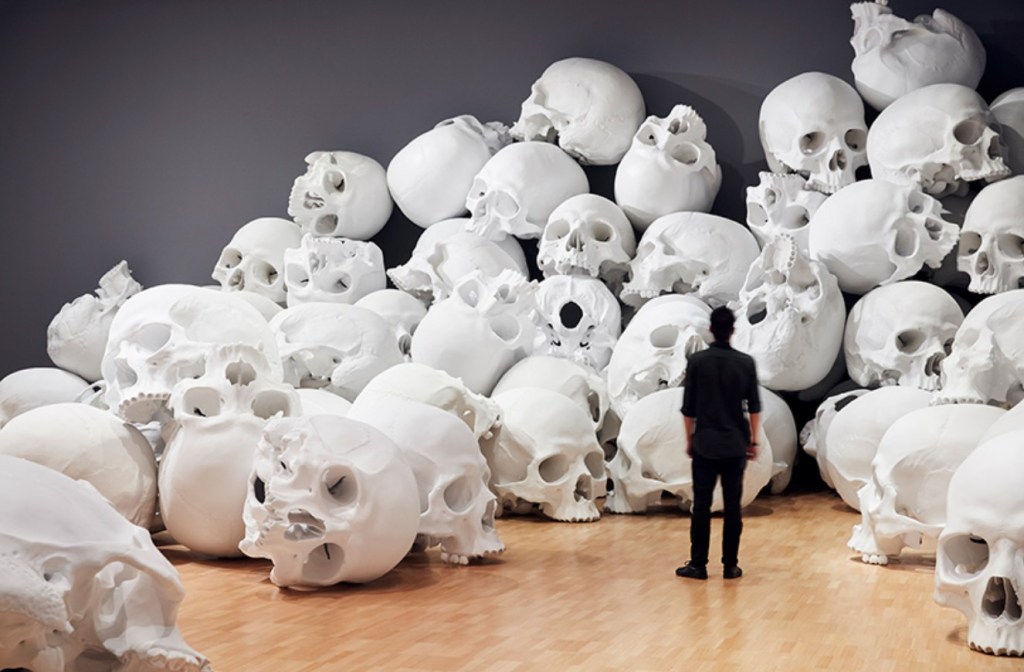
The Mori Art Museum exhibition, organized in collaboration with the Fondation Cartier pour l’art contemporain, features 11 key works tracing Mueck’s evolution. It travels from prior stops in Paris, Milan, and Seoul, with several pieces making their Japanese debut. Central to the show is the monumental installation Mass (2016–2017), a towering accumulation of more than 100 sculpted skulls that evokes themes of mortality and collective memory.
Ron Mueck’s Mass installation, a powerful meditation on mortality.
This is not Mueck’s first encounter with Japanese audiences. A 2008 retrospective at the 21st Century Museum of Contemporary Art in Kanazawa left a lasting impression. Eighteen years later, the Mori presentation feels particularly timely. In an era dominated by digital imagery and AI-generated art, Mueck’s handcrafted figures offer a profoundly analog counterpoint rooted in meticulous observation of real human bodies.
Curator Kenichi Kondo of the Mori Art Museum notes that the works “push the boundaries of figurative sculpture through innovative use of materials, techniques, and methods of expression.” Visitors will encounter oversized self-portraits and intimate family scenes that blur the line between the familiar and the uncanny. One standout from the touring exhibition — a giant newborn figure — has drawn particular acclaim for its tender yet unsettling realism.
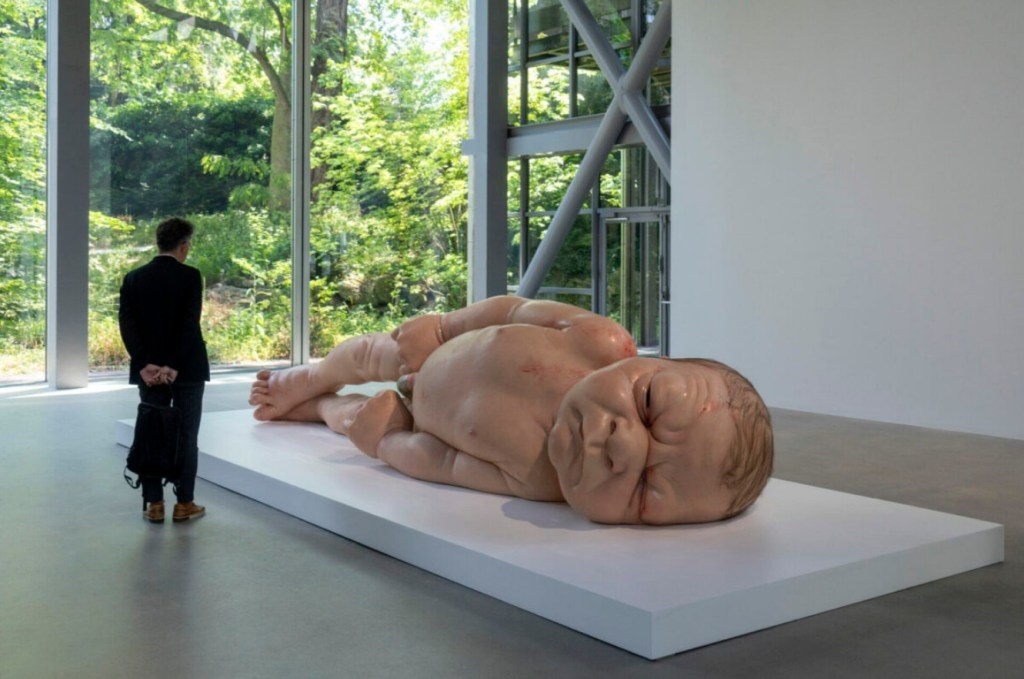
A newborn sculpture by Ron Mueck, exemplifying his hyperreal detail.
Mueck remains notoriously reclusive, rarely granting interviews. He works slowly — sometimes taking years per piece — in a studio on the Isle of Wight. This deliberate pace contrasts sharply with the fast-paced contemporary art market and allows him to maintain artistic integrity. His works are held in major public and private collections worldwide, including the National Gallery in London.
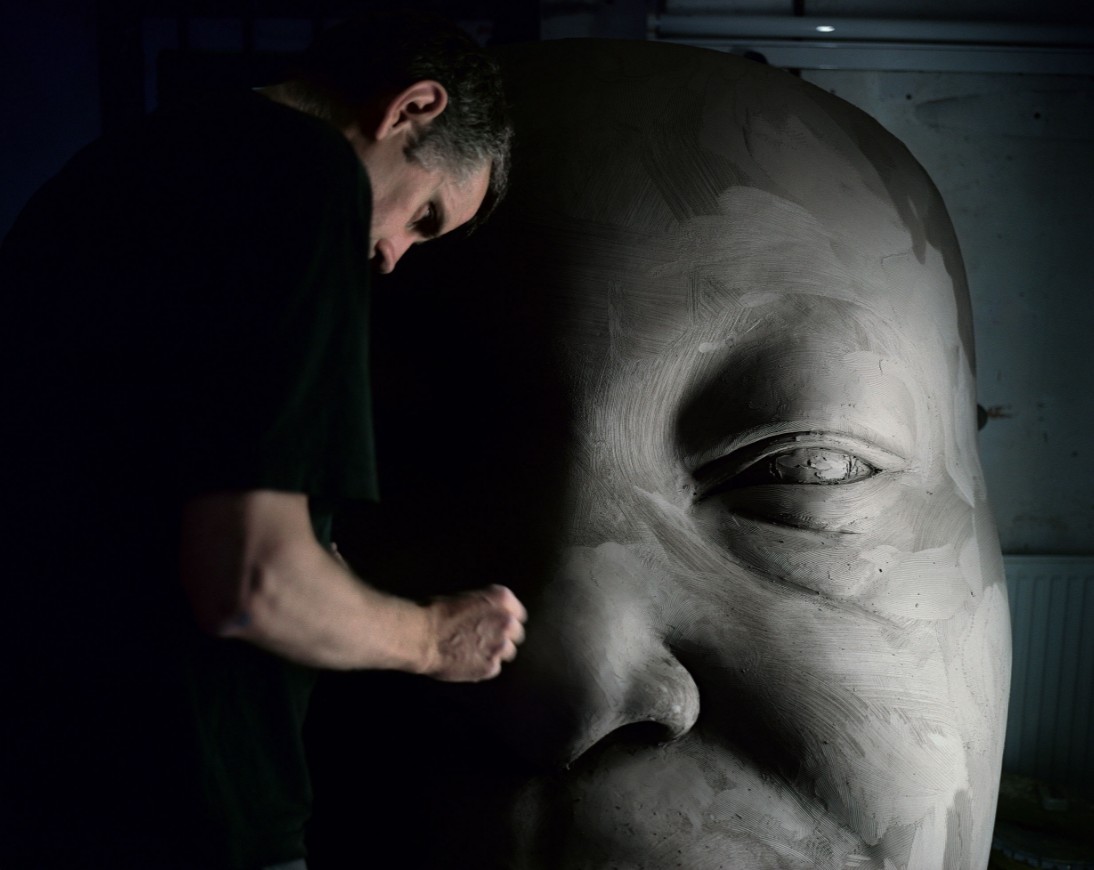
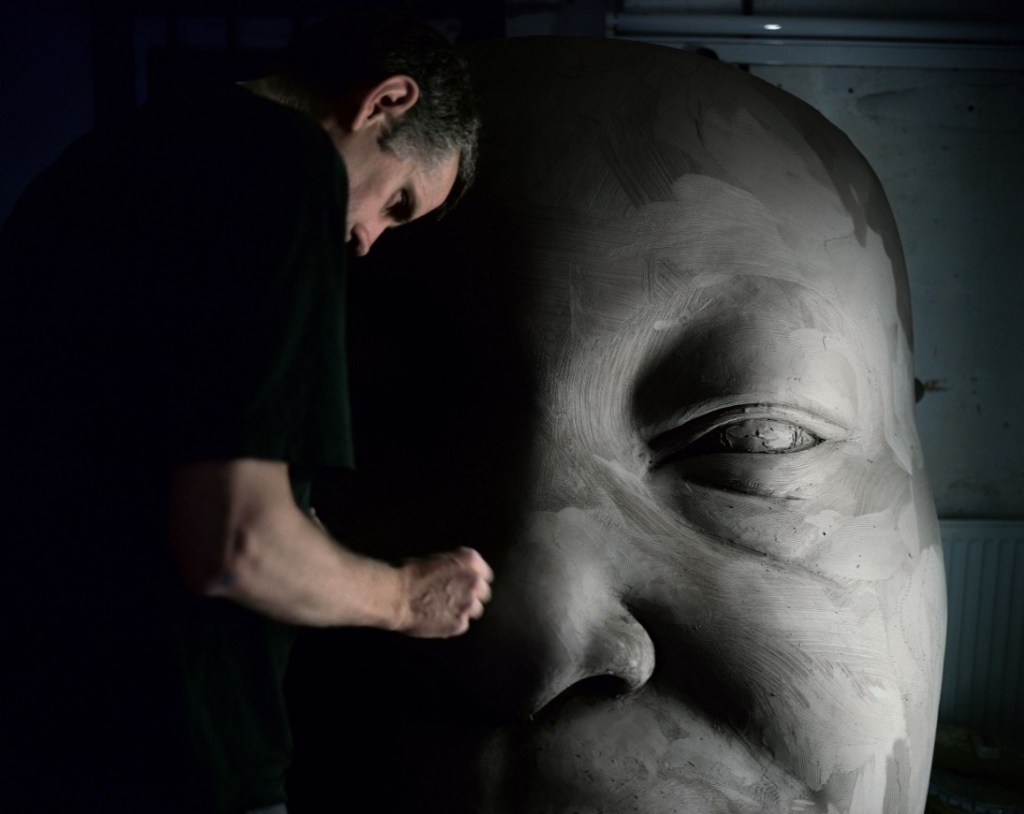
Ron Mueck in his studio, sculpting one of his monumental heads.
The exhibition opens at a moment of renewed global interest in figurative art. As audiences seek authentic emotional connections in a fragmented world, Mueck’s sculptures deliver with unflinching honesty. Admission is free for junior high school students and younger, with family-friendly programming designed to broaden engagement.
Ron Mueck at the Mori Art Museum runs through September 23, 2026. Tickets and full details are available at the Mori Art Museum website. For more on the artist’s career, explore resources from the Fondation Cartier or his representation at Thaddaeus Ropac. Additional context on hyperrealism is available via Tate’s artist profile. For background on the exhibition’s touring history, see coverage on Artprice.
High above Tokyo’s bustling streets on the 53rd floor of Roppongi Hills, Mueck invites visitors to pause and truly see one another. This exhibition transcends technical virtuosity — it serves as a mirror held up to humanity itself.
Plan your visit today. Secure tickets for the Ron Mueck exhibition at the Mori Art Museum and experience these transformative works in person. Share your reflections on social media using #RonMueckTokyo — your perspective may deepen someone else’s encounter with art that speaks to us all.
Darren Smith is an arts journalist, practicing artist, and tattooist with 26+ years of experience across traditional, digital, and body art practices. He covers the intersections of craft, culture, and collecting for ArtChain News.