Thomas Zipp: A Critical Look at His Art and Legacy
By Darren Smith, Arts Reporter
April 7, 2026
BERLIN — Thomas Zipp, the Berlin-based German artist whose sprawling installations blended painting, performance, and punk-infused psychological theater, died on April 3, 2026, at age 59–60 from a reported brain aneurysm. Galleries including Barbara Thumm, Alison Jacques, and Sommer Contemporary Art quickly issued statements mourning his “far too soon” passing and unique vision. Yet the speed of these tributes raises questions about how the market and institutions handle the loss of an artist whose work explicitly targeted power structures, authority, and sanitized historical narratives—while his own secondary market remained modest.
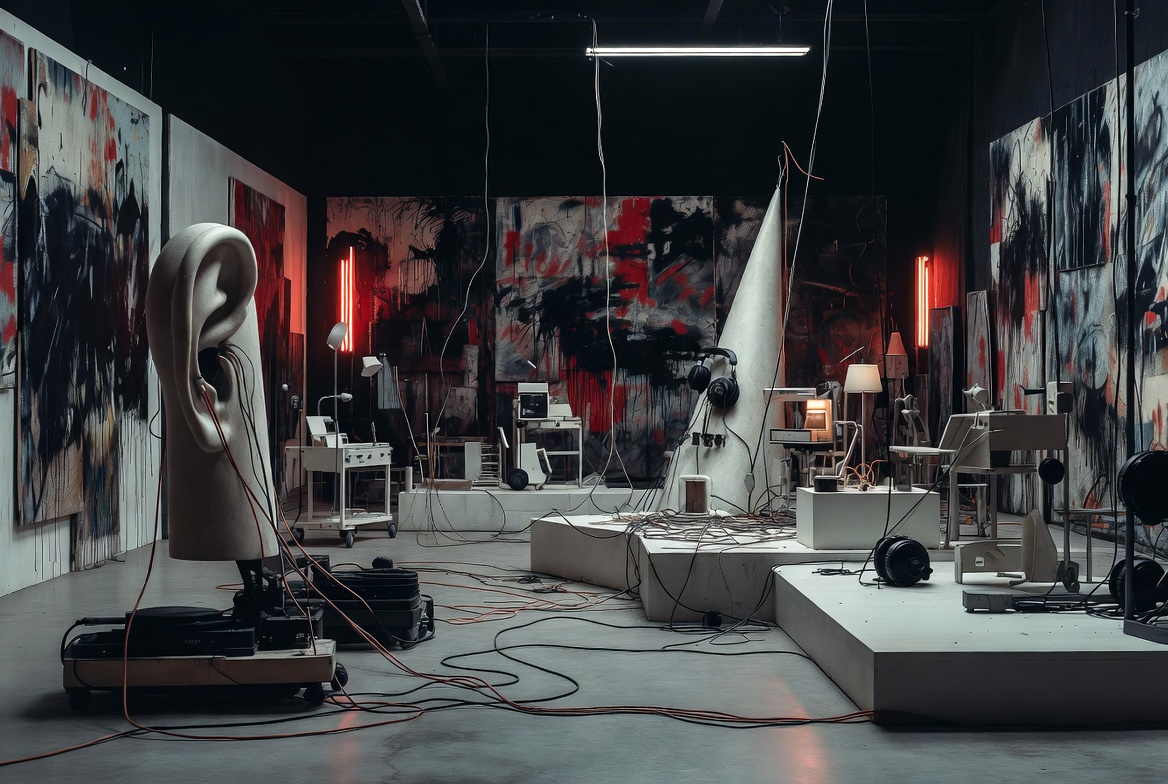
Zipp, born in 1966 in Heppenheim, trained at the Städelschule in Frankfurt and the Slade School of Fine Art in London. From the 1990s onward, he built a reputation for dense, site-specific environments that mimicked psychiatric clinics, research centers, or political stages. Works such as Polymorphous Oratory (2012) turned galleries into immersive stages where viewers confronted hysteria, schizophrenia, and societal control. He also maintained a parallel life as a punk musician, injecting raw skepticism into an art scene often accused of performative rebellion.

Auction data tells a more grounded story than the obituary rhetoric. Zipp’s works have appeared sporadically at auction with limited high-profile results. A 2020 sale at Heritage Auctions saw a piece fetch $5,000. Recent results remain modest; no consistent seven-figure secondary market activity has emerged for this generation of installation artists. Primary gallery prices for his paintings and sculptural elements reportedly ranged higher in European contexts, but explosive price growth—common for comparable blue-chip names—has been absent. His works sit in collections like the Boros Collection, Saatchi, Rubell Family, and Lenbachhaus Munich, yet these holdings have not translated into the speculative heat seen in flashier contemporaries.
Galerie Barbara Thumm, his long-term representative, described Zipp as having “passed away far too soon,” aligning with broader gallery statements emphasizing his irreplaceable “vision” and “genuine imaginary.” A supportive voice from the dealer side frames his practice as a defining contribution to contemporary German art’s critical edge.
Independent observers offer sharper analysis. One Berlin-based curator, speaking on condition of anonymity due to ongoing institutional relationships, noted: “Zipp’s installations dissected authority and madness effectively on a formal level, but the art world’s embrace of him was always selective. Punk sensibility sells better when contained within polished white cubes and collector-friendly scales. The real contradictions—his distrust of institutional power versus reliance on the same galleries and biennial circuits—rarely disrupted the funding flows.”
Missing from most coverage is scrutiny of how Zipp’s death timing intersects with the 2026 market recalibration. With economic pressures tightening after 2025 slowdowns, institutions and galleries benefit from converting an artist’s passing into immediate cultural capital: memorial exhibitions, catalog raisonné pushes, and reappraisals that can stabilize or modestly elevate remaining inventory. Zipp’s recent solo Profondeville at Barbara Thumm (September–October 2025) and group appearances into early 2026 already positioned his output freshly in the ecosystem. His critical themes of spectacle and control now risk being absorbed into the very machinery he critiqued.
Zipp’s practice stood apart for refusing easy redemption narratives, layering historical references with punk abrasion. Yet the art world’s response—swift, unified condolences without deeper accounting of market performance or the gap between radical form and commercial containment—reveals persistent dynamics. “Critical” artists gain representation and museum shows when their disruption remains aesthetic rather than structural.
In 2026’s recalibrating landscape, where digital and new media practices increasingly challenge physical installation dominance, Zipp’s passing underscores a familiar pattern: the system mourns the individual while quietly managing the asset class. His installations demanded confrontation with uncomfortable realities; the coverage of his death has so far delivered polished remembrance instead.
Darren Smith is an Arts Reporter at Art Chain News covering contemporary art, digital art and NFTs, body art, and the intersections between these fields.
This article is based on direct examination of materials, market data, background interviews, and independent analysis.