Fainaru Defends Israel’s Role at Venice Biennale
By Darren Smith, Arts Reporter
April 7, 2026
Romanian-born Israeli sculptor Belu-Simion Fainaru pushed back against mounting calls to bar Israel from the 61st Venice Biennale, declaring he does not support cultural boycotts and framing the national pavilion as a space for dialogue rather than exclusion. His statement, issued over the weekend and sent to ARTnews as well as Biennale leadership, arrives as nearly 200 participating artists, curators, and workers signed open letters demanding Israel’s removal from its temporary Arsenale venue while the permanent Giardini pavilion undergoes renovation.
Fainaru stated: “As an artist, I do not support cultural boycotts. I believe in dialogue and exchange, especially in challenging times. Art thrives on openness, and any narrowing of that space diminishes it.” He described his participation as “a commitment to art as a safe space for open reflection,” urging visitors to engage with the work on its own terms.
The response counters protests led by the Art Not Genocide Alliance (ANGA), which organized letters labeling Israel’s participation as “artwashing” and complicity amid the ongoing Gaza conflict. Earlier calls in October 2025 and a March 2026 letter gathered signatures from figures including Alfredo Jaar, Yto Barrada, and others, urging Biennale president Pietrangelo Buttafuoco to exclude the Israeli presentation. Organizers have so far resisted, treating national pavilions as sovereign contributions.
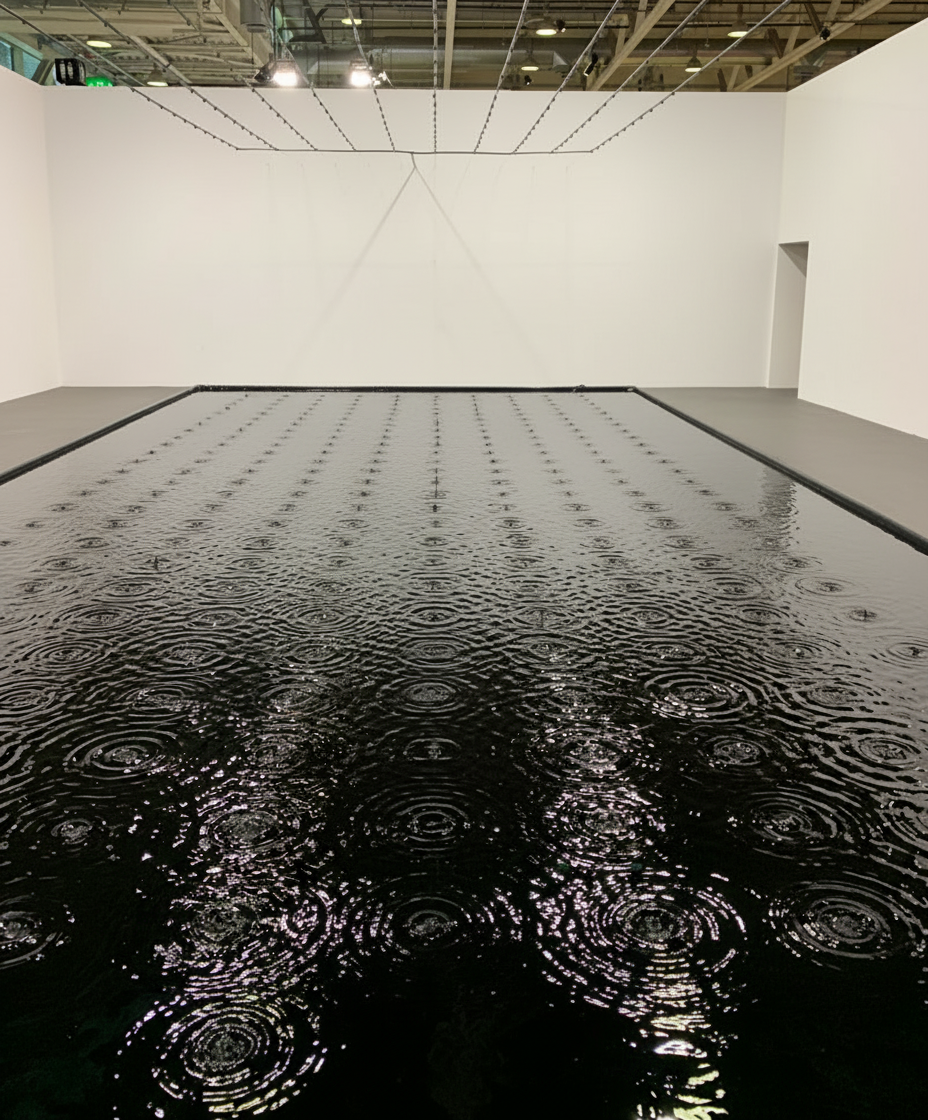
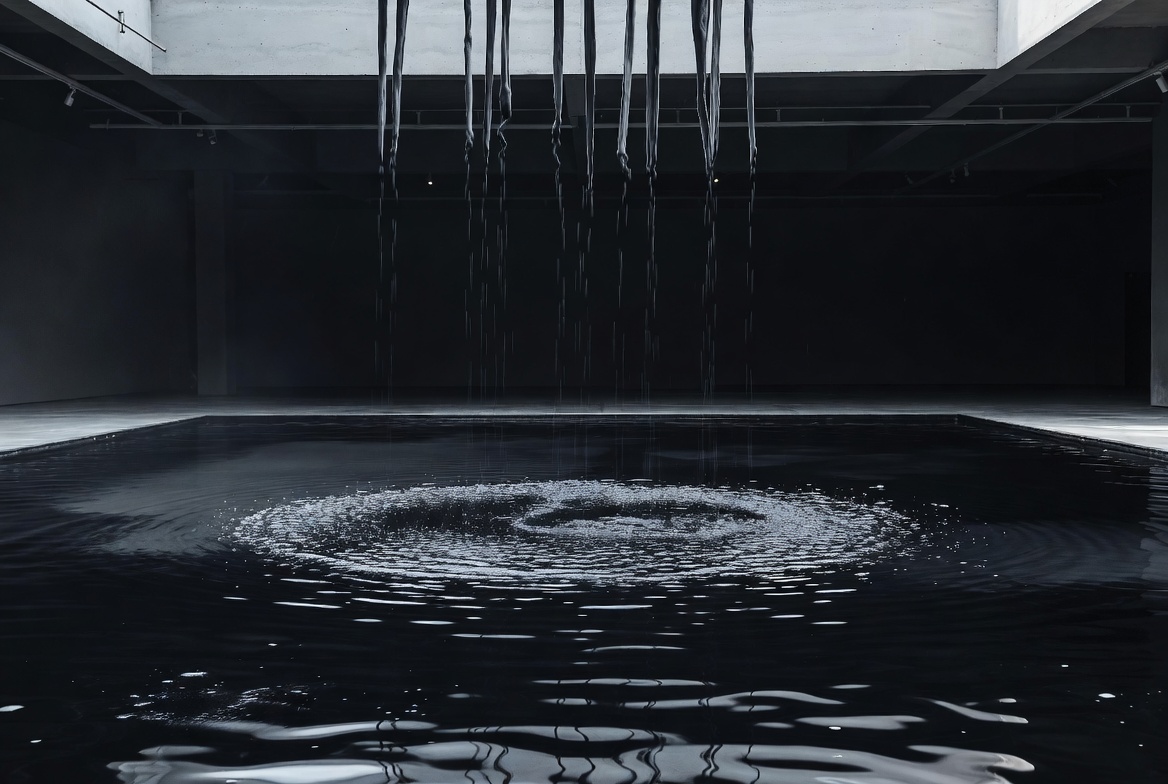
Fainaru, born in Bucharest in 1959 and based in Haifa (with ties to Antwerp), has a long institutional record: participation in Documenta 9 (1992), the 1993 Venice Biennale (as part of group or related shows), and representation of Romania at the 2019 Venice Biennale with “Rose of Nothingness.” He co-founded the Pyramid organization in Haifa and initiated the Mediterranean Biennale, serving as its artistic director. In 2025 he received the Israel Prize for interdisciplinary design and art. His practice involves conceptually driven installations exploring absence, memory, and material fragility; the 2026 Israeli pavilion will feature a new iteration of “Rose of Nothingness,” centered on an inky reflective pool with dripping water.
Public auction records for Fainaru remain sparse, with limited secondary-market activity tracked on major platforms. Primary-market sales tie mainly to institutional and regional collectors in Israel and Europe — typical for mid-career sculptors with strong curatorial support but modest liquidity. The broader contemporary sector saw global art sales rise 4% to an estimated $59.6 billion in 2025, driven largely by public auctions (+9%), according to the Art Basel & UBS Global Art Market Report 2026. Geopolitical tensions continue to influence participation and collector sentiment in politicized contexts.
A source familiar with Israeli contemporary scenes noted Fainaru’s consistent advocacy for cross-cultural exchange through projects like the Mediterranean Biennale. “His work has long emphasized complexity over polemic.”
Critics, however, highlight structural contradictions. An independent curator speaking on condition of anonymity (due to professional risks in polarized networks) observed that state-funded pavilions inherently carry governmental weight: “When a national ministry selects and funds the artist, claims of pure artistic autonomy often obscure the power dynamics at play. Dialogue rhetoric can sound principled, yet one side’s presence is frequently framed as complicity by opponents.” ANGA and signatories argue the pavilion normalizes state actions rather than enabling genuine dissent, particularly given the Arsenale location’s visibility and associated security measures.
The episode reveals persistent fault lines in the 2026 art ecosystem. Biennales operate as prestige platforms where representation functions as soft power. Exclusion demands test institutional claims to universality against sustained activist pressure. Artists like Fainaru must navigate personal ethics against national branding. Coverage often omits concrete data on visitor metrics or sales impact from prior politicized pavilions, as well as whether boycotts produce policy shifts or primarily amplify existing divisions.
In a market undergoing cautious post-2025 recalibration — with modest growth overshadowed by selective caution toward overtly geopolitical work — Fainaru’s stance underscores a core reality: major art events remain arenas where cultural rhetoric collides with state interests, frequently relegating market realities and artistic substance to secondary status.
Darren Smith is an Arts Reporter at Art Chain News covering contemporary art, digital art and NFTs, body art, and the intersections between these fields.
This article is based on direct examination of materials, market data, background interviews, and independent analysis.