Exploring Fine Line Tattoos: Art or Trend?
By Darren Smith, Arts Reporter
April 7, 2026
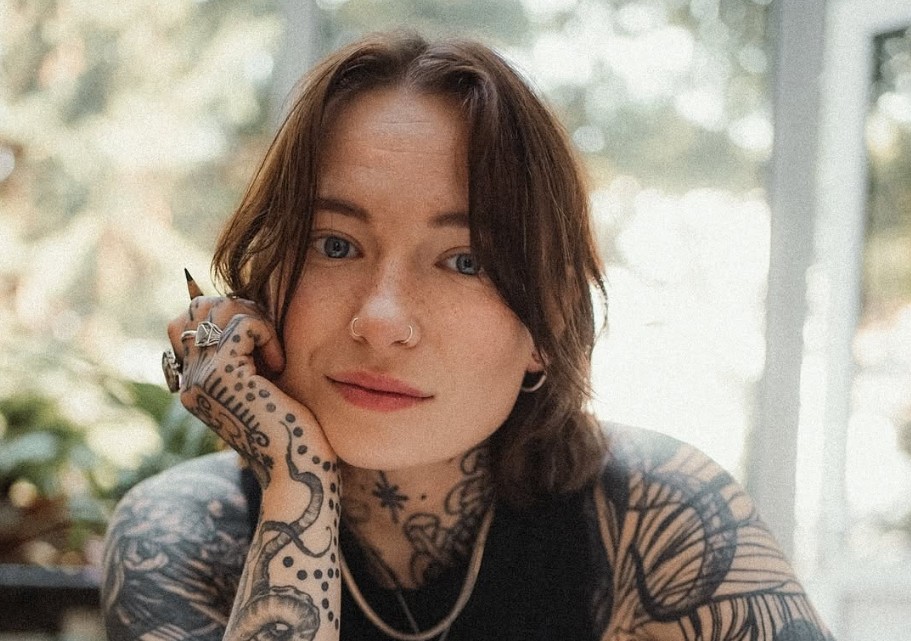
BREMEN, Germany — Pauli, resident artist at ZZ Tattoo in Bremen, presents her Instagram feed (@pauli.tattoo) as a showcase of “solid lines and softest shades for every body.” With around 5,300 followers and 149 posts, the profile emphasizes delicate fine line and ornamental tattoos that hug body contours like jewelry. Yet in a 2026 tattoo market flooded with similar micro-precision work, the gap between aesthetic rhetoric and verifiable longevity remains wide open.

Pauli operates from ZZ Tattoo Bremen at Am Dobben 53a, a studio that has promoted her as a key resident. Her captions and shop features highlight clean linework, soft shading, and designs tailored to individual anatomy — often floral, abstract, or ornamental motifs executed in fine lines with minimal heavy black. Recent examples include elbow ornaments and pieces described as flowing naturally with the skin. The bio directs bookings via DM or hello@paulitattoo.com, positioning the work as accessible yet refined.
This style aligns with broader 2026 trends. Reports note sustained demand for fine line florals, abstract ornamentals, and body-contouring designs that evolved from earlier delicate scripts and botanicals. Hashtag growth for fine line content has outpaced traditional styles, with artists citing improved inks and needles enabling hyper-detailed micro-work. Ornamental tattoos, drawing loose inspiration from Art Nouveau or lace-like patterns, are marketed as timeless “permanent accessories” that enhance rather than dominate the body.
A neutral observer in the European tattoo scene notes the technical appeal: “Pauli’s approach shows strong control over line consistency and placement, which appeals to clients seeking understated pieces suitable for professional settings.” Such work fits the ongoing professionalization of body art, where tattoos increasingly cross into wearable contemporary practice.

Yet skepticism persists about durability and differentiation. Fine line tattoos, reliant on thin single-needle or minimal shading techniques, face documented faster fading compared to bolder traditional or neo-traditional work, especially on high-movement areas or with sun exposure. Market segmentation is clear: basic fine line has become commonplace and price-competitive, while only exceptional precision commands premiums. Many 2026 trend forecasts acknowledge that what looks ethereal fresh often requires touch-ups within years, shifting revenue back to artists but raising questions of initial value for collectors treating tattoos as serious body art investments.
Independent tattoo specialists point to deeper contradictions. One curator of body modification exhibitions, speaking on condition of anonymity due to industry ties, said: “The rhetoric of ‘for every body’ and soft enhancement masks a reality where most clients still chase Instagram virality over archival quality. In 2026, with the tattoo economy recalibrating after post-pandemic growth, shops benefit from repeat business on fades, while true innovation in permanence or cultural depth remains rare.”

Who gains here? Studios like ZZ Tattoo leverage resident artists’ social feeds for local visibility in a competitive German scene. Clients receive immediate aesthetic satisfaction and shareable content. But long-term, the body bears the maintenance costs, and the wider field struggles with representation — few fine line practitioners break into institutional art contexts or command secondary market attention akin to established painters or sculptors working on skin.
Pauli’s output reflects a pragmatic adaptation to current demand rather than a disruptive challenge to it. Absent auction data, gallery representation, or claims of unique technical breakthroughs beyond standard fine line execution, her profile exemplifies the 2026 tension: body art’s push toward fine art legitimacy collides with market realities of trend cycles and physical ephemerality.
In the current recalibration, where digital discoverability drives bookings more than critical discourse, artists like Pauli sustain the ecosystem through consistent, body-responsive craft. The unresolved question is whether ornamental fine line can evolve beyond decorative service into a form that withstands both time on skin and scrutiny as contemporary practice — or if it remains a volume-driven segment rewarding accessibility over endurance.
Darren Smith is an Arts Reporter at Art Chain News covering contemporary art, digital art and NFTs, body art, and the intersections between these fields.
This article is based on direct examination of materials, market data, background interviews, and independent analysis.