The Quiet Revolution: Why Collectors Are Ditching Mega-Fairs for Boutique and Experiential Art Events in 2026
The art world is quietly rewriting its own rules. For years, the rhythm of the market pulsed to the beat of mega-fairs: Art Basel’s sprawling halls in Miami Beach, Frieze’s tented empire in London or New York, TEFAF’s polished Maastricht corridors. Collectors jetted between them, galleries staked fortunes on booth fees and shipping crates, and the spectacle—private views thick with champagne, red carpets, celebrity sightings—became as much the product as the paintings on the walls.
But in 2026, a noticeable shift is underway. Fatigue has set in. The relentless calendar, the sameness of booths recycled across continents, the exhaustion of constant travel amid economic uncertainty and post-pandemic reevaluation—all have prompted a growing number of serious collectors to step back from the blockbuster circuit. In its place, a preference is emerging for something more intimate, more deliberate: boutique and experiential art events that prioritize depth over dazzle, conversation over crowds, and location over logistics.
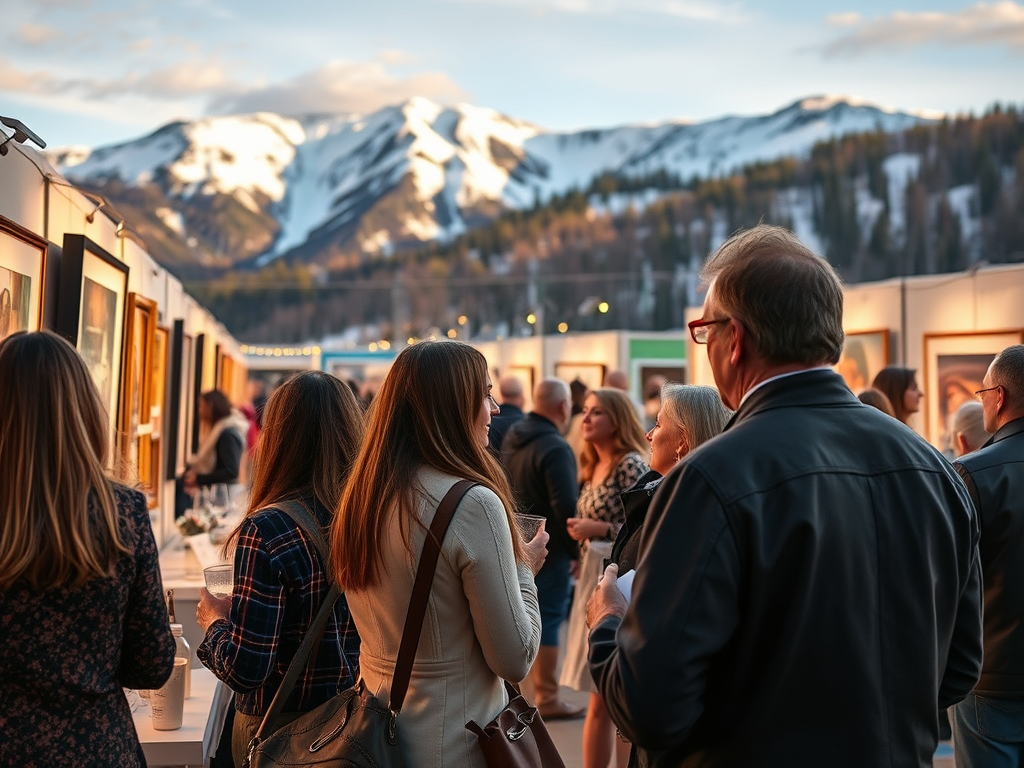
This isn’t a rejection of fairs altogether. It’s an evolution toward events that feel like destinations rather than trade shows. Aspen, long a summer escape for the ultra-wealthy, has seen its namesake Aspen Art Fair—now in its third edition under new leadership at the historic Hotel Jerome—draw collectors who arrive not just to buy, but to linger. Set against snow-capped peaks and paired with gallery dinners, hikes, and private viewings, the fair transforms art acquisition into part of a broader cultural retreat. Similar momentum is building in places like St. Moritz with NOMAD’s tightly curated collectible design showcase, Mallorca’s emerging pop-ups, Pioneertown’s High Desert Art Fair in the California desert, and even smaller satellites in Joshua Tree or the Berkshires. These events trade scale for setting: art viewed in natural light, over meals, amid landscapes that make the experience memorable long after the red dot is placed.
Industry observers point to clear drivers. Bain & Company’s luxury market research highlights a broader “tectonic shift” toward experiences over possessions—what one report calls “experiential indulgence” supplanting conspicuous consumption. In the art sphere, this manifests as collectors seeking events that integrate lifestyle: a weekend in Santa Fe blending Art Santa Fe with Indigenous craft markets and high-desert sunsets, or Los Angeles’ satellite fairs (from Frieze to boutique newcomers like ENZO or The Other Art Fair) that fold in pop-up restaurants, performances, DJ sets, and immersive installations. Even established players feel the pull. Feria Material in Mexico City has built a loyal following precisely because of its human scale—lower fees, riskier programming, and genuine discovery—proving that intimacy can outperform immensity.
Galleries, too, are adapting. Many report “fair fatigue” among both staff and buyers, with the cost-benefit equation tilting against the mega-events. Boutique formats allow for more meaningful interactions: longer booth conversations, site-specific presentations, fewer distractions. One dealer described it plainly: at the big fairs, you’re competing for attention in a stadium; at these smaller gatherings, you’re hosting in a living room.
Of course, the giants aren’t vanishing. Art Basel, Frieze, and their peers still command the highest stakes and headlines. But 2026’s undercurrent favors the curated escape—the event that feels personal, place-bound, and unhurried. For a new generation of collectors, many younger and more eclectic in taste, art isn’t just an asset class; it’s part of how they live, travel, and connect. In choosing smaller, experiential formats, they’re not abandoning the market—they’re redefining what value looks like: not the loudest room, but the one where the encounter lingers.
As one advisor put it recently, “Collectors aren’t tired of art. They’re tired of the treadmill. They’re looking for reasons to slow down—and the best fairs right now are giving them exactly that.”
The pendulum has swung toward quiet discovery. In a world overloaded with spectacle, the most radical act may be an intimate one.