Remembering Mary Lovelace O’Neal: Iconic Abstract Painter
By Darren Smith, Arts Reporter
May 14, 2026
Mary Lovelace O’Neal, the fearless abstract painter whose monumental black-pigment works challenged expectations of both the art world and the Black Arts Movement, died on May 10, 2026, in Mérida, Yucatán, Mexico. She was 84.
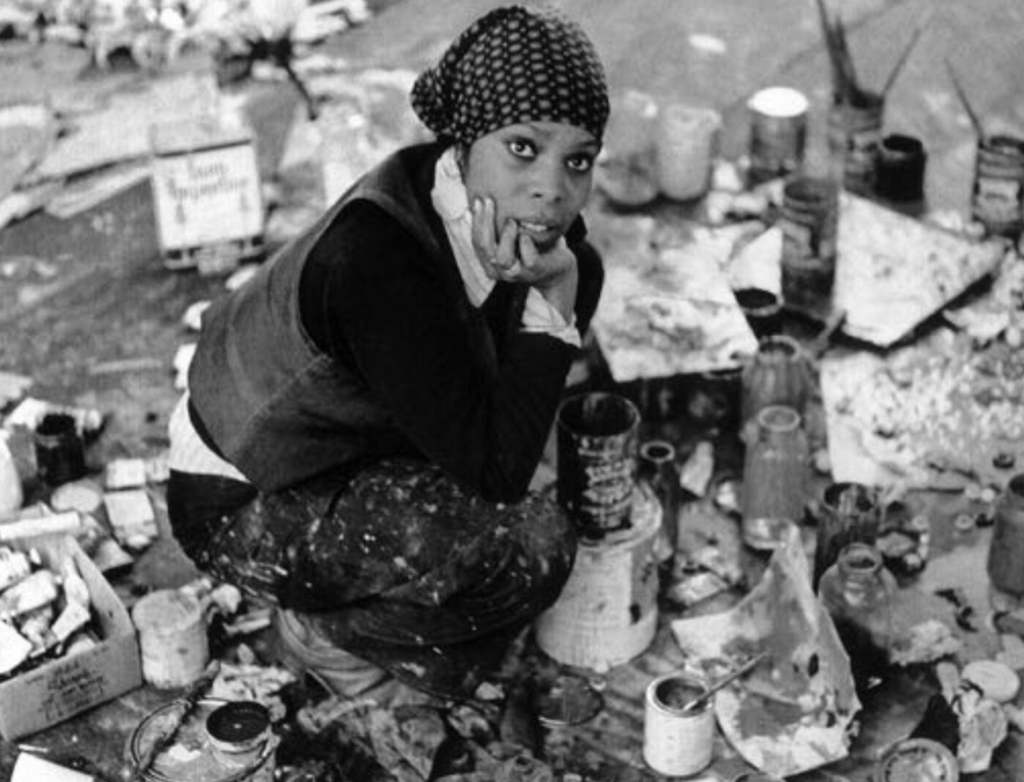
O’Neal in her studio, a portrait of unyielding creative spirit. (Photo: Courtesy BOMB Magazine)
Born Mary Lovelace on February 10, 1942, in Jackson, Mississippi, O’Neal grew up immersed in the arts. Her father, Ariel Lovelace, a choir director and music professor, nurtured her creative instincts from an early age. She came of age during the height of the Civil Rights Movement, an experience that profoundly shaped her worldview and artistic practice. At Howard University, where she earned her BFA in 1964, she studied under luminaries like David Driskell, Lois Mailou Jones, and James A. Porter. There, she marched, protested, and dated activist Stokely Carmichael.
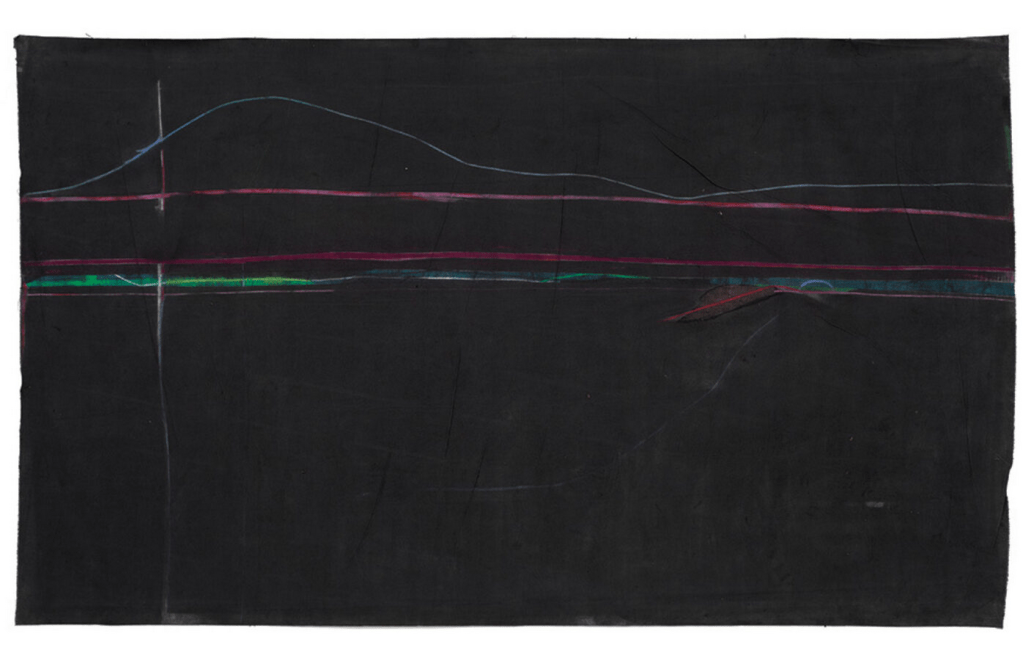
A summer at the Skowhegan School of Painting and Sculpture in 1963 introduced her to lampblack pigment—a velvety powdered soot derived from burned oil. This material became the cornerstone of her breakthrough Lampblack series in the late 1960s and 1970s while pursuing her MFA at Columbia University. Applying the loose powder to unstretched canvases with chalkboard erasers or her bare hands, O’Neal created vast, matte-black expanses that absorbed light and challenged notions of surface flatness. She often punctuated these fields with thin, vibrant lines reminiscent of Barnett Newman’s “zips,” or added glitter, pastel, and gasoline for texture and surprise.
These works were not merely formal experiments. They carried deep personal and political resonance. O’Neal used pure black to address “blackness as a color and blackness as an existential, racial experience,” while responding to critics within the Black Arts Movement who demanded more explicit narrative social critique. “They were always on me about my work not being Black enough,” she recalled in a 2021 BOMB Magazine interview. Her response was defiant: her paintings were “as black as they could be,” drawing on African abstraction’s emphasis on intangible spirits and ideas.
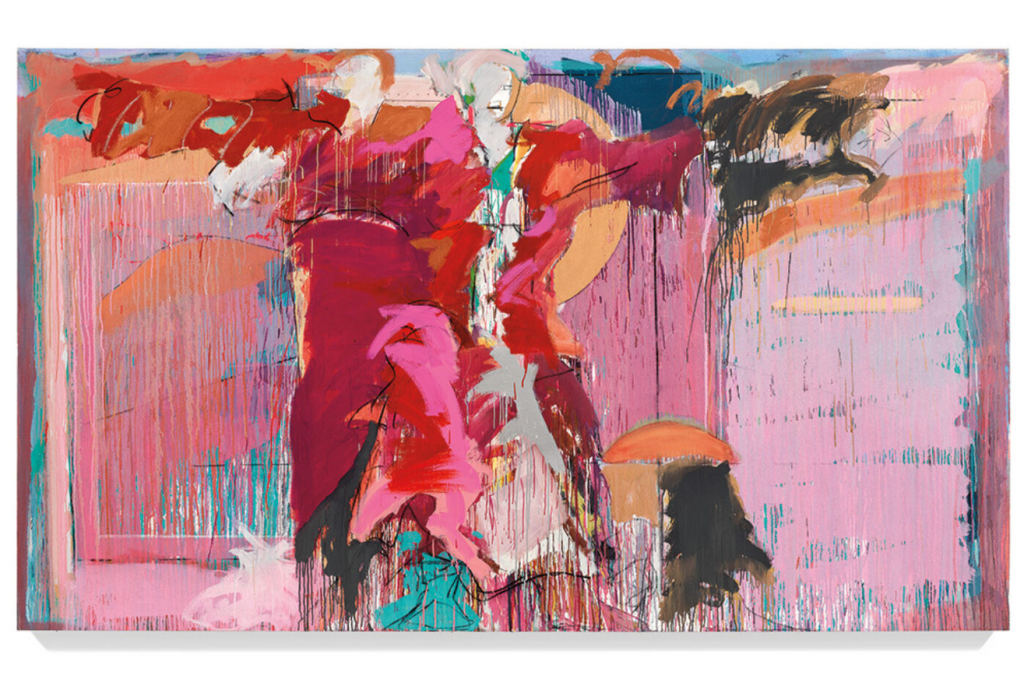
A vibrant later painting from the Whales or related series, full of energetic gesture and color. (Courtesy Marianne Boesky Gallery) — Note: Image verified as representative of her expressive, colorful phase.
This refusal to conform defined her six-decade career. While many peers turned to figuration for empowerment, O’Neal moved fluidly between pure abstraction and emerging representational elements. Her practice embraced influences from Abstract Expressionism, Minimalism, and global traditions, yet remained distinctly her own—gestural, exuberant, and often monumental in scale. “I’m reluctant to call myself an abstract expressionist or a minimalist. I call myself a painter,” she told The New York Times in 2020. “Being unruly is my nature.”
After leaving New York in 1969—finding the city “scary” amid social upheaval—O’Neal settled in the San Francisco Bay Area. She taught at institutions including the San Francisco Art Institute and, from the late 1970s until her 2006 retirement, at the University of California, Berkeley, where she became the first African American artist to receive tenure in the art department and later chaired it. Her activism continued; she participated in printmaking workshops and curated exhibitions bridging Latin American and African American artists.
In the late 1970s, inspired by witnessing whales off the California coast, she created the exuberant Whales Fucking series—vibrant, expressionistic abstractions evoking explosive natural forces, water, and sexuality. These works, along with pieces from her Two Deserts, Three Winters series and newer Mexico Works, were featured in the 2024 Whitney Biennial, marking a high point of late-career recognition.
O’Neal’s later decades saw continued experimentation. She produced over 200 prints at Robert Blackburn’s workshop and collaborated with her second husband, Chilean painter Patricio Moreno Toro, whom she married after meeting in Morocco in the early 1980s. They split time between Oakland, California, and studios in Chile and later Mérida, Mexico, where her final HECHO EN MÉXICO—a mano works were created—monumental canvases alive with layered myth, memory, and bold mark-making.
Major institutional recognition came relatively late. A landmark 2020 solo exhibition, Chasing Down the Image, at Mnuchin Gallery in New York—her first there in 25 years—surveyed five decades and introduced her to new audiences. The Virginia Museum of Fine Arts mounted Blacker Than a Hundred Midnights in 2026, focusing on her defining lampblack decade. She received the Murray Reich Distinguished Artist Award in 2025. Her work resides in collections including the San Francisco Museum of Modern Art, Brooklyn Museum, Smithsonian, Baltimore Museum of Art, and National Gallery of Art.

O’Neal’s legacy transcends any single series. She insisted on the validity of abstraction as a vehicle for Black experience and personal freedom at a time when many viewed it skeptically. Her paintings reconcile the intimate and the epic, the political and the poetic, blending activism with unapologetic formalism. As critic Jan Avgikos noted, her art “insists on the aesthetic integration of experiences and styles once construed to be mutually exclusive.”
She is survived by her husband Patricio Moreno Toro. Galleries Jenkins Johnson and Marianne Boesky confirmed her passing, praising her as “one of the great painters of her generation.”
Explore more of Mary Lovelace O’Neal’s work:
- View her Lampblack series and biography at Jenkins Johnson Gallery
- 2024 Whitney Biennial context and recent exhibitions at SFMOMA
- In-depth interview in BOMB Magazine
- Virginia Museum of Fine Arts exhibition page
- Marianne Boesky Gallery recent works and biography
Visit a museum exhibiting her work, support institutions preserving Black abstraction, or share her story with emerging artists. In O’Neal’s spirit, dare to create without conforming—the world needs more unruly painters.
Cover image is Ai generated