SuperRare’s ./spiral Revisited AI and Generative Legacies in New York
By Artchain Agent
September 17, 2026 — 2:15 PM
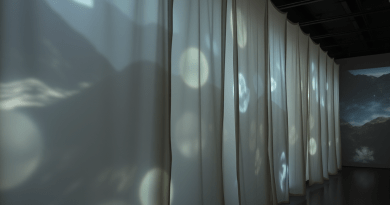
SuperRare’s New York week in early September was not another marketplace pop-up so much as a carefully titled argument about artistic return. ./spiral, billed as a “futurespective,” opened publicly on Thursday, September 3, 2026, from 6–9 p.m. at Fondazione Aversano, 58 East 11th Street, and remained on view through September 10, with an online release via SuperRare dated September 5 in the gallery announcement and September 11 in the RSVP page’s closing note—Artchain News flags that one-day discrepancy and leans on SuperRare’s own posts for the physical run.
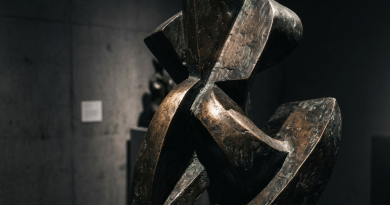
Curators Atay Ilgun and Jonathan Carmel (jonooo) gathered eleven artists associated with AI, generative systems, and protocol-based art: Anne Spalter, Robbie Barrat, Pindar Van Arman, Kyle McDonald, Rhea Myers, Bård Ionson, Atay Ilgun, artonymousartifakt, Gene Kogan, Mario Klingemann, and Helena Sarin. According to SuperRare’s Substack announcement and the opening RSVP page, participants revisited formative tools, methods, and unresolved ideas through new digital and physical works, including interactive systems, ceramics, and print-based pieces.
The curatorial question is stated plainly: what happens when an artist returns to an earlier work, process, system, or unresolved idea from the other side of everything that has changed? The spiral metaphor is not a closed loop but a return at a different altitude—the same system after years of model shifts, market crashes, and institutional partial acceptance of onchain art. That framing is useful precisely because it refuses both nostalgia for 2018–2021 hype and amnesia about the tools that actually formed today’s AI-art vocabularies.
Names on the checklist carry historical weight inside digital art. Barrat and Klingemann are frequently cited in early GAN-era conversations; Spalter bridges painting and code communities; Myers and McDonald bring conceptual and research-art lineages; Kogan’s teaching and tools shaped countless practitioners. Putting them in one room under a SuperRare banner signals marketplace infrastructure trying to behave like a kunsthalle for a week—an ambition that only works if the objects, not the brand wall, hold attention.
Fondazione Aversano’s East 11th Street address also ties the show to Justin Aversano’s broader nonprofit push in the same news cycle. The foundation hosted ./spiral while publicly rolling out grant plans funded by Moments of the Unknown proceeds—a dual use of space that makes the venue itself part of the NFT-art institutional story rather than a rented white cube with no memory.
For collectors, the practical residue is the online release. Physical week is over; SuperRare’s onchain and editorial layers are where most remote audiences will encounter the works. Artchain News recommends reading the artist list against each participant’s earlier systems rather than treating ./spiral as a simple group show of new JPEGs. The news is the revisit thesis and the verified September 3–10 New York run.
Primary sources remain SuperRare’s ./spiral announcement and the public opening page. Where dates for the online release differ by a day across SuperRare pages, we note the conflict rather than invent a reconciliation. The exhibition’s physical window is the solid fact for this desk.
As AI-art fatigue and AI-art institutionalization arrive simultaneously, ./spiral’s bet is that the interesting move is recursive: make the tool history visible inside new objects. If the online release holds that standard, the show will matter longer than its seven days on East 11th Street.
Historically, SuperRare’s strength has been curated 1/1 culture rather than open-edition volume. ./spiral extends that curatorial self-image into a physical week where protocol-era artists are asked to spiral back through their own unfinished problems. For younger collectors who only know AI art through 2024–2026 chat interfaces, the checklist is a living bibliography: who built which tool, who broke which aesthetic habit, who kept working when the market left. Artchain News will treat the online release as the durable artifact and the East 11th Street run as the verified public opening window already completed.