
Sotheby’s to Auction ‘Last Surrealist’ Enrico Donati’s Personal Collection, Led by $40 Million Picasso
By Darren Smith, Arts Reporter
NEW YORK — April 13, 2026
Sotheby’s will disperse the intimate personal collection of Enrico Donati and his wife Adele Donati across its major New York sales this May, offering a rare window into the private world of the artist long hailed as the “last Surrealist.” The 45-lot “A Night in May” collection carries a high estimate of approximately $82 million and is anchored by Pablo Picasso’s Arlequin (Buste) (1909), estimated in the region of $40 million.
The sale marks the latest chapter in the market’s fascination with artist-collectors whose holdings reflect deep personal and professional bonds rather than mere investment. Enrico Donati, who died in 2008 at age 99, and Adele, who passed in 2025, assembled works through friendships, gifts, and discerning purchases over decades. Many pieces have rarely been exhibited publicly.
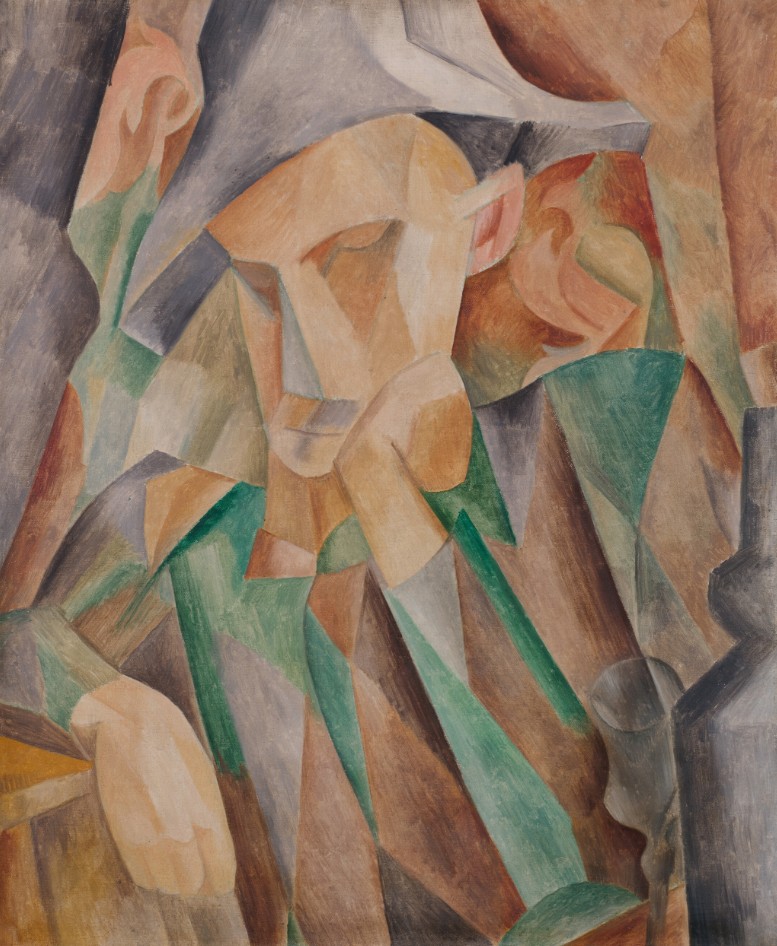
Pablo Picasso
Arlequin (Buste)
Born in Milan in 1909, Enrico Donati studied economics before embracing avant-garde music and painting in 1930s Paris. He fled to New York in 1939 as war engulfed Europe and quickly integrated into the Surrealist circle. André Breton championed him after a 1942 exhibition, famously writing: “I love the paintings of Enrico Donati as I love a night in May.” Donati maintained close ties with Marcel Duchamp, Yves Tanguy, Arshile Gorky, and others, often trading works directly.
Highlights beyond the star Picasso include Wassily Kandinsky’s Rote Tiefe (Red Depth) (1925, est. $12–18 million), Yves Tanguy’s Aux Aguets le Jour (1939, est. $800,000–$1.2 million)—a gift from Tanguy himself—and a miniature Alexander Calder mobile from 1950 (est. $700,000–$1 million), exchanged for one of Donati’s drawings. Fourteen works of African, Oceanic, and Native American art will appear in a dedicated June sale, underscoring Donati’s broad interests in objects that influenced Surrealist thought.
Julian Dawes, Sotheby’s head of Impressionist and Modern Art, emphasized the collection’s personal nature. “These were not status symbols or trophies,” he said. “They were intimate things, extensions of himself and his friends and he lived with them effortlessly.” Dawes also noted the rarity of major 1909 Cubist works outside museums, calling the Picasso a “generational opportunity.”
The Arlequin (Buste)—a green-and-grey jester portrait painted two years after Les Demoiselles d’Avignon—has its own dramatic history. Donati acquired it in 1953 from Galerie Louise Leiris (through dealer Daniel-Henry Kahnweiler) after becoming enamored with it at a Cubist retrospective. He reportedly paid roughly the cash he had on hand at the time. Sotheby’s attempted to sell the painting in 2008 shortly after Donati’s death, but withdrew it; its reappearance now reflects renewed appetite for pristine early Cubist material amid a market that continues to reward fresh-to-market provenance.

The timing of the sale arrives as the art world grapples with questions of legacy, friendship networks, and the blurred lines between artist and collector. Donati’s own practice evolved from Surrealism through Constructivist influences into later abstract modes, and his holdings mirror that restless curiosity. Adele Donati, a designer and philanthropist, helped shape the collection’s refined sensibility after their marriage.
Previous segments of the Donati holdings have performed strongly, including a Matisse still life that realized £4.3 million in 2019 and tribal objects that exceeded expectations in 2010. Observers see the current offering as both a tribute to a pivotal 20th-century figure and a barometer for blue-chip modern works in 2026.
Exhibitions of the collection will open at Sotheby’s New York galleries in early May, ahead of the Modern Evening Auction on May 19.
Darren Smith is an Arts Reporter at Art Chain News covering contemporary art, digital art and NFTs, body art, and the intersections between these fields.
This article is based on exhibition/auction statements, direct reporting, and institutional analysis.