Catherine Opie’s Landmark UK Debut “To Be Seen” Illuminates Queer Identity and Visibility at National Portrait Gallery
By Darren Smith, Arts Reporter
LONDON — April 13, 2026
Catherine Opie’s first major museum exhibition in the United Kingdom opened in March and continues to draw attention for its powerful exploration of portraiture, community, and belonging. Titled Catherine Opie: To Be Seen, the show at the National Portrait Gallery brings together more than three decades of the Los Angeles-based photographer’s work, curated in close collaboration with the artist herself.
Spanning from her early 1991 series Being and Having—which features LGBTQ+ friends in stylized, Holbein-inspired portraits with fake mustaches and tattoos—to more recent images of motherhood, domestic life, and American landscapes, the exhibition challenges traditional notions of who gets represented in institutional spaces. The title itself serves as both declaration and invitation, emphasizing visibility for those often marginalized in historical portrait galleries.
The exhibition design by Katy Barkan of Now Here creates dynamic sightlines across rooms, encouraging viewers to draw connections between works and with the gallery’s permanent collection. Opie has also introduced interventions throughout the museum, placing her portraits in dialogue with historical figures to question power, representation, and who is “seen” in public institutions.
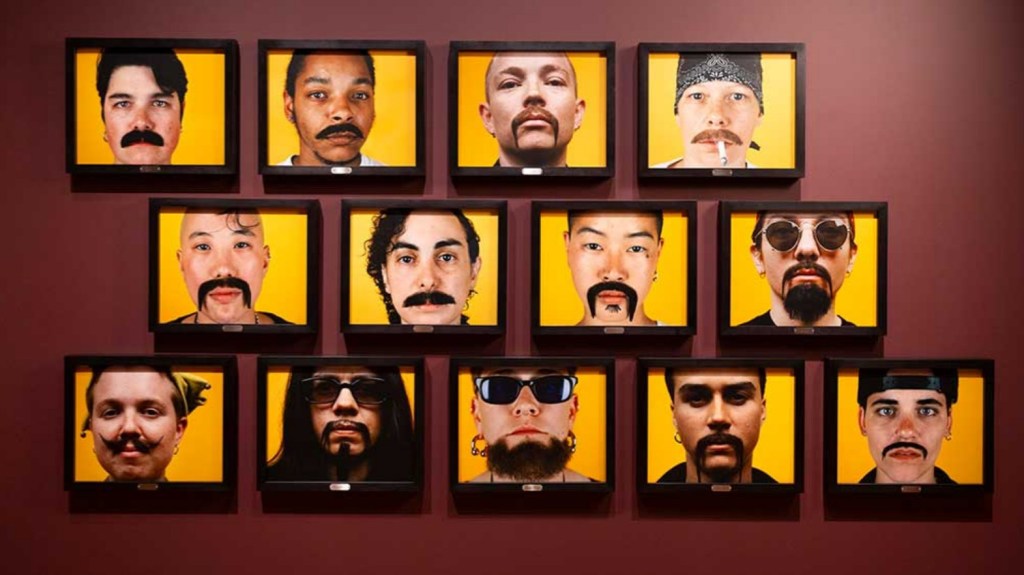
In a recent interview, Catherine Opie underscored the urgency of the project amid shifting cultural and political landscapes. “All people have the right to exist,” she stated, framing the portraits as an assertion of presence and humanity in times of division. The show arrives at a moment when questions of identity and institutional representation feel particularly charged, offering a space for reflection on intimacy, community, and resilience.
Opie’s practice has long centered the body as a site of identity and performance, aligning with broader conversations in contemporary art about body art—including tattoos, piercings, and modifications—as legitimate forms of self-expression and cultural documentation. Many of her subjects wear their identities visibly through ink and styling, transforming the photographed body into a canvas that asserts presence against erasure.
Art historian and critic Flora Dunster, who participated in related programming, noted the exhibition’s strength in fostering new narratives: “Opie’s portraits don’t just document a community—they ennoble it, creating a queer archive that stands alongside traditional portraiture.”
Running through May 31, 2026, on Floor 2 of the National Portrait Gallery, the show has already received strong critical reception, with reviewers praising its emotional depth and formal rigor. Admission is £19.50 (£21.50 with donation), free for members. A companion publication developed with the artist accompanies the exhibition.
As Catherine Opie’s work enters this prominent UK institutional context for the first time, it highlights ongoing market and cultural interest in photographers who bridge documentary traditions with personal and political storytelling. Her portraits continue to resonate in conversations around visibility, especially as digital and new media artists explore similar themes of self-representation online.
The exhibition will tour to the National Galleries of Scotland later in 2026, extending its reach.
Darren Smith is an Arts Reporter at Art Chain News covering contemporary art, digital art and NFTs, body art, and the intersections between these fields.
This article is based on exhibition statements, direct reporting, and institutional analysis.