
Titanic Relic Buzz Fuels Ongoing Auction Interest as Major Fairs Wrap in Chicago and New York
By Darren Smith, Arts Reporter
April 12, 2026
NEW YORK — As the spring art fair season winds down with the close of Expo Chicago and ArtExpo New York on Sunday, collectors and institutions continue to digest market signals from bustling fair floors while historical artifacts generate sustained buzz in the auction sector.
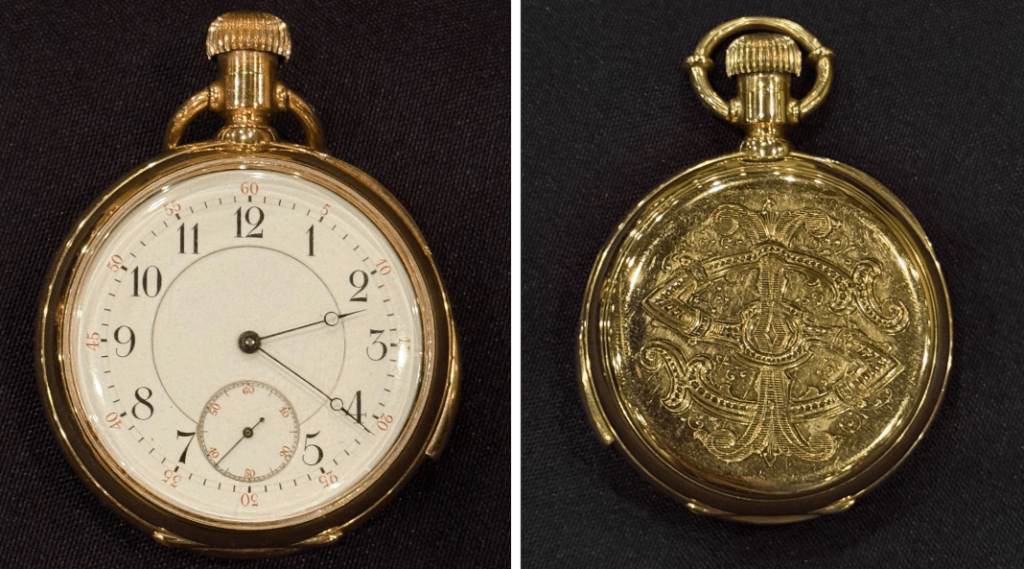
Although ultra-fresh auction headlines remained limited in the final hours of April 12, conversations around high-profile sales — particularly the record-breaking Isidor Straus gold pocket watch from the Titanic — persisted in dealer circles and online forums. The 18-carat Jules Jurgensen timepiece, recovered from the body of the Macy’s co-owner who perished with his wife Ida in 1912, sold for £1.78 million ($2.3 million) at Henry Aldridge & Son in November 2025, setting a new benchmark for Titanic memorabilia.
The engraved watch, a birthday gift from Ida in 1888, symbolizes one of the ship’s most poignant stories of devotion. Its recovery and subsequent sale have kept Titanic-related items in the spotlight. Henry Aldridge & Son has announced its next dedicated auction of Titanic, White Star, and maritime memorabilia for April 18, 2026, featuring exceptional pieces including a lifejacket worn by a first-class passenger and other rare artifacts expected to draw strong institutional and private interest.
“This continued fascination underscores how historical objects function as both cultural touchstones and alternative asset classes,” said a senior specialist at a major London auction house who requested anonymity to discuss market trends. “The Straus watch didn’t just break records — it reminded collectors that narrative depth can outweigh pure material value in today’s market.”
Broader market notes from the just-concluded fairs reflect a measured optimism. Expo Chicago (April 9–12 at Navy Pier), now under Frieze ownership, featured strong programming around embodiment and spatial themes, with notable presentations by galleries including Richard Gray and others highlighting artists such as Torkwase Dyson, Theaster Gates, and Rashid Johnson. Attendance and sales conversations reportedly held steady amid a selective buying environment, with mid-tier contemporary works and works on paper performing reliably.
Simultaneously, ArtExpo New York at Pier 36 brought together hundreds of artists, galleries, and publishers in a more accessible trade-show format, emphasizing discovery and direct artist-collector connections. While not a blue-chip event on the scale of TEFAF or Frieze, it provided a barometer for emerging and mid-market demand in painting, prints, and mixed media.

Industry observers note that the spring fair circuit — sandwiched between major auction seasons — serves as a critical pulse-check. With few blockbuster contemporary consignments hitting the block in the immediate past five hours, attention has shifted toward upcoming sales and the interplay between historical relics and living artists’ markets. Digital and new media works, including generative pieces with NFT provenance, saw quieter but targeted interest at both fairs, aligning with Art Chain News coverage of intersections between traditional objects and blockchain-verified art.
The Titanic watch’s enduring resonance also highlights broader conversations around provenance, memory, and the body as a site of historical trauma — themes that resonate with contemporary body art practices where skin becomes a living canvas for narrative and permanence.
As the art world transitions from fair season into deeper auction cycles, the blend of sentiment-driven historical sales and selective contemporary buying suggests a market rewarding quality, story, and strategic timing over volume.
Darren Smith is an Arts Reporter at Art Chain News covering contemporary art, digital art and NFTs, body art, and the intersections between these fields.
This article is based on exhibition/auction statements, direct reporting, and institutional analysis.