Singaporean Artist Ming Wong Reimagines Saint Sebastian as a Code-Switching Queer Icon in National Gallery London Residency
By Darren Smith, Arts Reporter
LONDON — April 4, 2026, 1:30 PM PST
Singapore-born, Berlin-based artist Ming Wong has recast the martyrdom of Saint Sebastian as a layered exploration of queer identity, cultural code-switching, and historical crisis in his new film and installation at the National Gallery in London.
Titled Dance of the sun on the water | Saltatio solis in aqua, the work forms the centerpiece of Wong’s tenure as the gallery’s 2025 Artist in Residence. It draws directly from the institution’s 14 historic depictions of the saint — from Renaissance masters like the Pollaiuolo brothers and Carlo Crivelli to Gerrit van Honthorst — while engaging Derek Jarman’s groundbreaking 1976 film Sebastiane. Wong relocates the narrative inside the National Gallery itself, blending performance, video, and site-specific installation.

The short film features contemporary performers, including British Asian artists, a drag king, and a burlesque dancer, re-enacting scenes from Jarman’s work amid the gallery’s historic rooms. Wong presents the footage on custom “medieval televisions” — gilded frames that evoke Renaissance altarpieces while housing modern screens. This creates a dialogue between past and present, where arrows of martyrdom intersect with themes of resilience amid persecution.
“Saint Sebastian is a figure who keeps appearing at times of crisis,” Wong said in statements surrounding the project. The artist, known for works that interrogate how cinema and popular culture construct and circulate identity, uses the saint’s image — long a queer icon symbolizing both beauty and suffering — to reflect on contemporary experiences of marginalization, adaptation, and visibility.
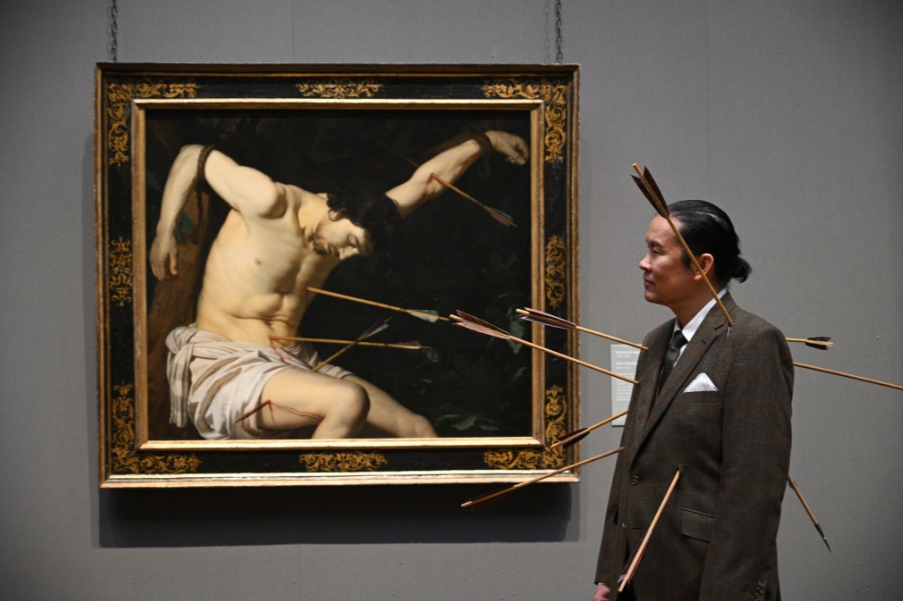
Curators and critics note the timeliness of the intervention. As the National Gallery approaches its bicentennial, Wong’s residency highlights the institution’s evolving commitment to modern and contemporary dialogue with its historic collection. The project also underscores Saint Sebastian’s enduring power as a symbol: venerated as a protector against plague in earlier centuries, later reclaimed during the AIDS crisis, and now refracted through lenses of Asian diaspora experience and fluid identity.
Art historian and queer studies scholar Robert Mills, who has engaged with the work in related programming, has described Wong’s approach as expanding the saint’s iconography beyond traditional Western narratives. By centering diverse performers and code-switching motifs, the installation probes how bodies navigate multiple cultural languages — a theme resonant with Wong’s broader practice, which often examines imitation, translation, and hybridity in globalized contexts.
The exhibition occupies Rooms 10, 58, 59, and 60 through April 5–6, 2026, with associated events including performative tours and conversations. Its run coincides with heightened conversations around representation in major museums and the role of artist residencies in bridging historical and living art practices.
In the broader contemporary art landscape, Wong’s project exemplifies growing interest in reinterpreting canonical religious and queer imagery through non-Western and diasporic perspectives. It intersects with ongoing discussions in body art and performance, treating the human form as both historical canvas and site of active resistance and reinvention.
Support for the residency comes from LG as the Modern and Contemporary Art Partner, alongside other donors, signaling institutional investment in such cross-temporal explorations.
As the installation enters its final days, it invites viewers to consider not only the arrows that pierce Saint Sebastian but the adaptive strategies of survival and expression that define marginalized communities across eras.
This article is based on exhibition statements, direct reporting, and institutional analysis.
Darren Smith is an Arts Reporter at Art Chain News covering contemporary art, digital art and NFTs, body art, and the intersections between these fields.