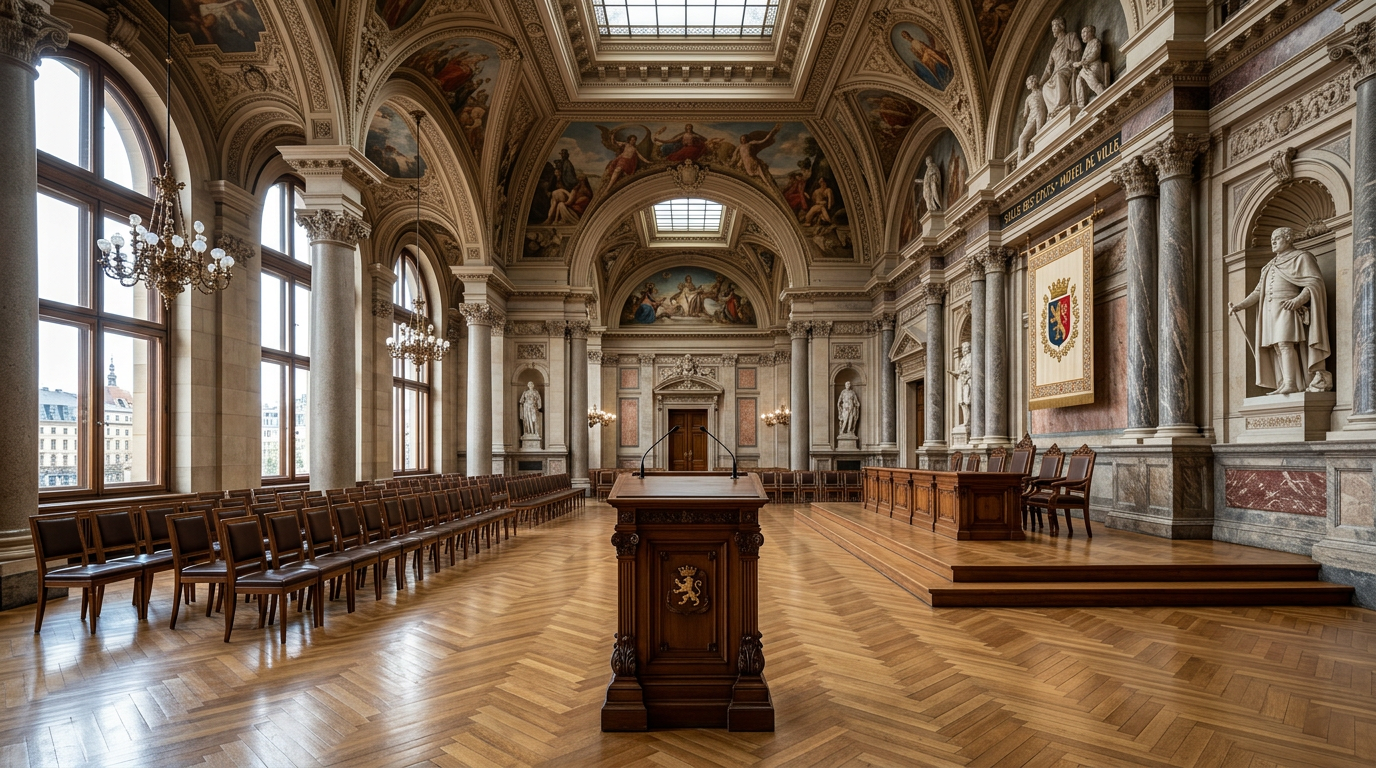
Hamburg Renames Cultural Medal Amid Historical Reassessment
By Darren Smith, Arts Reporter
May 20, 2026
In a quiet but significant act of historical reckoning, the Free and Hanseatic City of Hamburg has stripped a long-standing cultural honor of its original name. The Senator Biermann Ratjen Medal, awarded for nearly five decades to recognize outstanding contributions to the arts and culture, will now be known as the Medal for Art and Culture in Hamburg.
The decision, announced this week, stems from fresh historical research revealing the wartime affiliations of Hans Harder Biermann-Ratjen. While he played a key role in rebuilding Hamburg’s cultural institutions after 1945, evidence confirms his membership in the Nazi Party, prompting officials to distance the prestigious award from his legacy.
A Postwar Icon Under Scrutiny
Born in 1904, Biermann-Ratjen emerged in the immediate postwar period as a driving force in Hamburg’s cultural recovery. In 1945, British occupation authorities invited him to manage art and cultural affairs. He delivered a notable radio lecture titled “Is Art Necessary Today?” and later served in Hamburg’s parliament from 1949 to 1966.
When the medal was conceived in 1973 and first awarded in 1978, authorities viewed him primarily as a nominal party member. New scholarship challenged that narrative. Historian Helmut Stubbe da Luz, in a 2024 investigation published by Die Welt am Sonntag, uncovered definitive proof: in 1943, Biermann-Ratjen confirmed his Nazi Party membership in an application to the Reichsschrifttumskammer.
Read the full 2024 investigation (Die Welt)
Honoring Excellence Without Compromise
The medal has recognized more than 120 recipients, celebrating painters, sculptors, performers, writers, and cultural advocates. Past honorees include Anke Feuchtenberger, Uta Falter-Baumgarten, and others who helped transform Hamburg into a dynamic arts hub.
The first award under the new name will go this summer to Peter Hess, founder of Gedanktafeln Hamburg. Hess has installed memorial plaques for notable residents, including Nazi resisters, and played a pivotal role in bringing Gunter Demnig’s Stolpersteine project to the city in 2002.
Broader Context of Reckoning
Hamburg’s move reflects a wider German trend of reassessing postwar honors. In an era of heightened historical awareness, cities are prioritizing ethical clarity.
Critics may argue the renaming applies present-day standards retroactively. Supporters counter that public honors carry symbolic weight and should reflect values of democracy and remembrance—especially in a city deeply affected by the Nazi era.
Preserving Legacy While Moving Forward
The renaming does not erase Biermann-Ratjen’s historical contributions but reframes the award for future generations. Hamburg’s cultural authorities emphasize that the medal’s core purpose—celebrating artistic excellence—remains unchanged.
As Germany confronts its 20th-century past, such decisions reinforce democratic principles. Culture thrives because of historical accountability.
What do you think about Hamburg’s decision? Share your thoughts in the comments below, visit a local Stolpersteine memorial, or support initiatives preserving cultural memory. Subscribe to our newsletter for more in-depth reporting on art, history, and ethics. Let’s keep the conversation going—because confronting the past ensures a brighter cultural future.
Cover image is Ai generated