Refik Anadol: Leading the AI Art Renaissance
By Darren Smith, Arts Reporter
LOS ANGELES — April 12, 2026, 5:55 AM PST
Refik Anadol posted a sleek studio update on Instagram this week showcasing fluid data visualizations for an upcoming installation, tagging partners and teasing “new machine hallucinations.” The post, typical of his high-production feed, garnered rapid engagement while spotlighting his role as 2026 UCLA School of the Arts and Architecture commencement speaker and co-founder of the forthcoming Dataland museum dedicated to AI art.
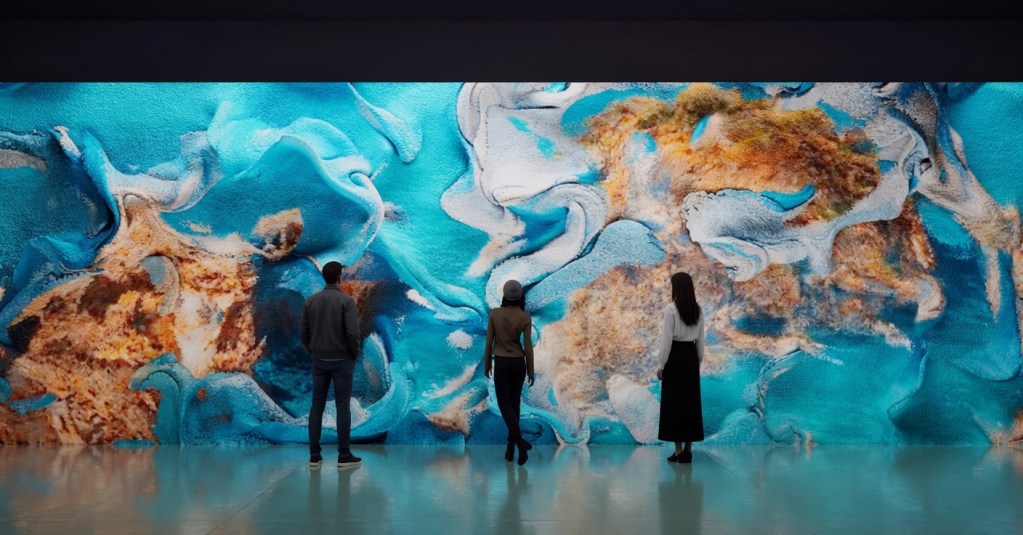
Anadol, the Turkish-born media artist known for large-scale immersive works using machine learning on massive datasets, maintains one of the most consistent social media presences among digital practitioners. His accounts blend behind-the-scenes process shots, public art activations (including projections on the Sphere in Las Vegas and Walt Disney Concert Hall), and promotional announcements for collaborations with Google, Microsoft, and architectural icons. Recent activity emphasizes “data as pigment” and celebrates AI as a collaborative tool rather than threat, aligning with his public statements framing the current moment as a “digital art renaissance.”
This visibility comes amid a 2026 market still digesting the post-NFT contraction and broader AI skepticism. While Anadol’s primary-market pieces have achieved strong results—some reported auction sales exceeding $1 million—questions persist about secondary market depth, long-term collector retention, and the distinction between spectacle-driven public commissions and durable artistic legacy. Art Basel/UBS reports continue to show selective institutional buying, with preference for works demonstrating tangible innovation over pure technological novelty.
Anadol’s practice centers on transforming data (from NASA imagery to urban sensors) into hypnotic, site-specific environments. His MoMA commission “Unsupervised” drew millions of visitors, and Dataland’s planned opening in downtown Los Angeles positions him as a key institutional player in AI arts infrastructure. Social updates frequently highlight these scale achievements, positioning the work as accessible yet cutting-edge.
A curator familiar with media arts offered a measured endorsement: “Anadol has succeeded in bringing data-driven practice into mainstream museum and public spaces where many generative artists struggle. His emphasis on collective datasets and architectural integration reflects genuine technical ambition at a time when much AI output remains screen-bound or decorative.”
Skeptical voices highlight tighter alignments. An independent digital art specialist, speaking anonymously due to industry relationships, observed: “The rhetoric of democratizing imagination through AI sits uncomfortably with heavy reliance on big-tech partnerships and corporate venues. When data from surveillance-heavy or proprietary sources becomes the raw material, and the artist functions as both creator and promoter of the tools, it raises issues about whose realities are being visualized—and who ultimately benefits from the spectacle.” Critics have noted that while the visuals mesmerize, they often prioritize sensory immersion over pointed critique of the data economies or labor conditions underlying AI systems.
In the recalibrating 2026 landscape, where ethical concerns around training data, energy consumption, and authorship intensify, Anadol’s social strategy effectively sustains attention and secures commissions. Yet observable gaps remain: institutional acquisitions of his work, while growing, trail those of established non-digital contemporaries, and secondary market liquidity for AI-specific editions has proven volatile compared to traditional media. His upcoming UCLA address and Dataland project underscore a pivot toward educational and infrastructural influence rather than solely object-based sales.
Anadol’s feed keeps digital practice in the public eye at a moment when many peers have quieted or pivoted. It also exposes the field’s core tension: the need for technological fluency versus risks of becoming marketing extensions for the very systems artists once claimed to interrogate. As museums and collectors demand clearer provenance and conceptual substance amid AI saturation, the real test for such high-visibility practices will be whether engagement metrics convert into lasting critical and market substance.
Darren Smith is an Arts Reporter at Art Chain News covering contemporary art, digital art and NFTs, body art, and the intersections between these fields.
This article is based on direct examination of materials, market data, background interviews, and independent analysis.