
Celeste Dupuy-Spencer, Painter of Politicized Figuration, Dies at 46 Amid Stalled Market Momentum
By Darren Smith, Arts Reporter
April 12, 2026
NEW YORK — Celeste Dupuy-Spencer’s death at age 46 cuts short a career built on raw, often contradictory figurative paintings that tackled American political violence, queer intimacy, religious ecstasy, and racial tension—yet her secondary market never fully escaped the mid-tier volatility plaguing much of 2020s socially engaged painting.
News of the Los Angeles-based artist’s passing broke late April 10 and spread through tributes on April 11, prompting galleries and institutions to issue statements. An upcoming solo exhibition, “Burning in the Eyes of the Maker,” had been scheduled to open April 17 at Jeffrey Deitch in Los Angeles. That show will now proceed as a memorial or be postponed, gallery representatives confirmed without detailing cause of death or further plans.

Dupuy-Spencer, born in 1979 in New York City and educated at Bard College, rose through Los Angeles exhibitions in the mid-2010s. She gained wider attention with works in the 2017 Whitney Biennial and Hammer Museum’s Made in L.A. Her canvases mixed gestural energy with sourced imagery from news events—Trump rallies, the January 6 Capitol riot, evangelical services—often refusing simple moral binaries. One large painting, “Don’t You See That I Am Burning” (2020), depicted the Capitol insurrection without clear heroes or villains, drawing both praise for complexity and criticism for equivocation.
Auction data shows limited but uneven commercial traction. Her highest realized price reached $50,400 for a painting, with other results including $21,930 against a $10,000–15,000 estimate at Phillips. Multiple works sold below or near low estimates in recent years, reflecting broader 2025–2026 recalibration in contemporary figurative painting after post-pandemic highs. Primary gallery prices at Nino Mier and others sat in the low-to-mid five figures, but resale liquidity remained thin outside institutional acquisitions by the Whitney, Hammer, LACMA, and SFMOMA.
A dealer familiar with the market, speaking on condition of anonymity, noted: “Her work had strong museum placement and critical support, but collector demand cooled as the sector shifted toward tighter budgets and skepticism around overtly topical content. The January 6 painting was talked about more than traded.”
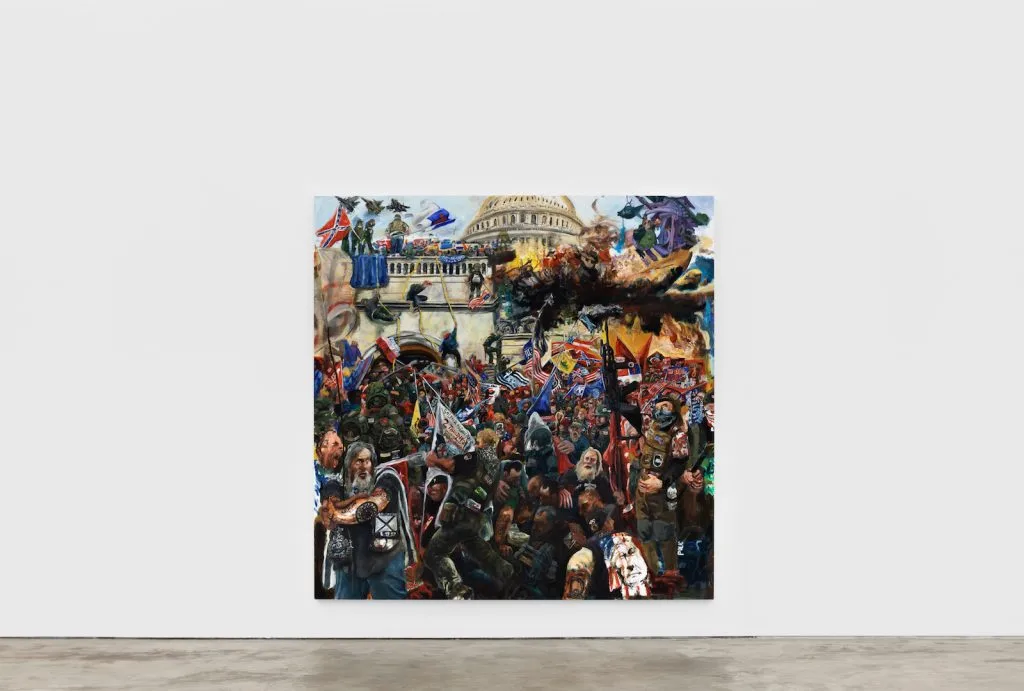
Curator and critic Johanna Fateman, who has written positively on Dupuy-Spencer’s Whitney Biennial contribution, described her as producing “convivial work… relatable in the best sense,” highlighting its direct engagement with lived political friction. Yet independent collector and market observer Alex Chen, who tracks mid-career American painters, offered a sharper assessment: “Socially engaged figuration delivered moral urgency and press coverage in the late 2010s, but many such artists, including Dupuy-Spencer, saw primary prices outpace sustainable secondary performance. Her death will likely spark short-term interest and possible price spikes at auction, but without deeper market infrastructure—consistent high sell-through and broad collector base—the long-term valuation trajectory remains constrained by the same forces hitting peers.”
The timing amplifies contradictions in the current art ecosystem. As institutions and fairs like Expo Chicago continue programming politically charged work, secondary market data from Art Basel/UBS reports and auction houses indicate selective contraction for narrative-driven painting. Dupuy-Spencer’s practice sat at the intersection of personal narrative and headline events, a strategy that secured biennial slots and press but rarely translated into blue-chip stability. Questions linger over estate handling, unpublished works, and whether her archive will reinforce or complicate the narrative of “forceful images seeking justice.”
Her passing also highlights representation gaps: while lauded for addressing whiteness, religion, and sexuality, Dupuy-Spencer operated in a segment where critical acclaim often outstripped durable commercial infrastructure for non-superstar figurative painters.
In 2026’s recalibrating market—marked by caution toward speculative topicality and renewed scrutiny of institutional power—Dupuy-Spencer’s career stands as evidence of both the visibility gains and structural limits facing artists who weaponize paint against American contradictions without fully resolving them on canvas or balance sheet.
Darren Smith is an Arts Reporter at Art Chain News covering contemporary art, digital art and NFTs, body art, and the intersections between these fields.
This article is based on direct examination of materials, market data, background interviews, and independent analysis.