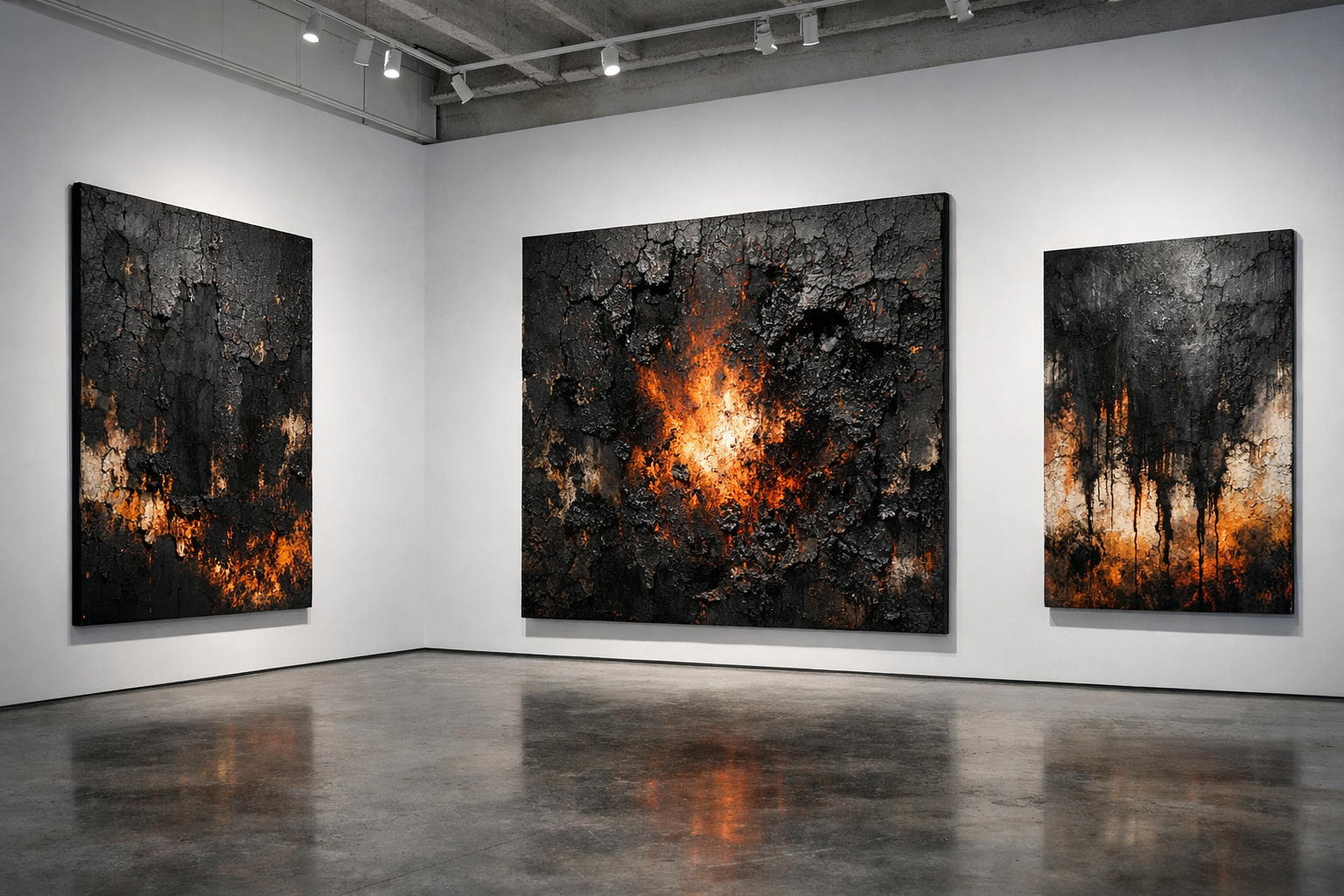
Detroit Sculptor’s Ritual Clay Works Close Amid Modest Sales and Local Focus
By Darren Smith, Arts Reporter
April 12, 2026
Austen Brantley’s solo exhibition “Burnt Offerings” ended its run at M Contemporary Art in Ferndale on April 11, 2026, with several ceramic sculptures already sold but the majority of the edition still available at prices starting around $2,000. The show, timed to coincide with the 60th Annual NCECA conference in Detroit, presented Brantley’s red clay figures as ritual objects drawing from biblical “burnt offerings” in Leviticus. Yet the timing and venue raise questions about whether this represents a breakthrough for a self-taught Detroit sculptor or another contained moment in a regional market that struggles to translate local visibility into broader secondary-market traction.

Brantley, born in 1995, works primarily in figurative sculpture, often in clay and bronze, referencing Greek, African, and African American historical and spiritual traditions. His pieces in “Burnt Offerings” feature detailed male and female forms in deep red surfaces, with titles such as “Ablaze,” “Cornucopia,” “Earthbound 1,” and “The Hunter.” Some works incorporate symbolic elements like a hand holding a winged heart. The gallery positioned clay not merely as material but as ritual, aligning the exhibition with themes of sacrifice, spirituality, and cultural memory. An artist talk on April 11 drew local attendance during the show’s final hours.
M Contemporary Art, founded by Melannie Chard and focused on emerging and mid-career Detroit artists, provided a platform during a high-traffic period for ceramics professionals. Listings on Artsy show select pieces priced between $3,300 and $4,950, with a few marked sold. Earlier works by Brantley have appeared at local venues like Detroit Artists Market, and he has completed public commissions, including memorials to figures such as Elizabeth Hamer and contributions toward a Joe Louis sculpture. Auction history remains thin: one early piece, “DIA 17,” appeared at DuMouchelle’s in 2021 with limited follow-through data. No major blue-chip secondary sales or institutional acquisitions appear in current 2026 reports.
A supportive voice comes from local coverage framing the work as a “spiritual experience” that honors resilience and underrecognized Black narratives. BridgeDetroit’s April 2 report highlighted the exhibition’s timing with NCECA and noted some sales, presenting Brantley as an active contributor to Detroit’s creative ecosystem.

Skeptical perspectives emerge from broader market observers tracking Black figurative sculpture in 2026. One independent collector familiar with Midwest scenes, speaking on condition of anonymity, noted: “Regional galleries do important work keeping artists visible, but consistent price growth and collector depth outside home turf remain elusive for many mid-career sculptors without strong auction comps or museum placements. Clay series risk being viewed as production rather than singular statements when edition-like elements appear.” This echoes 2026 Art Basel/UBS trends showing recalibration in mid-tier contemporary segments, where primary-market enthusiasm at fairs does not always convert to sustained secondary demand.
The exhibition fits Detroit’s active but localized Black art ecosystem, including initiatives like Sacred Spaces 2026 spotlighting Black-owned and -led venues. Brantley’s public projects underscore community investment, yet the gap persists between institutional rhetoric around representation and verifiable long-term market impact or critical penetration beyond regional press. Questions linger about who ultimately benefits: the gallery gains programming during NCECA foot traffic, the artist secures short-term visibility and sales, but systemic barriers—limited auction liquidity, collector concentration in coastal hubs—continue to constrain upward mobility for many Detroit-based practitioners.
In the current 2026 landscape of cautious buying and emphasis on proven trajectories, “Burnt Offerings” illustrates both the vitality of local ceramic practice and the persistent contradictions in how regional talent scales. Without stronger secondary indicators or wider institutional validation, such shows risk reinforcing a pattern where Detroit’s output stays celebrated at home while struggling for national recalibration.
Darren Smith is an Arts Reporter at Art Chain News covering contemporary art, digital art and NFTs, body art, and the intersections between these fields.
This article is based on direct examination of materials, market data, background interviews, and independent analysis.


