Exploring Bahamian Art at Venice Biennale 2026
By Darren Smith, Arts Reporter
May 7, 2026
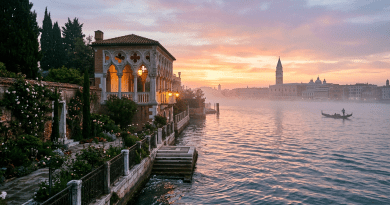
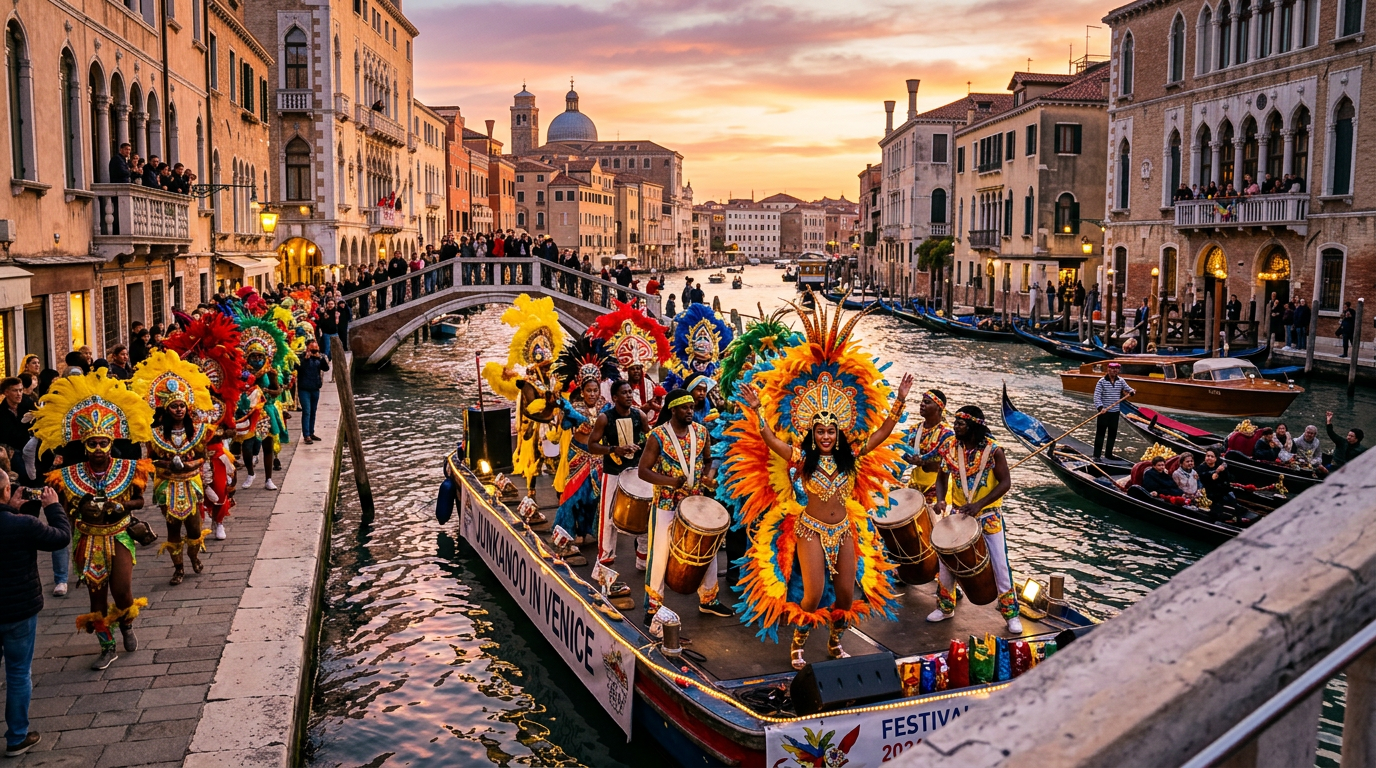
VENICE — In the sun-dappled Dorsoduro district, amid the historic canals and stone facades of Venice, the Bahamas Pavilion has emerged as one of the most resonant and visually electrifying national presentations at the 61st Venice Biennale. Titled In Another Man’s Yard: John Beadle, Lavar Munroe, and the Spirit of (Posthumous) Collaboration, the exhibition transforms the San Trovaso Art Space into a vibrant homage to Bahamian creativity, community resilience, and the pulsating energy of Junkanoo—the nation’s iconic processional festival.
Curated by renowned art historian Dr. Krista Thompson, the pavilion marks the Bahamas’ return to the Biennale after a 13-year hiatus. It pairs the late master John Beadle (1964–2024) with his former student Lavar Munroe (b. 1982) in an intergenerational dialogue that feels both intimate and expansive. Far from a static display, the show pulses with the collective spirit of Junkanoo, where costumes crafted from cardboard, crepe paper, and found materials are built, performed, and often repurposed in a cycle of creation and renewal.
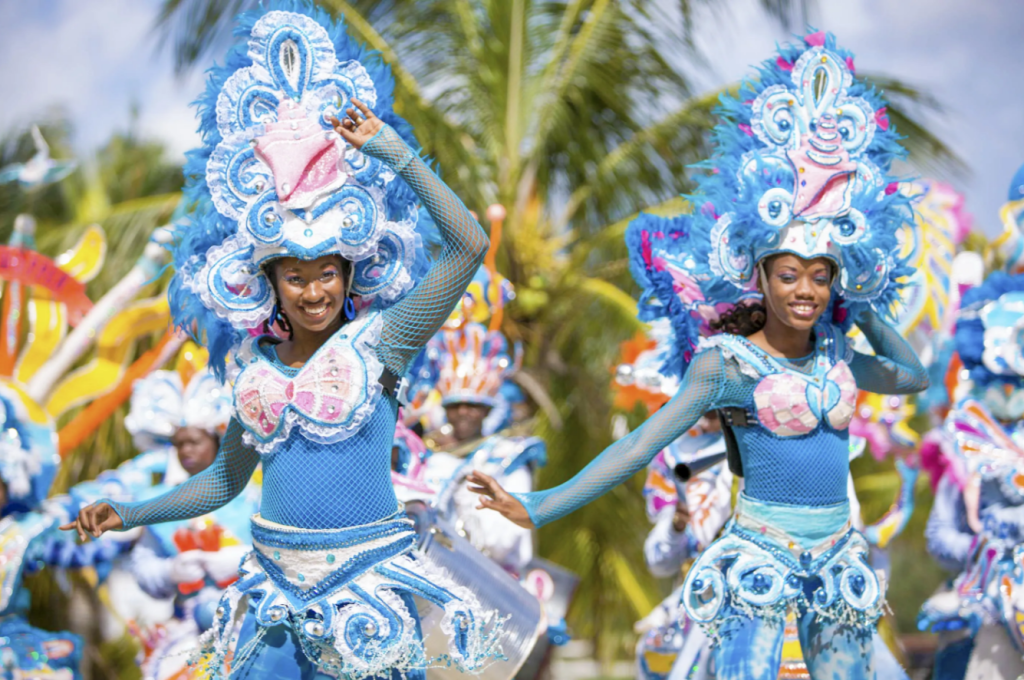
Junkanoo, which erupts across the Bahamas on Boxing Day and New Year’s Day, traces its roots to West African traditions and the resilience of enslaved communities. Groups compete with elaborate, larger-than-life costumes, accompanied by rhythmic goatskin drums, cowbells, and whistles. As Munroe explains, the tradition is “alchemy”—a communal production line involving designers, builders, pasters, decorators, and performers. Both Beadle and Munroe were steeped in this culture, drawing from its emphasis on transformation, memory, and collective labor.
Beadle, a towering figure in Bahamian art who studied at the Rhode Island School of Design and Tyler School of Art, elevated discarded materials—cardboard, tarpaulin, metal, and wood—into poetic sculptures and installations. His signature cardboard cutouts of human and natural figures, often drawn from Junkanoo iconography, spoke to migration, labor, and the foundational armatures of culture. Works like Inverted Tree, Man for Hire (2004) exemplify his ability to imbue the everyday with piercing presence. Tragically, Beadle passed away in 2024 at age 60, leaving what the National Art Gallery of the Bahamas called “a cavernous space” in the nation’s creative landscape.
Munroe, now based in Baltimore but deeply connected to his Grants Town roots, carries the baton forward. In Venice, he incorporates elements from Beadle’s studio—sketchbooks, ideas left unrealized, and materials including sailcloth from Haitian migrant sloops—into new works that echo the exhibition’s title. The phrase, drawn from a Derek Walcott poem, evokes trespassing into shared spaces of memory and creation. Munroe’s Bridge Over Troubled Water (2026) and a grand ten-panel painting reference Beadle’s motifs while staging a memorial Junkanoo procession, honoring both his mentor and ancestral spirits.

A riotous back room features actual Junkanoo costumes, including one worn by Munroe and another by his daughter, flanked by fierce tiger masks and a suspended white wave. These elements transform the space into a living archive of energy and reverence for the dead—a hallmark of Junkanoo celebrations.
Dr. Thompson’s curatorial vision aligns seamlessly with the Biennale’s overarching theme, In Minor Keys, conceived by the late Koyo Kouoh. The exhibition elevates “minor notes”—overlooked histories, community practices, and material ingenuity—into a major statement. As Thompson notes, the pavilion highlights how Bahamian artists use discarded materials and collaboration to address global issues of migration, memory, and resilience.
The project’s realization itself embodies Caribbean resourcefulness. After government funding challenges derailed an earlier Beadle-led effort in 2015, the 2026 pavilion was largely privately funded through community efforts, with major support from Baha Mar resort and its arts initiatives. John Cox, executive director of arts and culture at Baha Mar and co-founder of the Fuse Art Fair, describes the pavilion as a vital correction to stereotypical images of the Bahamas. “Nothing could be further from the truth than the idea of a monolithic Bahamas,” Cox told ARTnews. The exhibition showcases nuance, complexity, and the voices of Bahamian people.
Amanda Coulson, commissioner for the pavilion and a key advocate for Bahamian culture, emphasized the grassroots momentum: “When you come from the Caribbean, you figure out a way round things, to get things done.” The result is not only a national presentation but an act of cultural nation-building.
Critics and visitors have hailed the pavilion as one of the Biennale’s standouts. In a sea of often cerebral or politically charged national exhibitions, In Another Man’s Yard offers unapologetic joy, color, and emotional depth. Large-scale sculptural works assembled from repurposed Junkanoo strips create a sensory environment that invites movement and reflection. The posthumous collaboration feels organic rather than contrived—a true meeting of minds across time.

This presentation arrives at a pivotal moment. As global tourism evolves and cultural diplomacy gains new urgency, the Bahamas leverages its creative community to project a more authentic identity. Beadle’s maritime interests—viewing Venice as a kindred archipelago—add another layer of poetic symmetry. His research into Venetian boatbuilding traditions mirrored his own explorations of labor, migration, and seafaring narratives in Bahamian life.
The pavilion also underscores broader themes in contemporary art: sustainability through reuse, the power of mentorship, and the living archive of intangible cultural heritage. Munroe’s integration of his father’s ashes and parasails in past works, now extended to Beadle’s legacy, demonstrates art’s capacity to bridge absence with presence.
As previews conclude and the public opening approaches on May 9, In Another Man’s Yard stands as a testament to the enduring vitality of Bahamian creativity. It reminds audiences that true cultural power often emerges from the “minor keys”—the collective rhythms, repurposed materials, and intergenerational bonds that define resilient communities worldwide.
In an era of fragmentation, the Bahamas Pavilion offers a harmonious, celebratory counterpoint: a Junkanoo procession of ideas marching boldly onto the global stage.
Explore the exhibition: Bahamas Pavilion Official Site | Biennale Arte 2026 Bahamas Page | e-flux Announcement
Visit the San Trovaso Art Space in Venice before November 22, 2026, to experience this groundbreaking exhibition in person. Support Bahamian artists by following the pavilion’s initiatives and attending future Fuse Art Fair editions—cultural exchange thrives when we engage directly. Share your thoughts on social media using #BahamasInVenice to amplify these vital voices.
Cover image generated by Grok Imagine (xAI).