Uncovering Cranach’s Venus: Art, History, and Morality
By Darren Smith, Arts Reporter
May 12, 2026
In the hushed galleries of London’s National Gallery, Lucas Cranach the Elder’s Cupid Complaining to Venus (1526–27) hangs as a jewel of German Renaissance art. Its delicate eroticism and moral undertones continue to captivate viewers. Yet a newly highlighted historical photograph has cast an unsettling shadow: the painting once adorned Adolf Hitler’s private Munich apartment, where he entertained Eva Braun.
This revelation underscores the complex provenance challenges that haunt many European masterpieces displaced during the Nazi era. The story weaves artistic genius, wartime plunder, a daring journalistic acquisition, and ongoing ethical questions.
The Artist: Lucas Cranach the Elder and the Saxon Renaissance
Lucas Cranach the Elder (1472–1553), born Lucas Müller in Kronach, was one of the most versatile figures of the German Renaissance. As court painter to the Electors of Saxony from 1505, he ran a prolific workshop in Wittenberg producing altarpieces, portraits, and mythological scenes. A friend of Martin Luther, Cranach blended Protestant themes with classical subjects. His style—elongated figures, luminous nudes against detailed landscapes—often explored temptation and morality.
In this oil-on-panel painting (later transferred to board, 81.3 × 54.6 cm), Venus stands nude except for a red velvet hat with ostrich feathers and jeweled accessories in Saxon court fashion. She reaches for an apple branch while Cupid, stung by bees after stealing honeycomb, complains. A Latin inscription from Theocritus warns of fleeting pleasure mixed with pain. Venus’s flirtatious gaze toward the viewer adds irony.
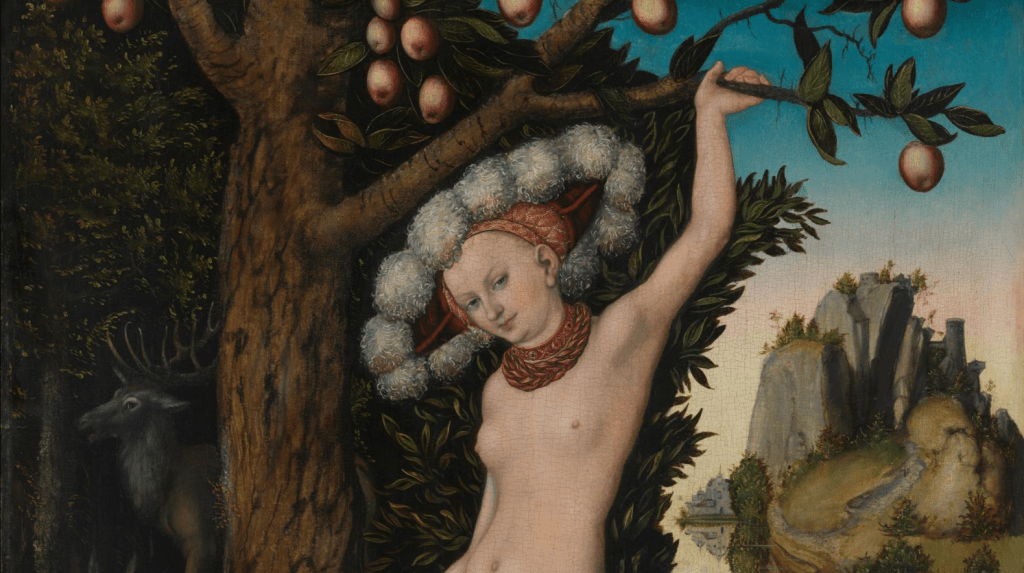

The work exemplifies Cranach’s Weibermacht (power of women) themes.
From Berlin Auction to Hitler’s Sitting Room
First documented in a 1909 Berlin auction from Emil Goldschmidt’s collection, the painting’s path through the 1930s is murky. Evidence now confirms it hung in Hitler’s Munich apartment at 16 Prinzregentenplatz. A rare early 1940s photograph, identified by provenance expert Birgit Schwarz, shows it in the living room. British journalist George Ward Price noted Hitler’s recent acquisition of a Cranach around 1937.
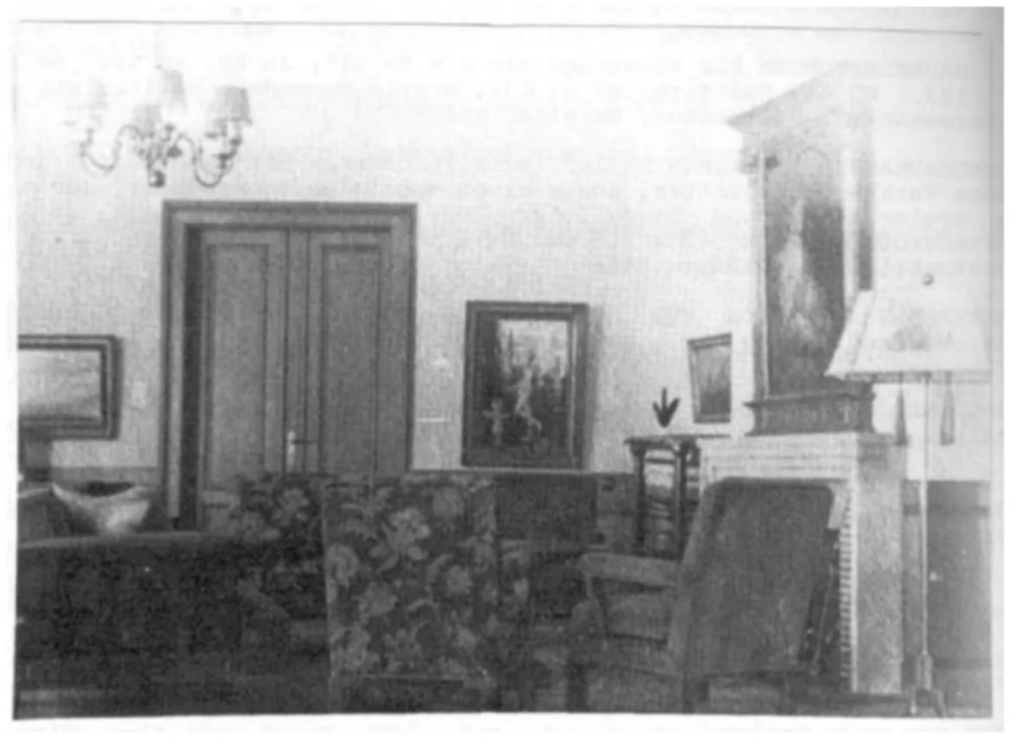
The National Gallery has been transparent about the 1933–1945 provenance gap since at least 2008 and continues to seek information.
Post-War Odyssey: A Journalist’s Prize and Transatlantic Voyage
In 1945, American war correspondent Patricia Lochridge Hartwell (1916–1998) was allowed to select a work from a U.S.-controlled art warehouse in southern Germany. She chose the Cranach and took it to the United States. In 1963, it passed through E. & A. Silberman Galleries in New York to the National Gallery in London. The dealer’s claimed provenance was later corrected.
Enduring Legacy and Ethical Reckoning
Today, Cupid Complaining to Venus remains a highlight in Room 55, featured in exhibitions like Strange Beauty (2014). It reflects broader Nazi-looted art research efforts, with museums prioritizing transparency and restitution.
The painting’s journey—from Wittenberg workshop to Hitler’s walls, an American journalist’s possession, and a public London gallery—encapsulates 20th-century triumphs and tragedies. As new details emerge, it prompts reflection on beauty, ethics, and history.
What do you think? Visit the National Gallery to see it in person, explore provenance research, or share this story. Learn more at the National Gallery collection page, read the latest reporting in The Art Newspaper, review the full catalogue entry, check Wikipedia provenance summary, or support initiatives via the Commission for Looted Art in Europe. Your engagement preserves cultural heritage.
Cover image is Ai generated