Trailblazing Native American Artist Jaune Quick-to-See Smith Dies at 85
Here is your award-winning-style news article proofread and lightly edited for accuracy, clarity, flow, grammar, style consistency, and journalistic polish. I’ve incorporated
Jaune Quick-to-See Smith, the fearless Native American artist whose powerful, incisive works compelled the nation to confront its legacy of Indigenous erasure, cultural appropriation, and colonial violence, has died at 85.
The groundbreaking painter, printmaker, curator, and activist passed away on January 24, 2025, at her home in Corrales, New Mexico, after a long battle with pancreatic cancer. Her death was announced by Garth Greenan Gallery in New York, her longtime representative.
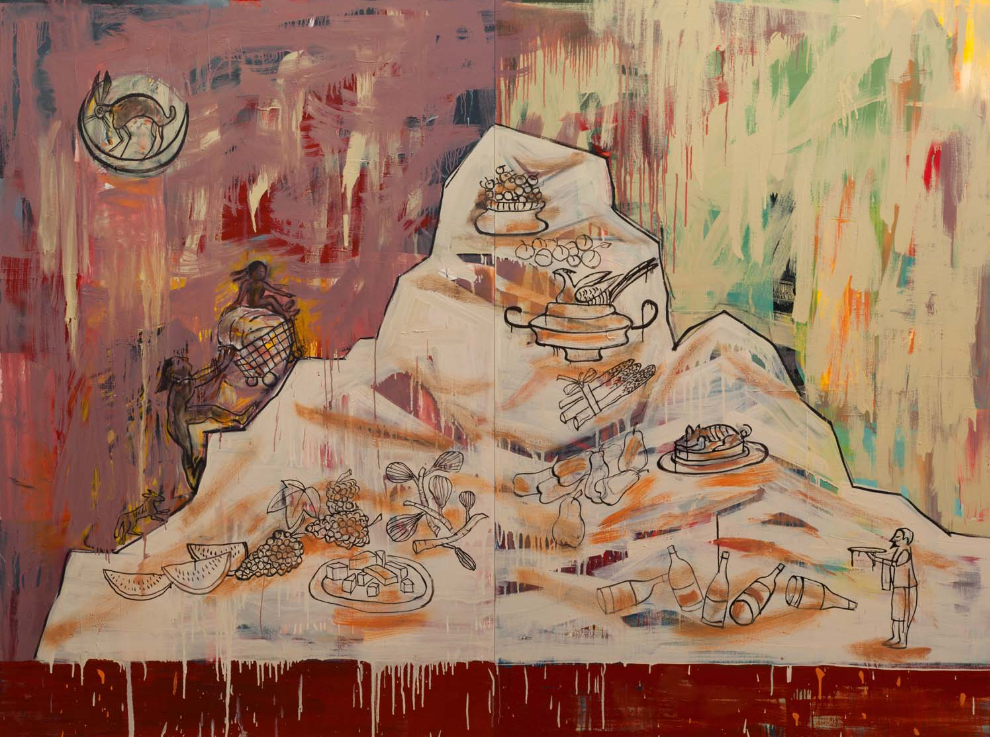
Born Jaune Quick-to-See Smith on January 15, 1940, at the St. Ignatius Mission on the Flathead Indian Reservation in Montana, she was an enrolled member of the Confederated Salish and Kootenai Tribes. Raised in the realities of reservation life—her father was a horse trader—Smith drew from a deep well of personal heritage, traditional Native storytelling, and the formal innovations of modernists such as Pablo Picasso, Paul Klee, and Robert Rauschenberg. Her art became a potent instrument of critique, fusing abstraction, collage, text, and found objects to dismantle stereotypes, expose environmental devastation, and reclaim Indigenous narratives amid enduring colonial legacies.
Smith rose to prominence in the 1970s and 1980s as one of the first Native American women to achieve broad recognition in the mainstream contemporary art world. She mounted more than 80 solo exhibitions, curated over 30 shows spotlighting Indigenous artists, and lectured at nearly 200 institutions globally. Her signature large-scale mixed-media paintings incorporated maps, news clippings, consumer waste, and ironic appropriations of American symbols—bison skulls branded with corporate logos, maps stained with blood-red handprints—delivering visual arguments that were intellectually razor-sharp and aesthetically commanding.
In a historic milestone, she became the first Native American artist to have work enter the permanent collection of the National Gallery of Art in Washington, D.C. In 2023, she made history once more as the first Native artist to receive a solo exhibition at the National Gallery with her retrospective “Jaune Quick-to-See Smith: Memory Map,” which spanned decades of work bridging personal memory and collective trauma.
Her honors were extensive and richly deserved: the Joan Mitchell Foundation Painters Grant (1996), the Women’s Caucus for Art Lifetime Achievement Award (1997), election to the National Academy of Design (2011), the Georgia O’Keeffe Museum’s Living Artist of Distinction Award (2012), the Anonymous Was A Woman Award (2022), the Artists’ Legacy Foundation Artist Award (2023), four honorary doctorates, and fellowships from United States Artists and other organizations.
Beyond her studio, Smith was a tireless advocate. She mentored generations of Indigenous artists, organized exhibitions to elevate underrepresented voices, and leveraged her platform to address urgent issues: land rights, ecological destruction, cultural commodification, and the persistent effects of settler colonialism. Her work balanced righteous anger with sharp wit, demanding accountability while celebrating Native resilience and joy.
“Her art was resistance and reclamation,” said one curator who collaborated with her closely. “She didn’t merely paint—she bore witness, challenged myths, and insisted that Indigenous stories belong at the very center of American art history.”
Smith is survived by her family, her extended community in the Confederated Salish and Kootenai Tribes, and a towering legacy that continues to inspire artists, activists, and audiences to confront—and reckon with—the full, unflinching complexity of this nation’s past and present.
In an era when Indigenous voices are finally receiving the prominence they have long deserved, Jaune Quick-to-See Smith’s fearless vision endures as both a guiding light and a clarion call to action.