Remembering Paula Kamps: A Tribute to a Rising Star
By Darren Smith, Arts Reporter
May 28, 2026
The art world is mourning the loss of Paula Kamps, a German-born painter whose ethereal works captured the hazy boundaries between memory and presence. Kamps passed away at the age of 36. Her Paris gallery, sans titre, confirmed the news, describing her as “an artist of rare sensitivity.” While the cause of death has not been publicly disclosed, tributes have poured in from across Europe and the United States, where she lived and worked in Chicago.
Born on February 12, 1990, in Cologne, Germany, as Paula Karoline Kamps, she pursued a rigorous education blending visual art with intellectual inquiry. She studied at the prestigious Kunstakademie Düsseldorf, graduating as a Meisterschülerin in 2016. Her teachers included Lucy McKenzie, Tomma Abts, and Elizabeth Peyton. She also explored philosophy at the Freie Universität Berlin, an interest that infused her practice with layers of introspection. Her work consistently probed the unreliability of memory, the evasiveness of meaning, and humanity’s desire for connection—themes rendered through delicate, almost translucent applications of pigment.
Kamps’s distinctive technique occupied a space between watercolor and drawing. She employed thin washes of ink, watercolor, and other media to create large, luminous “stains” that revealed fragmented figures, wilting flowers, and scenes from daily life. These compositions often hovered between figuration and abstraction, with forms appearing to emerge from or dissolve into the canvas. Critics noted how her softly hued paintings evoked the fleetingness of recollection—blurred edges suggesting moments slipping away, much like dreams upon waking. As one gallery statement reflected, her pieces carried an “arcane symbology” that invited viewers to linger in uncertainty.
Her career gained momentum quickly after graduation. Solo exhibitions followed at venues including Galerie Christine Mayer in Munich, M. LeBlanc in Chicago—where she made her U.S. solo debut with “Rain or Shine” in 2021—and sans titre in Paris. She participated in group shows at powerhouses like Galerie Max Hetzler in Berlin and The Arts Club of Chicago, and her works entered permanent collections, notably the X Museum in Beijing. Residencies took her to Ox-Bow in Michigan, New York’s Lower East Side Printshop, and other international sites, further enriching her poetic approach. Kamps also published artist’s books featuring her writing, blending visual and literary expression.
In Chicago, Kamps became a beloved figure not only for her art but for her generosity as an educator. She taught at the School of the Art Institute of Chicago, mentoring students who described her as deeply insightful and encouraging. M. LeBlanc Gallery, which represented her and hosted multiple exhibitions, highlighted her impact on the local community.

Kamps’s oeuvre evolved yet remained rooted in tenderness. Later pieces incorporated oil, pigments, distemper, and rabbit glue on canvas, expanding scale while preserving the intimate, dissolving quality that defined her early watercolors. Titles like “The Harboring,” “Let the Magic Heart Give Your Love Rating,” and “Who Would Trouble Oneself About a Flower?” hinted at emotional undercurrents—protection, affection, transience. Her fragmented narratives resisted straightforward interpretation, mirroring the complexity of human experience. Collectors and institutions responded enthusiastically; her market presence grew steadily alongside critical acclaim.
Beyond the canvas, Kamps cultivated a life intertwined with creativity and community. Friends and collaborators remember her warmth, her thoughtful conversations, and her commitment to fostering dialogue through art. In an era often dominated by spectacle, her quiet, probing works offered a counterpoint—a space for contemplation amid noise. As galleries and peers reflect on her legacy, it becomes clear that Kamps’s influence extended far beyond sales or exhibitions. She touched those who encountered her art by inviting them to embrace ambiguity and cherish impermanence.
The suddenness of her passing has left the contemporary art scene reflecting on the fragility of creative lives. Tributes emphasize not only what she achieved in a relatively short career but the potential that remains unrealized. Her paintings, now imbued with added poignancy, continue to resonate as testaments to sensitivity and resilience. Institutions holding her work, from European kunstvereins to Asian museums, will undoubtedly see renewed interest as curators and scholars revisit her contributions.
Paula Kamps leaves behind a body of work that feels both timely and timeless. In honoring her memory, the art community reaffirms the value of artists who draw us gently toward the ineffable. Her fragments of figures and flowers remind us that beauty often lies in what is partially seen, partially remembered, and deeply felt.
To explore Paula Kamps’s works, read her full biography, or view available pieces and past exhibitions, visit sans titre gallery. For additional context on her Chicago exhibitions, see M. LeBlanc Gallery. Share your own reflections on her art in the comments below—let’s keep conversations about her legacy alive.
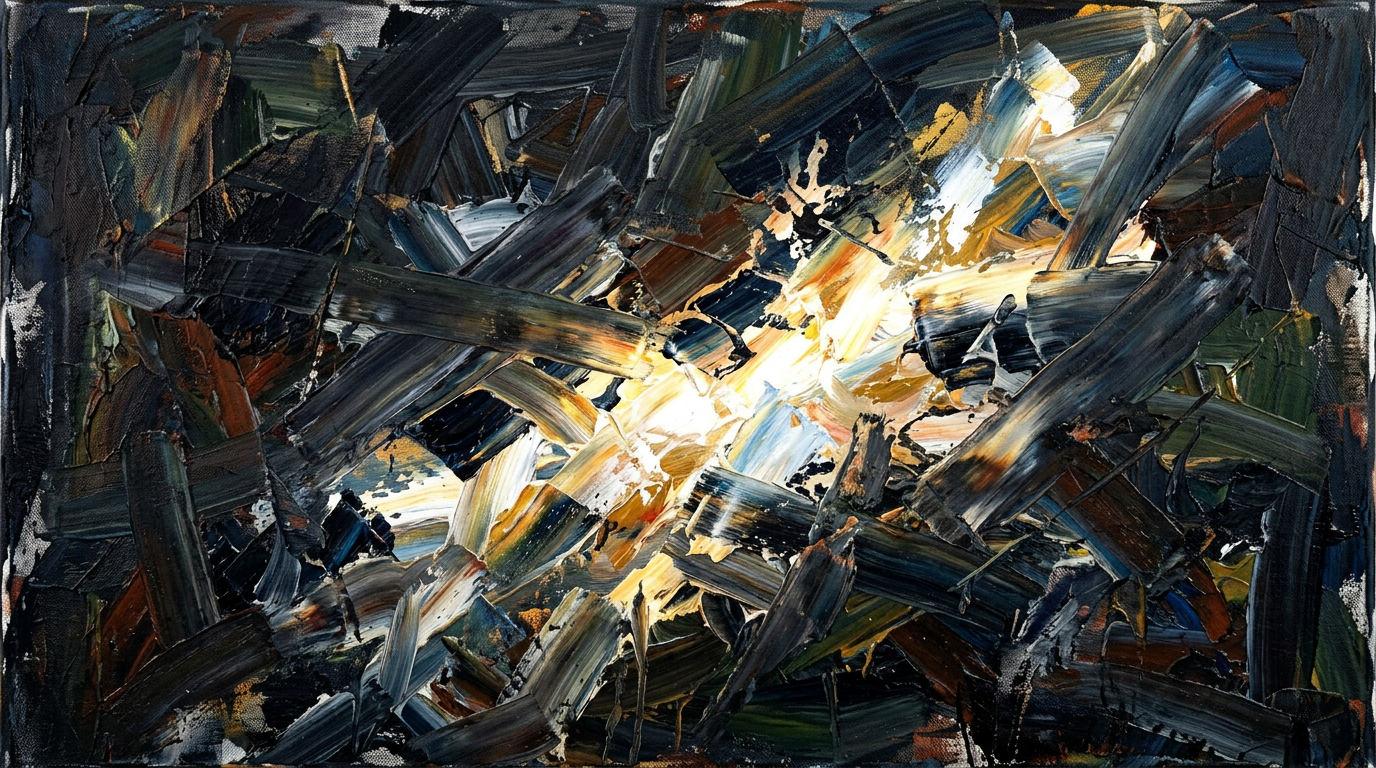
The cover image in this article was AI-generated.


