‘The Violence of Racist Tyranny’: South African Artist Dumile Feni’s African Guernica Enters Dialogue with Picasso Masterpiece
MADRID — In a bold curatorial move challenging Eurocentric narratives in modern art, Madrid’s Museo Reina Sofía has placed Dumile Feni’s searing 1967 charcoal drawing African Guernica directly opposite Pablo Picasso’s iconic Guernica (1937). The juxtaposition launches the museum’s new annual exhibition series, History Doesn’t Repeat Itself, But It Does Rhyme.
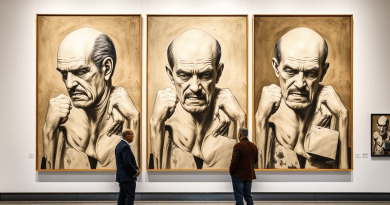
Feni (1942–1991), a self-taught South African artist often called “the Goya of the townships,” created his monumental work amid the brutal realities of apartheid. Measuring over two metres square and executed on newsprint, the chaotic, nightmarish composition depicts distorted human and animal figures in states of terror, anguish and defiance—evoking the “slow violence” and systemic oppression faced by Black South Africans under racist rule.

“It’s the violence, the slow violence, and the actual violence of racist tyranny,” explained curator Tamar Garb, contrasting Feni’s response to state repression with Picasso’s cri de coeur against the bombing of the Basque town of Guernica during the Spanish Civil War. The exhibition also includes four of Picasso’s preparatory drawings, inviting visitors to reconsider both works in a transnational dialogue on atrocity and resistance.
Museo Reina Sofía director Manuel Segade described the initiative as an effort to “correct old biases” by pairing the museum’s star attraction with voices from different cultural and geographical frameworks. Feni’s drawing, loaned from the University of Fort Hare’s National Heritage and Cultural Studies Centre, hangs in the precise spot where Picasso’s mural first greeted visitors upon its arrival in Madrid 34 years ago.

The display runs until 22 September 2026 and has already sparked discussion among critics and audiences about global histories of conflict, from European fascism to colonial and apartheid-era oppression. Feni, who lived in exile for much of his later life, produced art that bore witness to township life under siege, blending raw expressionism with profound humanity.

Art historians note that while Picasso’s Guernica became a universal anti-war symbol, Feni’s counterpart offers a vital African perspective on tyranny that has long been underrepresented in major Western institutions.
As Segade observed, history may not repeat, but its rhymes resonate powerfully when placed in conversation. The pairing not only elevates Feni’s legacy but prompts fresh readings of one of the 20th century’s most famous paintings through the lens of continued struggles against injustice.