Revolutionary Dissolving Microneedle Tattoo for Health Monitoring
By Darren Smith, Arts Reporter
May 20, 2026
In a breakthrough that blurs the line between body art and medical diagnostics, researchers have developed a dissolving microneedle tattoo capable of real-time subsurface skin temperature monitoring. Published today in Nature Sensors, this innovative technology—dubbed the SMEAR-ULM system—promises to revolutionize early detection of conditions like melanoma while offering a painless, temporary alternative to traditional wearables.
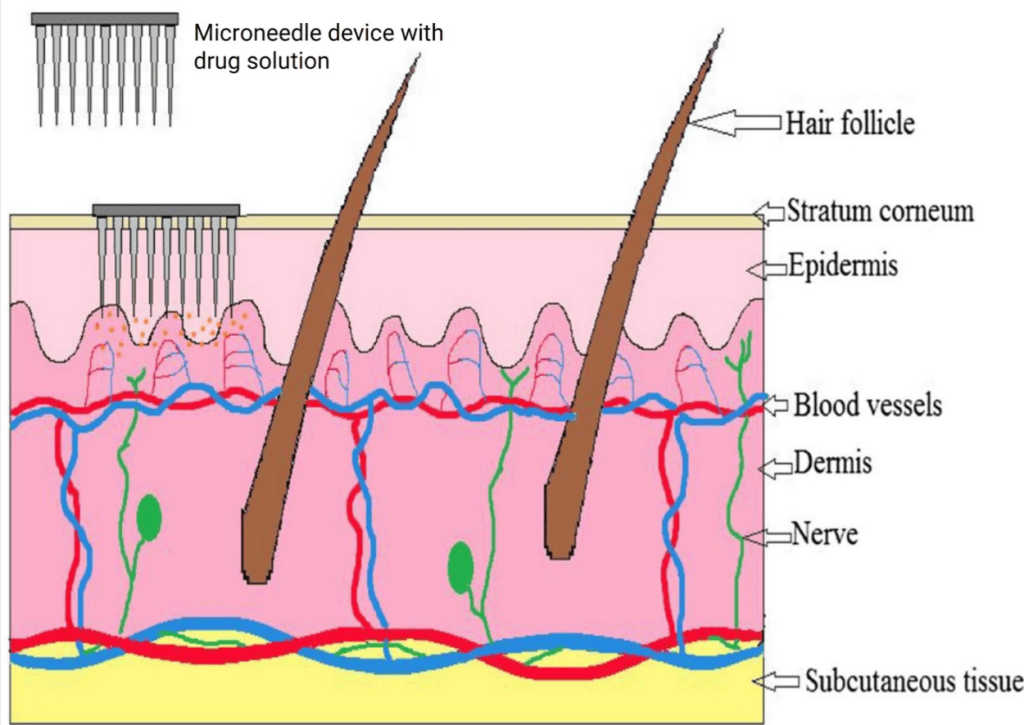
At its core, the system uses a patch of microscopic, dissolvable needles loaded with specially engineered upconverting nanoparticles (UCNPs). When pressed onto the skin, these microneedles painlessly penetrate the outer layer and deposit the particles into the dermis, creating an invisible “tattoo” that responds to temperature changes through alterations in luminescence lifetime. Unlike surface-level sensors affected by ambient conditions, this intradermal approach provides precise subsurface readings with an impressive 0.1°C resolution at submillimeter scales and video rates up to 30 Hz.
“This represents a significant leap in transdermal sensing,” notes the research team led by Y. Lai and collaborators. Traditional temperature monitoring often struggles with depth and accuracy, particularly for detecting subtle thermal anomalies beneath the skin—key indicators in diseases where metabolism alters local heat signatures. Melanoma, for instance, can produce detectable temperature variations even in its earliest micro-stages due to increased vascular activity and cellular proliferation.

The technology builds on years of advances in microneedle drug delivery and luminescent nanomaterials. Dissolving microneedles, made from biocompatible polymers, have long been explored for vaccine delivery and interstitial fluid sampling. Here, the patch integrates core-shell UCNPs—rare-earth-doped particles that convert near-infrared light into visible or shorter-wavelength emissions. These particles exhibit strong thermal coupling: their luminescence lifetime shifts predictably with temperature, enabling non-invasive optical readout.
A critical innovation lies in the all-optical streak camera component, which allows single-shot lifetime mapping without repetitive scanning. This enables real-time, wide-field thermo-dermoscopy—essentially turning the skin into a living thermal map. In ex vivo tests, the system demonstrated high-fidelity wide-field temperature sensing. In vivo experiments on mouse models with micro-melanoma xenografts (as small as four to seven days old) successfully highlighted thermal differences, offering a pathway for in situ early diagnosis.
Safety and practicality were paramount. The microneedles dissolve quickly, leaving behind stable nanoparticles that integrate harmlessly. UCNPs are chosen for biocompatibility, photostability, and minimal background interference. The tattoo remains functional while being imperceptible under normal light, addressing privacy concerns.
This development arrives amid growing excitement around medical tattoos. Earlier work explored colorimetric dermal tattoos for biomarker detection and thermochromic inks. Electronic skin patches and graphene-based e-tattoos have monitored surface temperature, but few achieve true intradermal precision. The SMEAR-ULM system stands out for its seamless integration.
Experts foresee broad applications beyond oncology. Continuous temperature mapping could aid wound healing, inflammation tracking, or fertility monitoring. In resource-limited settings, a simple patch paired with a smartphone reader could democratize diagnostics. For athletes or workers in extreme environments, it offers real-time thermal stress alerts.
Challenges remain, including long-term nanoparticle retention, regulatory approval for human use, and scalability of the optical readout. Human trials will be essential, as skin thickness and optical properties differ from mouse models. Cost-effectiveness and telemedicine integration will shape adoption.
Nevertheless, the implications are profound. As Guoan Zheng and colleagues highlight, this microneedle tattoo paves the way for functional dermal implants that could one day deliver therapies in response to detected changes—closing the loop in closed-loop healthcare.
The convergence of nanotechnology, optics, and minimally invasive delivery heralds a future where health monitoring feels like an enhancement of the body’s own capabilities. What began as a clever fusion of tattoo artistry and engineering may soon become a standard tool in preventive medicine.
Ready to explore the future of skin-based health tech? Read the full research in Nature Sensors and the accompanying News & Views. Share your thoughts on how this could impact personal wellness—comment below or connect with biomedical experts driving these advances.
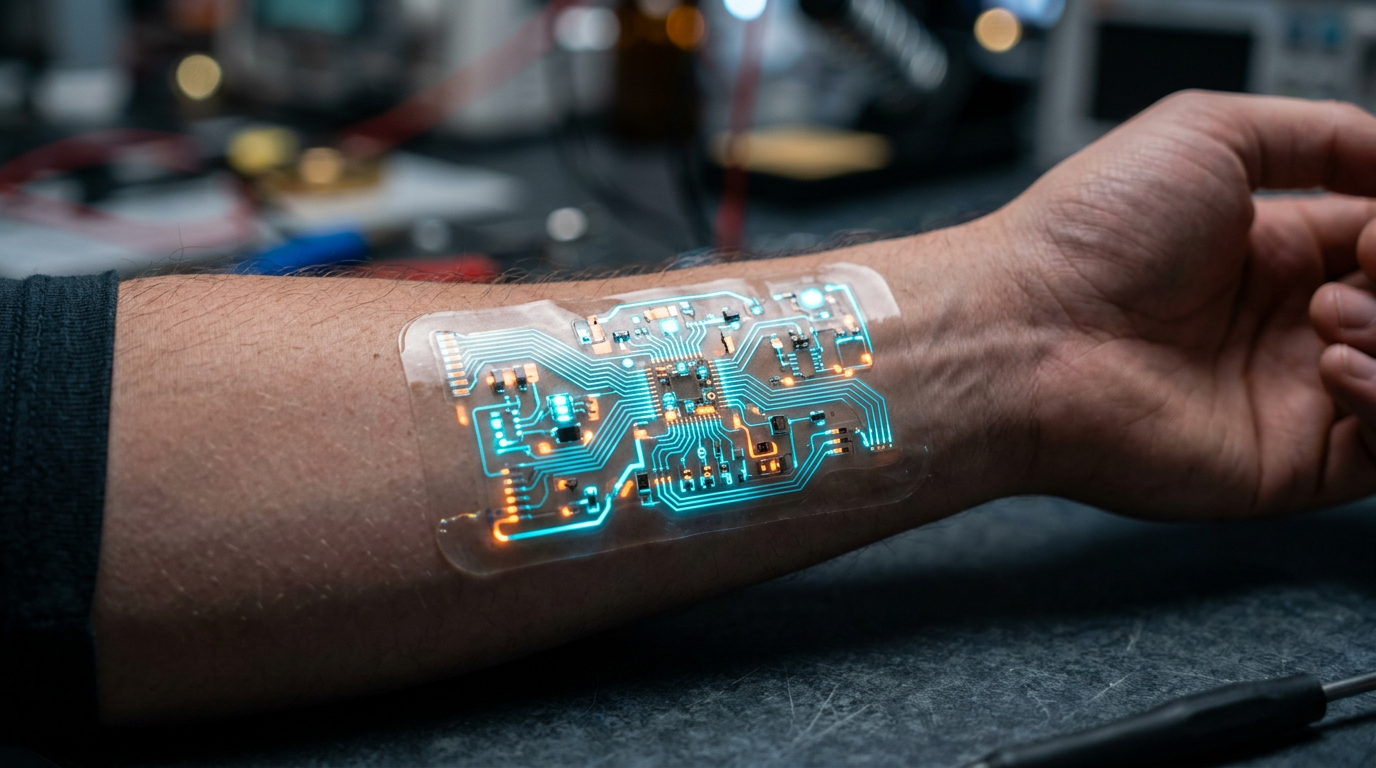
Cover image is Ai generated