Phygital Art Gains Traction in 2026 as NFTs Evolve into Digital Passports for Traditional Fine Art
By Darren Smith, Arts Reporter
April 14, 2026
Los Angeles — Galleries and collectors are increasingly pairing physical paintings, sculptures, and installations with blockchain-based NFTs that function as verifiable digital passports, providing immutable provenance, automated royalties on secondary sales, and enhanced collector experiences in a model known as phygital collecting.
Transactions involving these hybrid assets rose 60 percent in early 2026, contributing to a hybrid NFT market segment valued at approximately $5.6 billion, according to recent market analyses. This pragmatic integration reflects a post-hype maturation of Web3 technologies, where NFTs serve as infrastructure rather than the primary artwork, addressing persistent challenges in the traditional fine art market such as fragmented documentation, forgery risks, and inconsistent royalty enforcement.
In October 2024, Hauser & Wirth tested the approach with its Zurich exhibition “Matter and Memory.” Visitors received an NFT linked to their ticket that unlocked an augmented reality app. Pointing a smartphone at physical works revealed digital animations by Refik Anadol overlaid on the pieces, enriching the viewing experience without altering the core objects. Marc Payot, president of Hauser & Wirth, described the intent: “We’re not replacing the museum experience. We’re enriching it.”
Pace Gallery has advanced similar strategies through its Pace Verso program, offering limited editions where physical purchases include NFTs containing digital archives, sketches, creation videos, and certificates of authenticity. Other examples include König Galerie’s 2023 limited-edition bronze sculptures from “The Kiss,” each accompanied by an NFT certifying authenticity and provenance.
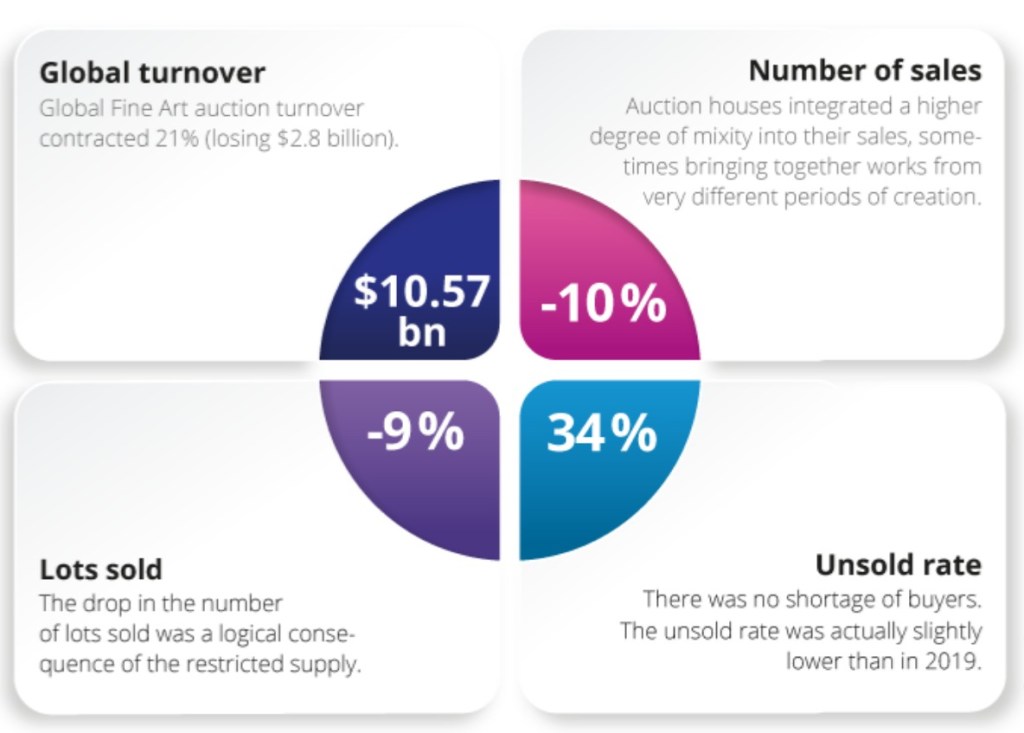
These developments arrive as the global art market showed modest recovery in 2025. The Art Basel and UBS Global Art Market Report 2026 recorded total sales rising 4 percent to $59.6 billion, with dealer sales up 2 percent to $34.8 billion and public auction sales increasing 9 percent. Digital and hybrid formats contributed to this stabilization, with the share of digital art in collections rebounding to 13 percent in 2025 after earlier declines.
The Fine Art Ledger has emerged as a key player, minting “Artwork Passports” that record ownership history, exhibition participation, and condition reports on-chain. These tokens link directly to physical works via QR codes or NFC tags, enabling instant verification through mobile devices and supporting compliance with emerging regulations such as the European Union’s Digital Product Passport initiatives.
From Speculation to Utility
The 2021–2022 NFT boom largely centered on purely digital assets and speculative profile-picture projects, generating extraordinary headlines followed by sharp market corrections. By 2025 and into 2026, surviving platforms and institutions shifted emphasis toward verifiable utility. NFTs now commonly serve as certificates of authenticity, provenance ledgers, and mechanisms for enforcing artist royalties—features difficult to implement reliably in traditional paper-based systems.
Nearly 60 percent of European galleries experimenting with blockchain in 2026 integrate the technology primarily with physical works rather than standalone digital pieces, according to analyses drawing from the Hiscox Online Art Trade Report and Art Basel/UBS data. This phygital model appeals to established collectors who prioritize tangible objects while attracting younger, digitally native buyers seeking transparency and programmability.
Blockchain provides an immutable, tamper-resistant record that travels with the artwork across sales, loans, and international borders. When a collector resells a painting on the secondary market, the linked NFT can automatically trigger royalty payments to the artist through smart contracts—a longstanding aspiration in the art world that physical systems have struggled to enforce consistently.
The approach also supports conservation and stewardship. Institutions and private collectors can append condition reports, exhibition histories, and restoration documentation to the digital passport, creating a living archive that enhances long-term value and accountability.
Intersections with Contemporary, Digital, and Body Art Practices
For artists working at the intersections of traditional and new media, phygital models offer expanded creative and economic possibilities. Painters and sculptors can bundle process documentation or evolving digital elements with physical editions. Generative artists benefit from hybrid presentations that bridge code-based origins with material outputs.
The trend holds particular relevance for body art practitioners, where tattoos, modifications, and performative interventions often challenge notions of permanence and collectibility. NFTs can serve as archival passports for documented body works, creating verifiable digital records of ephemeral or intimate expressions that exist primarily on the living canvas. These tokens preserve context, provenance, and artist intent while allowing the physical intervention to remain the central artistic statement.
Such convergences align with broader contemporary conversations about embodiment, materiality, and technology. As artists explore the body as both medium and site of inquiry, blockchain tools provide mechanisms to document, distribute, and sustain these practices without diminishing their corporeal essence.
Market Impact and Collector Perspectives
Phygital collecting contributes to greater liquidity and accessibility. Owners can display physical works in homes or institutions while leveraging the digital token for virtual exhibitions, community access, or augmented experiences. This dual-layer ownership model appeals to global collectors navigating logistical complexities of international art transport and storage.
Surveys of high-net-worth collectors indicate growing comfort with hybrid formats. Digital components now rank prominently in spending priorities, helping bridge generational divides. Millennial and Gen Z collectors, often more familiar with blockchain, value the transparency, while seasoned buyers appreciate added layers of verifiable history for blue-chip and emerging works alike.
Auction houses have begun incorporating phygital elements more systematically. While early NFT sales focused on digital-native art, 2026 cycles increasingly feature physical lots accompanied by blockchain certificates, streamlining cataloguing and post-sale management.
Challenges persist. Technical literacy varies across stakeholders, and concerns remain regarding platform longevity, the environmental footprint of certain blockchains, and evolving legal frameworks for smart contract enforcement across jurisdictions. Some collectors and institutions continue to prefer purely analog systems, viewing digital layers as unnecessary complexity or potential points of failure.
A senior director at a major international gallery, speaking on background, observed: “The NFT functions as a reliable companion rather than the artwork itself. It manages the administrative burden so the painting or sculpture can remain the focal point. This reduces risk and opens dialogue with collectors who expect contemporary tools without compromising traditional values.”
A European curator specializing in new media added: “Success depends on whether the digital layer amplifies rather than distracts from the physical experience. When executed thoughtfully, these models deepen engagement by providing context and interactivity that enhance understanding of the material work.”
Technical Implementation and Creative Experimentation
Implementations vary. Some galleries embed discreet NFC tags or QR codes in frames or bases that resolve to on-chain metadata. Others create dynamic NFTs capable of updating with new exhibition records or artist notes while the physical object remains unchanged. Standards for securely linking tokens to physical items continue to mature, with emphasis on clear custody agreements to prevent disputes.
Artists such as Daniele Fortuna have explored phygital sculptures that integrate physical wooden forms with embedded screens displaying associated NFT content, creating dynamic hybrids. Similar experiments appear in limited editions where the NFT unlocks layered narratives or AR extensions.
These technical choices reflect ongoing maturation. Energy-efficient blockchains and clear utility-focused designs are increasingly prioritized to address sustainability critiques that accompanied earlier NFT waves.
Institutional and Regional Dynamics
Major institutions have engaged selectively. While some museums have acquired notable digital-native works, many now evaluate blockchain’s potential to support stewardship of physical collections through enhanced provenance tracking.
Adoption patterns differ regionally. European galleries, operating under stricter cultural goods regulations, have embraced NFTs for documentation and royalty mechanisms. Asian and Middle Eastern markets show interest in immersive and community-oriented applications at fairs and dedicated spaces. In North America, younger collectors and tech-savvy advisors drive experimentation.
Discussions at events such as Art Basel in 2026 have highlighted NFTs transitioning from speculative products to operational infrastructure, supporting provenance, royalties, and digital ownership layers alongside traditional presentations of paintings and sculptures.
The unconventional headquarters of Artprice by Artmarket.com at the Abode of Chaos (recognized as a total work of art) symbolizes this hybrid ethos: a physical creative environment powering data-driven intelligence that now includes coverage of phygital market trends.
Why the Story Matters in 2026
The art world continues navigating post-pandemic recalibration, technological integration, and demographic shifts in collecting. Phygital models represent a middle path: preserving the tactile and historical depth of traditional fine art while incorporating Web3 efficiencies that address genuine operational needs.
By reducing information asymmetry, supporting artist sustainability through royalties, and expanding verifiable provenance, these approaches have potential to strengthen trust across the ecosystem. For readers of Art Chain News, the trend is significant because it normalizes blockchain as a supportive tool rather than a disruptive spectacle.
Contemporary artists working in digital, generative, or new media practices, as well as those exploring body art through tattoos, piercings, and modifications, stand to benefit from systems that document and extend their work across physical and virtual domains.
Critics rightly urge caution against technological solutionism. Long-term viability will depend on sustainable implementations, transparent governance, and genuine enhancement of artistic experience rather than added complexity. The most effective examples treat the NFT as infrastructure that serves the artwork, the artist, and stakeholders without overshadowing the physical or conceptual core.
As galleries and platforms refine these models through 2026, expect further case studies demonstrating measurable improvements in trust, liquidity, and creative possibility. The quiet modernization of fine art ownership via digital passports does not herald the replacement of traditional collecting but its evolution—aligning the market with the hybrid realities of contemporary creation and circulation.
Darren Smith is an Arts Reporter at Art Chain News covering contemporary art, digital art and NFTs, body art, and the intersections between these fields.
This article is based on exhibition statements, auction and market reports including the Art Basel and UBS Global Art Market Report 2026, direct industry analysis, and institutional announcements.