Minimalist Masterpieces from a Philadelphia Home Set to Ignite Christie’s Spring Auctions
NEW YORK — A landmark private collection of Minimalist art has been treasured for a long time. It is cherished in the intimate setting of a Rittenhouse Square townhouse. It will headline Christie’s marquee sales in May. The combined presale estimate exceeds $30 million.
Assembled over decades by the late Henry S. McNeil Jr., heir to the Tylenol fortune and a discerning Philadelphia connoisseur, the trove redefines how audiences perceive the austere movement. Rather than encountering Donald Judd, Dan Flavin, Carl Andre and Sol LeWitt in sterile gallery spaces, McNeil lived among these works, creating a warm, livable environment that highlighted their color, serenity and human scale.
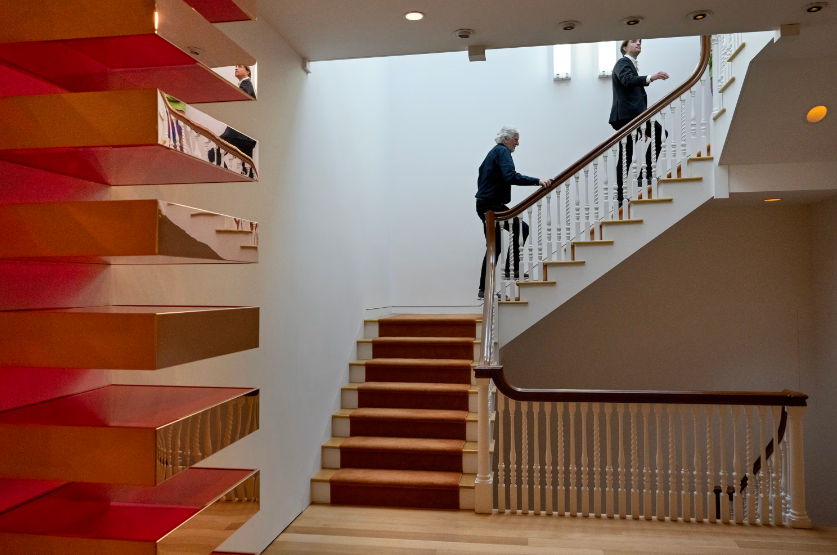
Central to the offering is an iconic Donald Judd “stack” from 1969 — a copper construction with red Plexiglas — long considered one of the most coveted examples to appear at auction and estimated in the low eight figures. Other highlights include the first edition of Dan Flavin’s breakthrough fluorescent light work, the diagonal of May 25, 1963 (to Constantin Brancusi), alongside significant sculptures and drawings by Sol LeWitt and floor pieces by Carl Andre.
Christie’s has titled the sale “Defined Space: The Collection of Henry S. McNeil Jr.”, underscoring McNeil’s curatorial vision. “He created both a home and a collection that positioned Minimalism as warm, alluring, colorful, and entirely livable,” noted Johanna Flaum, Christie’s Vice Chairman of 20th and 21st Century Art.

McNeil, who passed away in 2025 at age 81, carefully integrated these monumental pieces into daily life, complementing them with design objects including works by George Nakashima. The collection’s global tour will precede the New York auctions on May 20 and beyond.
Market observers anticipate strong results, building on recent performance of blue-chip Minimalist works. The sale arrives at a moment when collectors seek depth and provenance in a selective market.
For those who experienced the works in McNeil’s home, the dispersal marks the end of an era. Yet it promises to bring these defining pieces of postwar art into new collections and public view.