Arthur Jafa Defends Kanye West’s Genius Ahead of New Museum Show
By Darren Smith, Arts Reporter
September 14, 2026
Arthur Jafa has never treated Black genius as a disposable commodity, and this week he made that stance explicit. Speaking to The New York Times critic Holland Cotter ahead of his largest museum survey to date, the filmmaker and artist refused to disown his 2020 collaboration with Kanye West, even as West’s public record has grown more radioactive. “Love Ye,” Jafa said. “He’s been incredibly supportive of me. He’s a person and artist I deeply respect and clearly a genius. Plus, I’m not into discarding Black folk simply for things they say. And, just imagine if we held the President and crew to those same standards.” The remarks, first highlighted in ARTnews, arrive ten days before “I Am Tony” opens at New York’s New Museum on September 24.
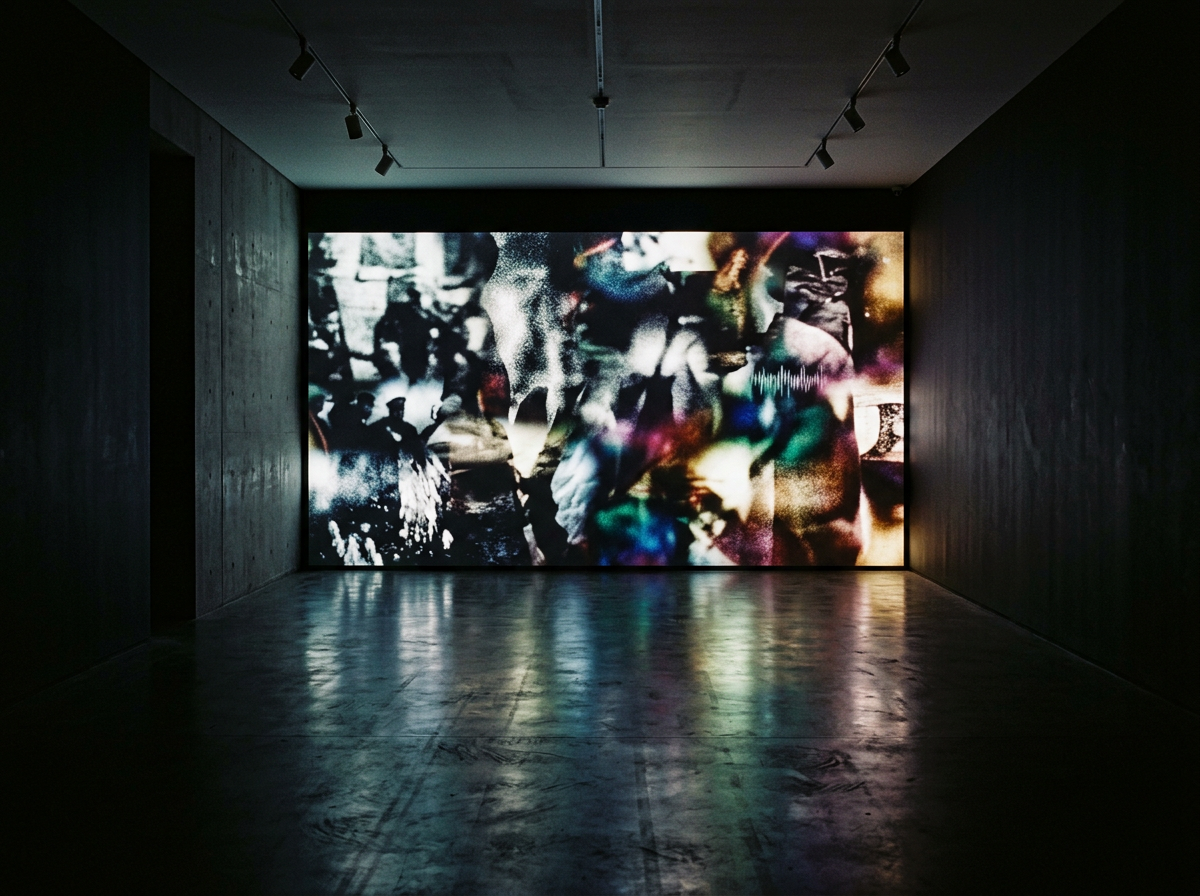
The work in question is the music video for West’s “Wash Us in the Blood,” released in June 2020 with Travis Scott and directed by Jafa. It is built from the same method that made Jafa’s 2016 masterpiece Love Is the Message, The Message Is Death one of the defining artworks of the century: rapid, rhythmic montage of found footage—police confrontations, dancing bodies, concert clips, solar flares—cut until the images themselves seem to pulse. When the video dropped, West had already claimed enslavement “sounds like a choice” and sat down with Donald Trump. Later came the 2022 social-media posts, the “death con 3” language about Jewish people, and the Alex Jones appearance in which West said he saw “good things about Hitler.” Earlier this year West took out a full-page Wall Street Journal ad to apologize. Jafa’s answer to Cotter does not pretend those statements never happened. It simply declines to treat them as grounds for exile.
That refusal is consistent with how Jafa has talked about West for years. Love Is the Message itself is scored to West’s “Ultralight Beam,” a track Jafa first heard West perform on Saturday Night Live and later described as a formal evolution of gospel. He has called West a genius in print since at least 2017, even while noting that people bristle when West says the same thing about himself. In a separate conversation this summer with Puck, Jafa went further: association with West is “part of my history,” and West has been “incredibly generous.” He compared the discomfort to the art world’s long tolerance for white modernists with far uglier politics. The point was not absolution. It was proportion, and a refusal to apply a purity test that is almost never applied upward.
Jafa’s own biography makes the stance less surprising than it first appears. Born Arthur Jafa Fielder in Tupelo, Mississippi, in 1960, he trained as a cinematographer, shot Julie Dash’s Daughters of the Dust, worked with Spike Lee, and spent years on the margins of an industry that had little use for the Black cinema he wanted—one with “the power, beauty and alienation of Black music.” When Love Is the Message exploded in late 2016, days after Trump’s election, it did so because Jafa had spent decades collecting images that refused a single mood: joy and terror, virtuosity and violation, all in the same seven-and-a-half minutes. The 2020 West video is not a departure from that project. It is an extension of it, made after West had already become a liability in polite rooms. Jafa directed it anyway. The original 2020 report on the video noted how closely it rhymed with the earlier work; the new comments confirm he still stands behind the decision.
“I Am Tony,” named for the late jazz drummer Tony Williams, will occupy two floors of the New Museum’s expanded building through January 4, 2027. Curators Massimiliano Gioni, Gary Carrion-Murayari, and Calvin Wang are assembling Jafa’s most celebrated films—Love Is the Message, the Golden Lion-winning The White Album (2018)—alongside paintings, sculptures, photographs, and new pieces that, Cotter reported, may still be in flux. Gioni told the Times that Jafa “wants the exhibition to be unstable.” A mural-scale painting titled More Real and a new video on Michael Jackson could still enter the mix. The show is billed as the artist’s largest survey; it is also the second major institutional presentation of his work this year, following a pairing with Richard Prince in Venice. For background on the scale of the New York exhibition, see Hyperallergic’s earlier report.
None of this resolves the ethical knot. West’s words caused real harm. Museums, galleries, and audiences will keep arguing about whether genius and friendship can coexist with that harm. Jafa’s contribution to the argument is not a theory of cancellation. It is a practice: keep the images moving, keep the friendship if it was real, and notice who is asked to perform moral cleanliness and who is not. He has said he believes in Black people believing. He has also said he is not interested in anyone—Black or otherwise—dictating what he makes. The New Museum show will test whether that independence still reads as rigor or as evasion. Either way, Jafa has now put the question on the record in the week the work returns to public view.
Readers who want the full Cotter profile and the surrounding exhibition details can start with the New York Times Arts coverage and then go see the films themselves. Go to the New Museum when “I Am Tony” opens on September 24, sit with Love Is the Message and the West video in the same building, and decide what you are willing to hold in one frame.


