Zabludowicz Collection Auction: Highlights and Insights
By Darren Smith, Arts Reporter
June 26, 2026
In the heat of a bustling London summer evening on June 25, Christie’s auction house witnessed a compelling chapter in contemporary art history unfold as works from the renowned Zabludowicz Collection crossed the block. Leading the charge was Philip Guston’s monumental Mirror Head (1977), which realized $5.2 million (£3.9 million with fees), anchoring a single-owner sale that ultimately totaled approximately $20.3 million (£15.4 million). This event not only highlighted the enduring power of Guston’s late figurative work but also signaled a strategic evolution for one of Europe’s most influential collecting families.
Anita and Poju Zabludowicz have spent decades building a collection of more than 5,000 works, often acquiring pieces directly from artists’ studios and championing emerging talent long before mainstream recognition. Their holdings helped define the rise of the Young British Artists in the 1990s while extending globally to support international voices. The decision to consign around 100 works—split between a live evening sale and an ongoing online auction—marks the first time any significant portion of their collection has been offered publicly at auction. Christie’s positioned the sale as “Beyond Ordinary – Then. Now. Next.,” underscoring the collectors’ forward-looking ethos even as they make room for new acquisitions.
Philip Guston’s Mirror Head stood as the undeniable star. This large-scale oil on canvas, measuring 68 by 112 inches (172.7 x 284.5 cm), captures the artist’s signature late-period style: cartoonish yet profoundly psychological forms rendered with thick, expressive brushwork. Depicting the back of his wife Musa McKim’s head as she confronts a hazy reflection, the painting pulses with themes of self-examination, uncertainty, and existential unease—hallmarks of Guston’s dramatic shift from abstraction to figuration in the late 1960s and 1970s. Acquired by the Zabludowiczes from Hauser & Wirth in 2017, it carried a pre-sale estimate of £3.5–5.5 million and performed solidly within range, selling for £3.9 million hammer (with fees totaling $5.2 million).
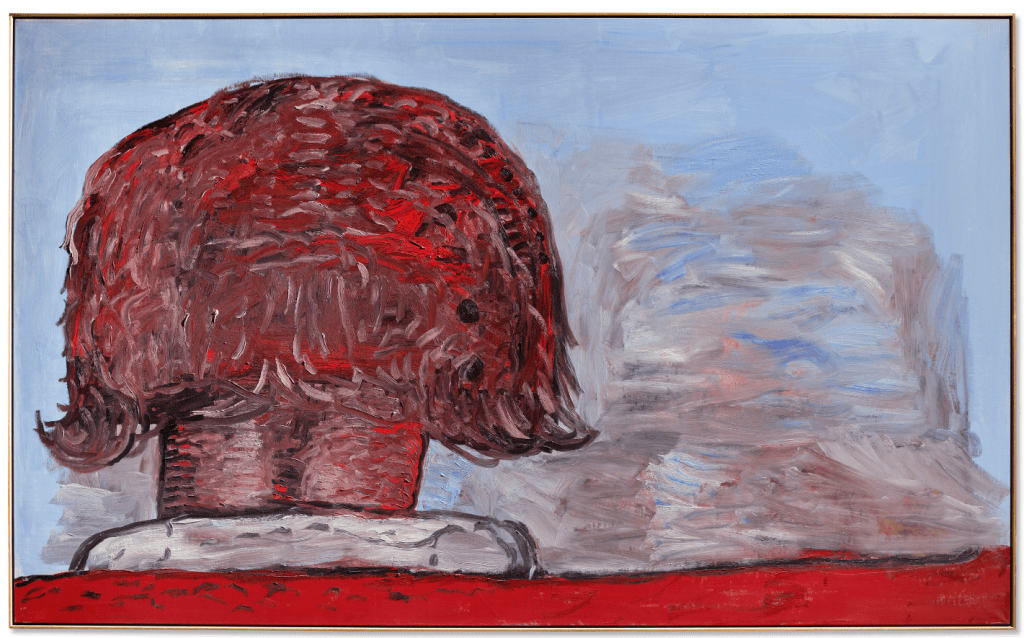
This result reinforces Guston’s strong market presence in recent years, as museums and collectors continue to reassess his politically charged, introspective oeuvre. His works have increasingly found homes in major institutions, and auction records reflect growing appetite for his raw, narrative-driven canvases.
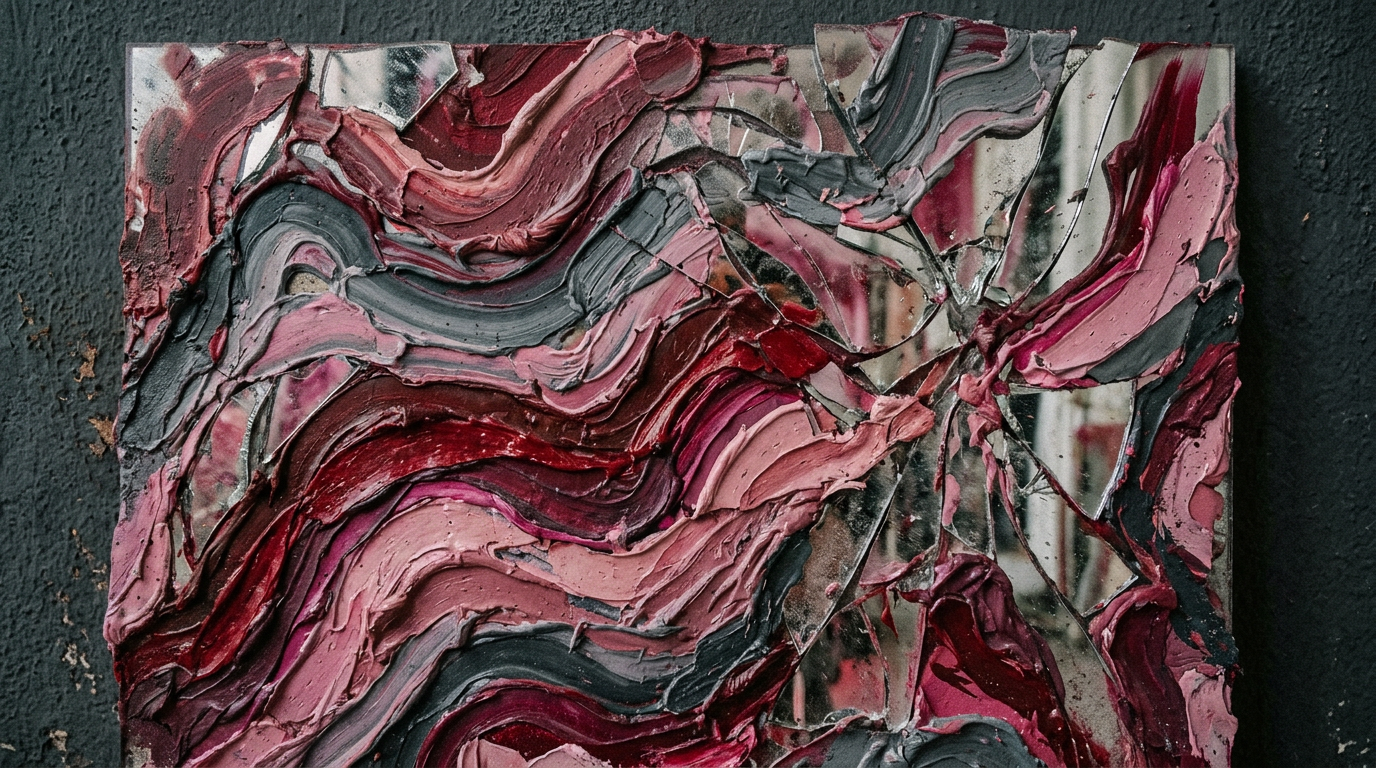
Supporting the Guston were other heavyweight pieces that reflected the Zabludowiczes’ prescient eye. Mark Bradford’s monumental Farther South and Elsewhere (2016) and Rashid Johnson’s Untitled Broken Crowd (2021) both performed strongly in the seven-figure territory, demonstrating sustained demand for contemporary artists who tackle social and cultural themes through innovative material practices. Richard Prince’s Untitled (Cowboy) (1994) also drew competitive bidding, echoing the collection’s deep roots in appropriation and pop-inflected art.
The sale’s overall performance was described as respectable rather than explosive, especially when viewed alongside the previous evening’s record-shattering results from other London auctions. Bidding remained measured amid a warm London night, with auctioneer Yü-Ge Wang navigating moments of quiet contemplation from the rostrum. Of the works offered live, the majority sold within or near estimates, with several artists achieving new auction records. These outcomes underscore the collection’s strength in mid-career and emerging voices alongside blue-chip names.
Beyond the numbers, the Zabludowicz sale invites broader reflection on the role of private collectors in shaping art history. Anita and Poju Zabludowicz built their collection with a distinctive blend of patronage and public engagement, establishing a namesake space in London that has hosted ambitious exhibitions and supported artists through residencies and commissions. Their move to deaccession comes at a time when many major collectors are recalibrating, whether to refresh holdings, address market conditions, or respond to personal shifts. The family has emphasized a continued commitment to future collecting.
The online portion of the sale, featuring additional lots and running through June 30, offers more accessible entry points with works by younger and mid-career artists. Early bidding has been active, suggesting sustained interest across price tiers.
This auction arrives amid a dynamic London summer season, where major sales continue to test market resilience. While headlines often focus on headline-grabbing totals, events like the Zabludowicz offering reveal the nuanced interplay of history, taste, and strategy that sustains the art ecosystem. Guston’s Mirror Head, with its introspective gaze, seems almost metaphorical: a mirror held up to the art world itself, reflecting on what we value, preserve, and pass forward.
As the gavel falls on one phase of this storied collection, it opens space for new narratives. Collectors, curators, and enthusiasts alike will watch closely to see what the Zabludowiczes acquire next—and how these freshly dispersed works find new homes and meanings.
Explore the full auction catalogue and results on the official Christie’s sale page. View detailed information on the star lot via Christie’s Guston lot page. Read comprehensive coverage in Artnet News and The Art Newspaper. Learn more about the collectors’ vision at the Zabludowicz Collection website and discover additional context in HENI’s report.
Stay engaged with the evolving art market—subscribe to leading art newsletters, attend upcoming exhibitions, visit galleries, and consider supporting artists whose works continue to challenge and inspire. Your next discovery could be just a click or visit away.
Crypto Disclaimer: This article is for informational and entertainment purposes only. It does not constitute financial, investment, or legal advice. Cryptocurrencies and NFTs are highly volatile and involve significant risk of loss. Always do your own research. The cover image in this article was AI-generated.