The Multibillion-Dollar Diplomacy Behind the Met’s Landmark Raphael Exhibition
By Darren Smith, Arts Reporter
April 26, 2026
In the hushed galleries of New York’s Metropolitan Museum of Art, more than 170 masterpieces by Raphael (Raffaello di Giovanni Santi, 1483–1520) command attention in Raphael: Sublime Poetry, the first comprehensive exhibition dedicated to the Renaissance master ever mounted in the United States. Spanning the artist’s brief but dazzling career—from his formative years in Urbino and Florence to his triumphant decade in Rome—the show reunites paintings, drawings, tapestries, and related works that have rarely traveled together. Behind the serene beauty lies an eight-year saga of relentless negotiation, scholarly persistence, and high-stakes cultural diplomacy.
Carmen C. Bambach, the Marica F. and Jan T. Vilcek Curator in the Department of Drawings and Prints at the Met, orchestrated this unprecedented gathering. Known for landmark exhibitions on Leonardo da Vinci and Michelangelo, Bambach approached the Raphael project with characteristic ambition. “Asking for Raphael loans is like asking for the firstborn heir of the royal family,” she remarked. Nearly every request met resistance; many required repeated visits and layered persuasion before lenders relented.
Planning intensified after Max Hollein became the Met’s director in 2018, with serious negotiations launching around 2020. Bambach and her team, including conservator Rachel Mustalish, logged countless miles across Europe and beyond. They engaged directly with curators, conservators, museum directors, and government officials guarding national treasures. The exhibition drew from more than 60 public institutions across 11 countries, plus select private collections, assembling approximately 237 works in total—including 33 paintings and 142 drawings by Raphael himself.

The logistical and financial challenges were immense. Shipping fragile Renaissance drawings and panel paintings demands climate-controlled transport, specialized crating, and multimillion-dollar insurance policies. Comparable blockbuster Renaissance exhibitions have carried insured values reaching into the hundreds of millions. Private loans added complexity; the show includes rare Raphael drawings from notable collections.
Yet the rewards justify the effort. Raphael: Sublime Poetry reframes the artist beyond the idealized Madonnas that once defined his popular image. Bambach argues that a Victorian-era perception of Raphael as overly sweet or pious has obscured his dynamic creativity, intellectual depth, and technical innovation. The exhibition traces his evolution: early influences from Perugino in Urbino, the competitive dialogue with Leonardo da Vinci and Michelangelo in Florence, and his role as the “Prince of Painters” at the papal court in Rome.
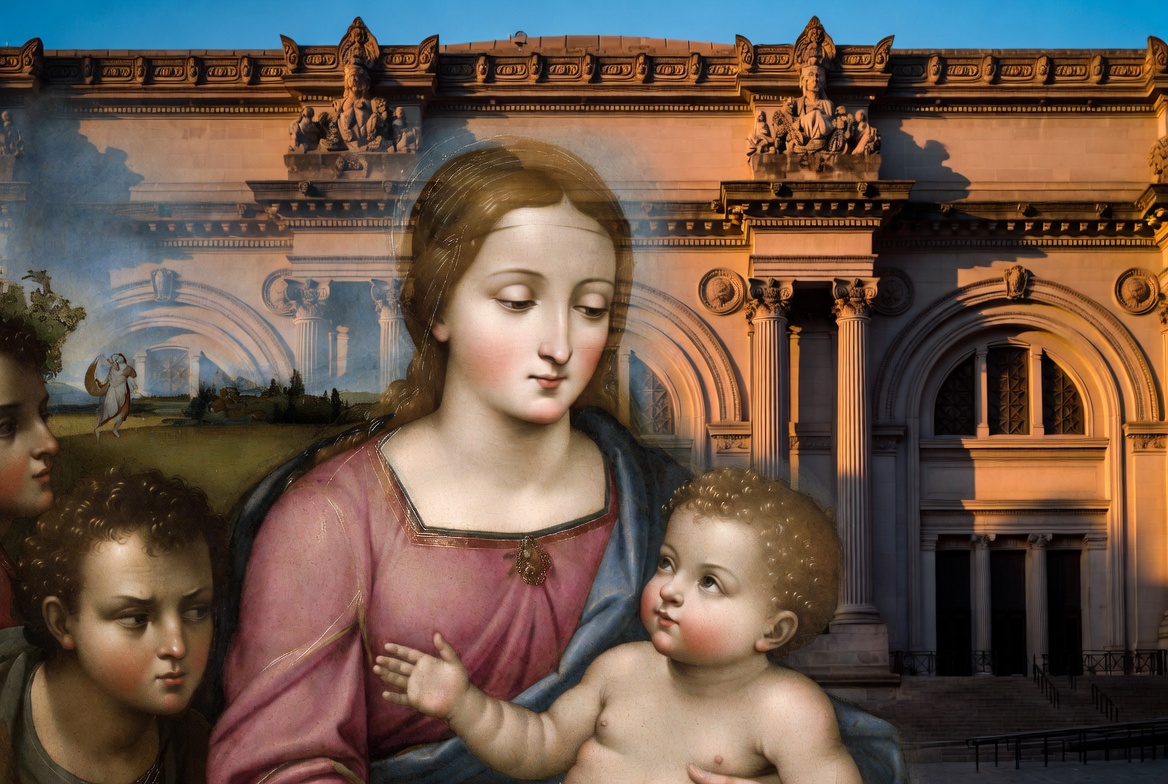
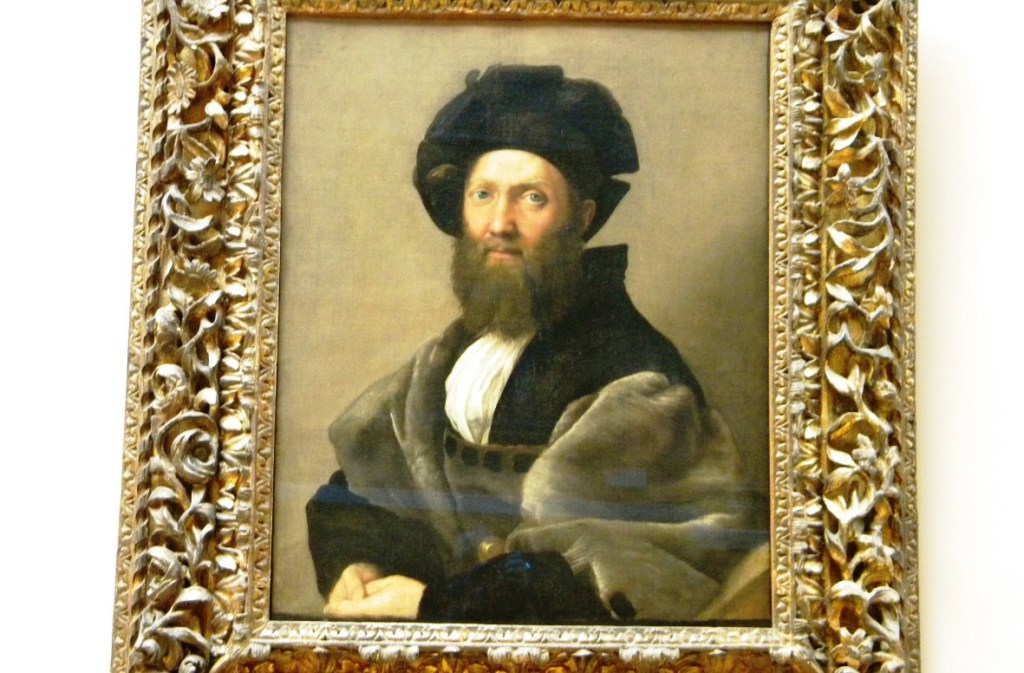
Standout loans underscore this narrative. The Alba Madonna (ca. 1509–11), on loan from the National Gallery of Art in Washington, D.C., appears alongside its preparatory studies. This circular composition exemplifies Raphael’s mastery of harmonious balance, classical proportion, and luminous color. Nearby, the Louvre’s iconic Portrait of Baldassare Castiglione (ca. 1514–15) reveals the artist’s penetrating psychological insight.

Bambach’s deep research also yielded new scholarly insights, including reattributions made possible by studying works side-by-side under ideal conditions.
The show’s design, led by Daniel Kershaw, Exhibition Design Manager, enhances these revelations. Deep blue and dark walls create intimate viewing spaces that highlight the luminous quality of Raphael’s palette and the delicacy of his silverpoint and chalk drawings. Tapestries after Raphael’s cartoons dominate one gallery, reminding visitors of his influence beyond easel painting. A virtual exhibition tour featuring Bambach, Kershaw, and research associate Caroline Elenowitz-Hess allows remote audiences to experience the layout and hear curatorial commentary.
Critics have praised the exhibition’s balance of scholarly rigor and emotional resonance, calling it “extraordinary” and “a major event… profound.” In an era of geopolitical tension and digital distraction, Raphael’s vision of ordered beauty and humanistic grace offers a powerful counterpoint.
The exhibition runs only through June 28, 2026, and will not travel—a deliberate choice that concentrated resources on a singular presentation in New York. This limited run heightens the urgency for visitors. Timed tickets and special programming, including scholarly symposia on Raphael’s techniques, accompany the show.
For Bambach, the project represents more than a curatorial achievement. “The seven-year journey… has been an extraordinary chance to reframe my understanding of this monumental artist,” she reflected.
In an art world increasingly shaped by market forces and spectacle, Raphael: Sublime Poetry stands as a testament to patient scholarship and institutional commitment. The “maneuvers” that brought these treasures to Fifth Avenue remind us that great exhibitions are acts of cultural stewardship as much as aesthetic celebration.
As the final weeks of the exhibition approach, the Met invites the public to witness this rare convergence of genius. Whether you are a seasoned Renaissance scholar or a first-time visitor, the show offers an unparalleled window into one of history’s most beloved yet sometimes misunderstood masters.
Explore the exhibition at The Met’s official page for Raphael: Sublime Poetry. For deeper context, watch the virtual exhibition tour. Plan your visit and secure timed tickets before the June 28 closing. Don’t miss this singular opportunity to experience Raphael’s sublime poetry in person—book now and immerse yourself in the Renaissance at its most radiant.
Darren Smith is an arts journalist, practicing artist, and tattooist with 26+ years of experience across traditional, digital, and body art practices. He covers the intersections of craft, culture, and collecting for ArtChain News
Cover image generated with AI assistance (powered by Grok Imagine) using public-domain details from Raphael’s The Alba Madonna (National Gallery of Art, Washington, D.C.) and reference photography of The Metropolitan Museum of Art.