Rediscovering Gladys Hynes: A Pioneer of Modernism
By Darren Smith, Arts Reporter
April 29, 2026
LEWES, England — Nearly seven decades after her death, Gladys Hynes (1888–1958) is finally receiving long-overdue recognition. Charleston in Lewes will open Gladys Hynes: Radical Lives on May 2, the first major exhibition dedicated to this pioneering modernist whose avant-garde practice was inseparable from her political activism.
Born in Indore, India, to an Irish Catholic family, Hynes moved to London as a child and trained at the London School of Art under Frank Brangwyn. She emerged as a versatile force—painter, sculptor, illustrator, and designer—moving through Britain’s avant-garde circles while championing suffrage, pacifism, and Irish republicanism.
Hynes exhibited widely during her lifetime, winning prizes and representing Britain at the 1924 Venice Biennale. Yet her legacy faded in the male-dominated art world, with some records later listing her as “non-existent.” This new exhibition rescues her from obscurity, presenting paintings, sculptures, drawings, and archival material that illuminate a bold life at the intersection of art and activism.

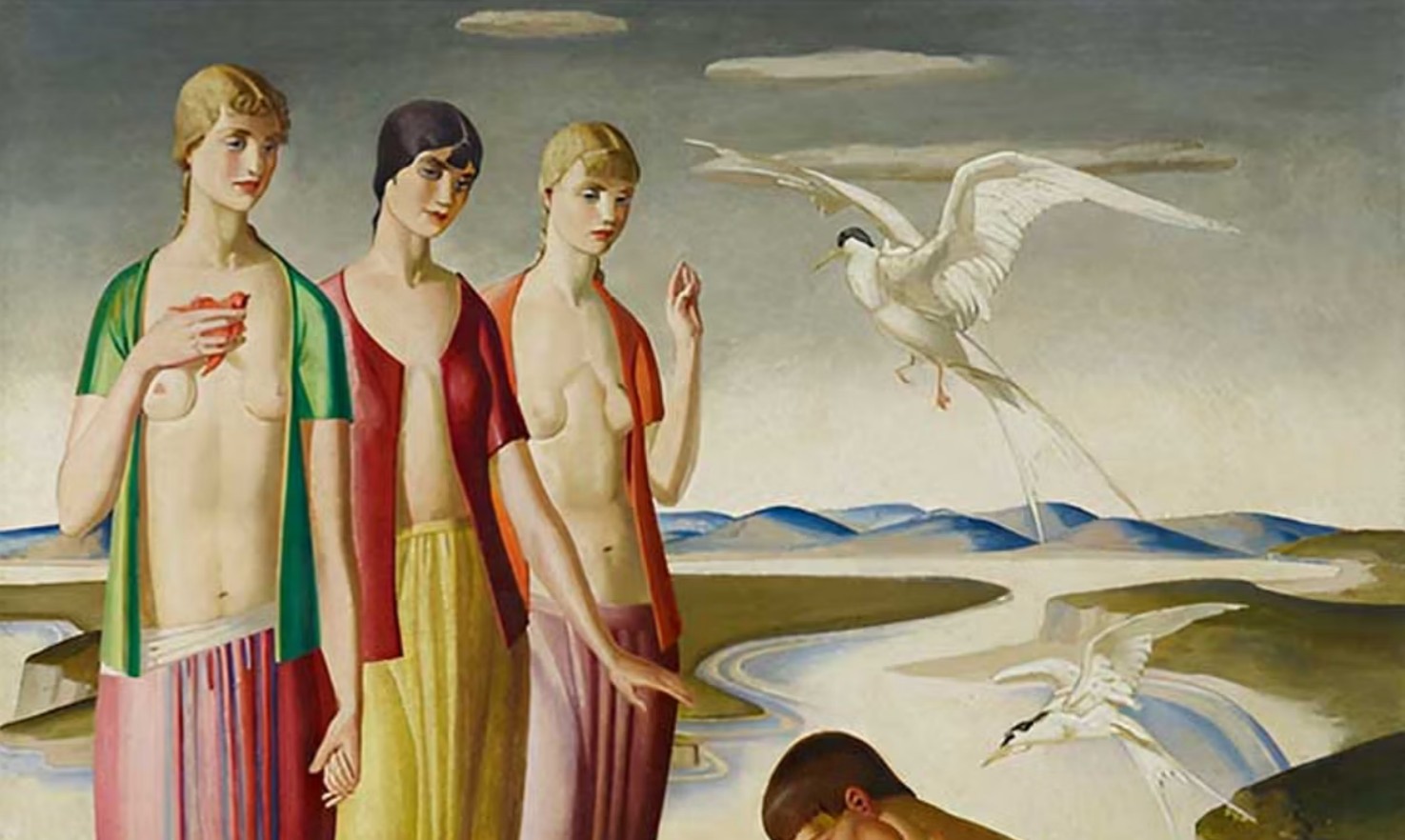
A standout work is Hynes’s modernist painting Morning (c. 1915), featuring ethereal female figures in a symbolic landscape that blends classical myth with contemporary social themes. Her sculptures and innovative designs further showcase a distinctive, experimental voice unafraid of political statement.
“She is one of the most compelling figures in modern British art,” say curators, noting Hynes’s friendships with Bloomsbury figures such as Nina Hamnett and her radical commitments during two world wars. Her work offers subtle yet powerful critiques of empire, gender norms, and militarism.
Loans from the Jerwood Collection and other institutions enrich the show, which runs through October 11, 2026, at Charleston in Lewes. The exhibition forms part of broader programming on radical publishing and overlooked voices in British modernism.
Art historians see this as both a retrospective and a necessary corrective. Hynes’s story challenges conventional narratives of 20th-century British art and highlights how women artists and activists were often sidelined. Her Venice Biennale representation, once a national milestone, had largely vanished from public memory until recent scholarship.
Visitors can expect immersive displays linking Hynes’s personal radicalism to her visual language, from Newlyn School landscapes to avant-garde experiments, while exploring her Irish heritage and anti-colonial perspectives.
Charleston continues its mission to champion overlooked modernists, building on its Bloomsbury legacy. This timely revival arrives amid renewed global interest in reclaiming marginalized artistic voices.
What are your thoughts on Gladys Hynes’s rediscovery? Share in the comments, visit the exhibition from May 2, or explore more at Charleston’s official page. Read the in-depth feature in The Art Newspaper, and support institutions preserving radical histories.