Pace Gallery: Innovating Art for 66 Years
By Darren Smith, Arts Reporter
June 27, 2026
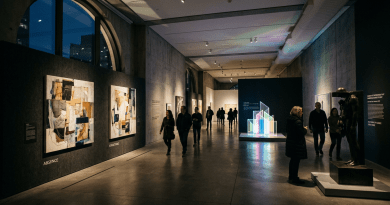
In the ever-evolving landscape of the global art world, few institutions have demonstrated the staying power and innovative spirit of Pace Gallery. Founded in 1960 by a young Arne Glimcher and his wife Milly in Boston, Massachusetts, Pace has grown from a modest Newbury Street space into one of the most influential contemporary art galleries worldwide, with multiple locations across New York, London, Hong Kong, Seoul, and beyond. Its name, deliberately chosen not after its founder but evoking forward momentum, has proven prophetic. For over six decades, Pace has championed artists who push boundaries, blending historical reverence with cutting-edge experimentation.
Arne Glimcher’s early vision was revolutionary. At just 22, he established a gallery that prioritized artists’ voices and ambitious programming over traditional models. This artist-first ethos quickly attracted luminaries and emerging talents alike. Pace became known for mounting seminal exhibitions that not only showcased individual works but contextualized them within broader cultural dialogues. Today, under the leadership of President and CEO Marc Glimcher, the gallery continues this legacy while adapting to new realities. Marc has expanded initiatives like Pace Live, which has delivered over 100 interdisciplinary performances, conversations, and events since 2019, fostering deeper connections between art, technology, music, and audience engagement.
Pace’s global footprint reflects its commitment to cultural exchange. With permanent spaces in Asia, including Hong Kong and Seoul, the gallery has bridged Eastern and Western artistic traditions. Recent programming highlights this international dialogue. In London, Kenjiro Okazaki’s exhibition Never could be any other way — anagnorisis (on view through August 7, 2026) explores themes of recognition and transformation. Meanwhile, in Seoul, Park Young Sook’s When Form Meets Gesture (June 19 – August 14, 2026) celebrates ceramic sculpture’s tactile poetry. These shows exemplify Pace’s ability to present works that resonate locally while contributing to a universal conversation.
In New York, the gallery’s dual Chelsea spaces serve as dynamic hubs. Currently on view are major exhibitions including Julian Schnabel’s Italy Through Its Trees, Paul Thek’s Dream of Vanishing, David Hockney’s The Moon Room, and Emily Kam Kngwarray’s The Turning Season—all running through mid-August 2026. These presentations underscore Pace’s strength in representing both living legends and historically significant estates. A poignant recent milestone came with tributes to David Hockney (1937–2026), whose seven-decade career embodied joyful inquiry into perception and the natural world. Pace’s deep relationship with Hockney mirrored its broader mission: celebrating artists who redefine how we see.
Mika Tajima’s 37 Dimensions, which opened today in Los Angeles (on view through August 15, 2026), offers a compelling example of Pace’s forward-looking program. Tajima’s work interrogates technology, spirituality, and human experience through sculptural and immersive installations. A conversation between Tajima and curator Nora N. Khan, scheduled for this afternoon at the LA space, promises rich insights into these themes. Such events highlight Pace’s role not merely as a dealer but as a cultural convener.
Pace has consistently supported artists at pivotal career moments. From early advocacy for figures like Louise Nevelson and Agnes Martin to representing estates of icons such as Constantin Brancusi, the gallery has shaped market narratives and institutional collections alike. Its publishing arm produces exquisite catalogs and artist books, while public installations and museum collaborations extend its impact far beyond commercial spaces. Recent Venice Biennale projects featuring Pace artists further cement its presence on the international stage.
Yet 2026 has also brought reflection and recalibration. In a notable restructuring announced earlier this month, Pace streamlined its roster from approximately 135 artists to around 85 and reduced staff by about 50 positions. CEO Marc Glimcher described this as a necessary response to an “unfixable” mega-gallery model strained by constant expansion. By refocusing resources on a tighter, intergenerational group of artists and estates, Pace aims to deepen support and return to its foundational strengths. This move, while challenging, positions the gallery for sustainable excellence in a maturing market.
What sets Pace apart is its unwavering belief in art’s transformative power. Whether through groundbreaking exhibitions, pioneering digital and performance initiatives, or thoughtful secondary market ventures like the newly launched Pace Di Donna Schrader Galleries, the institution remains committed to artists as visionaries who shape our understanding of the world. Its program balances blue-chip heavyweights with emerging voices, creating fertile ground for discovery and dialogue.
As the art world navigates economic shifts, technological disruption, and cultural change, Pace Gallery stands as a beacon of thoughtful evolution. It honors its 66-year history not by clinging to the past but by innovating responsibly—always with artists at the center. For collectors, enthusiasts, and curious minds alike, Pace offers more than transactions; it provides pathways into profound creative experiences.
Visit Pace Gallery’s website to explore current exhibitions, learn about represented artists, or plan your next gallery visit. Discover the power of art that moves us forward—your engagement supports the visionary creators defining our era. Don’t miss the opportunity to experience these extraordinary works in person or online today.