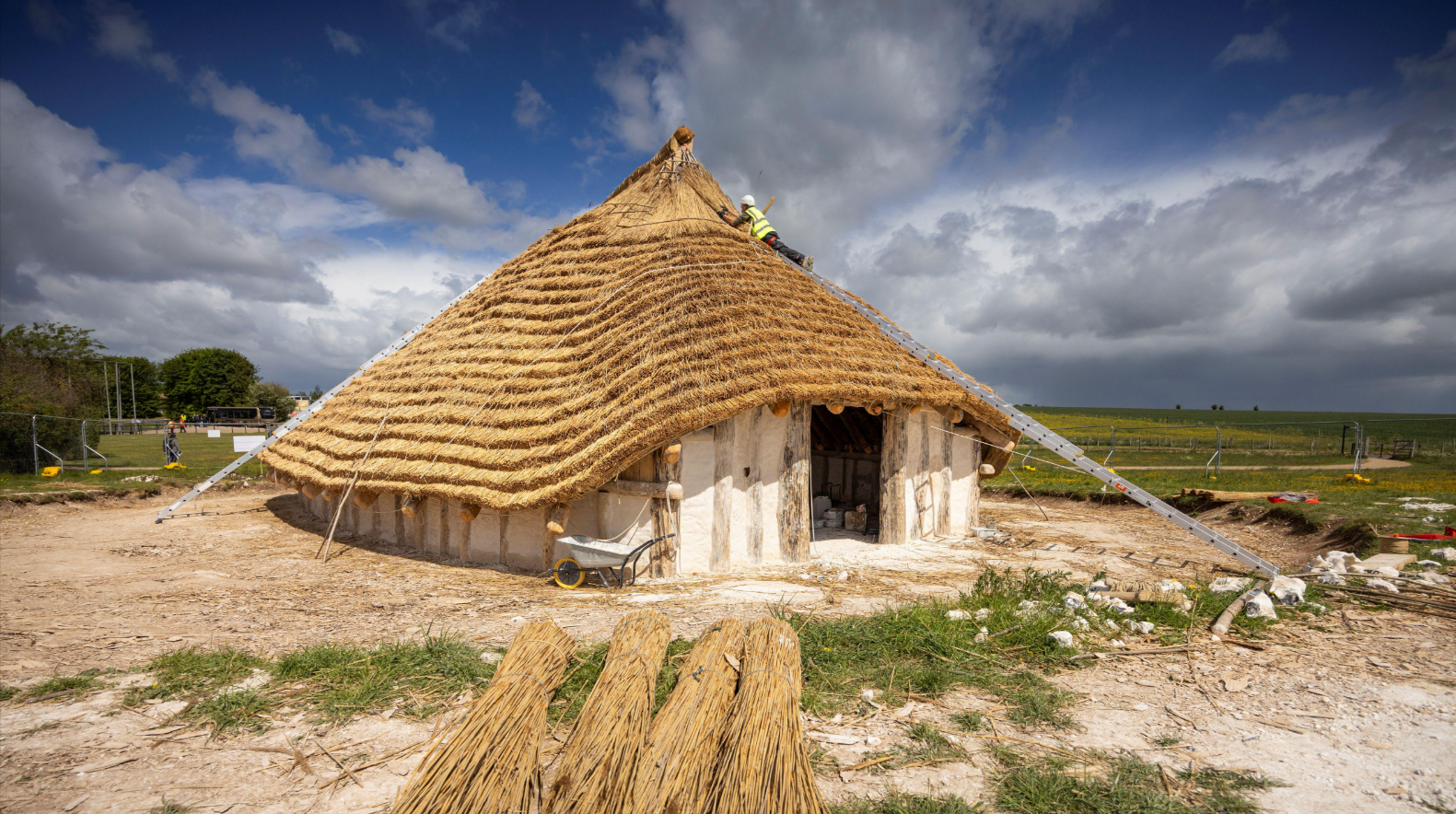
Kusuma Neolithic Hall: A Glimpse into Prehistoric Life
By Darren Smith, Arts Reporter
May 24, 2026
In a groundbreaking fusion of archaeology and living history, English Heritage has unveiled the Kusuma Neolithic Hall, a meticulously accurate replica of a 4,500-year-old Neolithic building at Stonehenge. Standing more than seven metres (23 feet) high, this ambitious £1 million ($1.34 million) structure offers visitors an unprecedented window into the lives of the prehistoric communities who constructed one of the world’s most iconic monuments.
The hall draws its design from archaeological evidence unearthed at Durrington Walls, a massive prehistoric settlement located just two miles northeast of Stonehenge. Discovered in the late 1960s and further investigated in subsequent excavations, the original structure—known as Durrington 68—remains enigmatic. It may have served as a communal gathering space for feasts, rituals, or seasonal celebrations, as suggested by associated finds of animal bones and Grooved Ware pottery.

More than 100 dedicated volunteers spent nine months hand-building the hall under the guidance of award-winning experimental archaeologist Luke Winter. They felled and coppiced local timber using replica flint axes, mixed chalk daub from water, straw, and locally sourced chalk, and thatched the roof with traditional materials. “This is epic,” Winter remarked, after carefully selecting oak, hazel, ash, and pine trees that would have grown in the area 4,500 years ago. Every detail—from the timber joints to the daub walls—reflects rigorous research, highlighting the advanced carpentry skills of Neolithic engineers.
Visitors stepping inside encounter a soaring interior warmed by a central hearth, where the scent of woodsmoke and the texture of handcrafted elements transport them across millennia. The project, generously funded by the Kusuma Trust, forms the cornerstone of English Heritage’s expanded educational offerings at the site. This summer, the public can explore the hall and interact with the volunteers who helped construct it. From September, it will transform into an immersive learning centre for school groups, where students will handle replica stone tools, practise ancient crafts, and try Neolithic cooking methods.
This initiative arrives at a pivotal time for Stonehenge, which continues to reveal new secrets through ongoing research. The Kusuma Neolithic Hall not only enriches the visitor experience but also advances public engagement with Britain’s prehistoric heritage, fostering a tangible connection to the ancestors who shaped these sacred landscapes.
As Matt Thompson, English Heritage’s Conservation, Curatorial and Learning Director, explained, the hall serves as a “model for living history,” instantly bridging past and present. By recreating the scale and atmosphere of Neolithic communal life, it underscores the ingenuity and social complexity of these early builders.
Those planning a trip to Stonehenge this summer should not miss this extraordinary addition. Book your visit now through the official English Heritage website and witness history reborn. Plan your educational group tour for the autumn term—spaces are filling quickly.