Hidden Cache of 22 Painted Coffins Reveals Lives of Ancient Egypt’s ‘Singers of Amun’ in Luxor
In the arid hills of Luxor’s West Bank, where the ancient Theban Necropolis has guarded Egypt’s pharaonic secrets for millennia, a remarkable discovery has emerged from the sands: a hidden cache of 22 vividly painted wooden coffins, dating back approximately 3,000 years to the Third Intermediate Period (circa 1070–664 BCE). The find, announced by Egypt’s Ministry of Tourism and Antiquities, includes intact mummies and eight rare, sealed papyrus scrolls—offering fresh insights into the lives of temple chanters and singers dedicated to the god Amun.
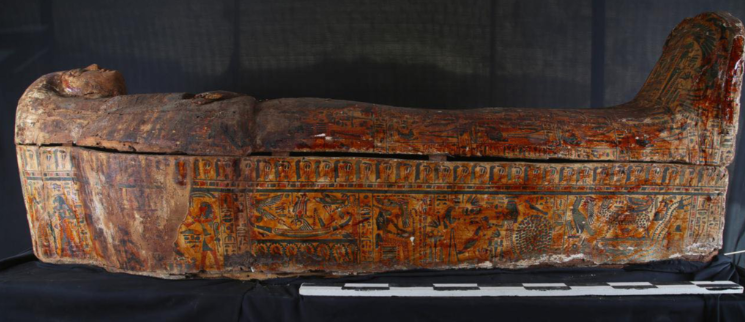
The discovery was made by a joint Egyptian archaeological mission led by the Supreme Council of Antiquities and the Zahi Hawass Foundation for Archaeology and Heritage. Excavations took place in the southwestern corner of the courtyard of the Tomb of Seneb (also referred to as Sennefer in some reports), in the Qurna area of Sheikh Abd el-Qurna. While working in the limestone courtyard of this previously known 18th Dynasty tomb, the team uncovered a rock-cut rectangular chamber that served as a funerary storage room.
Inside the chamber, archaeologists found the 22 coffins meticulously arranged in multiple layers—stacked in ten organized horizontal rows, with lids separated from the bodies to maximize space in the confined area. This deliberate organization reflects the practical ingenuity of ancient Egyptian burial practices during a time of political fragmentation following the New Kingdom’s collapse.

Many of the coffins bear inscriptions identifying their occupants not by personal names but by professional titles: “Singer of Amun,” “Chantress of Amun,” or similar variants. These titles refer to women (and possibly some men) who performed sacred musical and ritual roles in the vast Temple of Amun at Karnak, one of ancient Egypt’s most powerful religious centers. During the Third Intermediate Period, the priesthood of Amun wielded immense influence—often rivaling or surpassing pharaonic authority—making these chanters key figures in temple liturgy, economy, and society. The concentration of such burials in one cache opens new avenues for research into the status, training, and daily lives of these religious performers.
The coffins themselves remain remarkably well-preserved, their exteriors adorned with vibrant scenes of protective deities, funerary rituals, and colorful hieroglyphs in blues, greens, reds, and yellows. Mummies lie undisturbed within many of them, promising potential future studies on health, diet, and mummification techniques of the era. Accompanying the coffins were eight fragile papyrus scrolls, some still sealed in ceramic vessels with original clay stamps intact. Experts describe these documents as an “information treasure,” potentially containing administrative records, ritual texts, or hymns that could illuminate temple operations during a turbulent historical chapter.

Minister of Tourism and Antiquities Sherif Fathy hailed the find as “a significant addition to Egypt’s archaeological record,” emphasizing its value for both scholarship and cultural tourism. Dr. Zahi Hawass, the renowned Egyptologist involved in the project, called it exceptional, noting the coffins’ excellent condition despite their age. Field director Afifi Rahim highlighted how the discovery sheds light on the often-overlooked role of women in ancient Egyptian religious life.
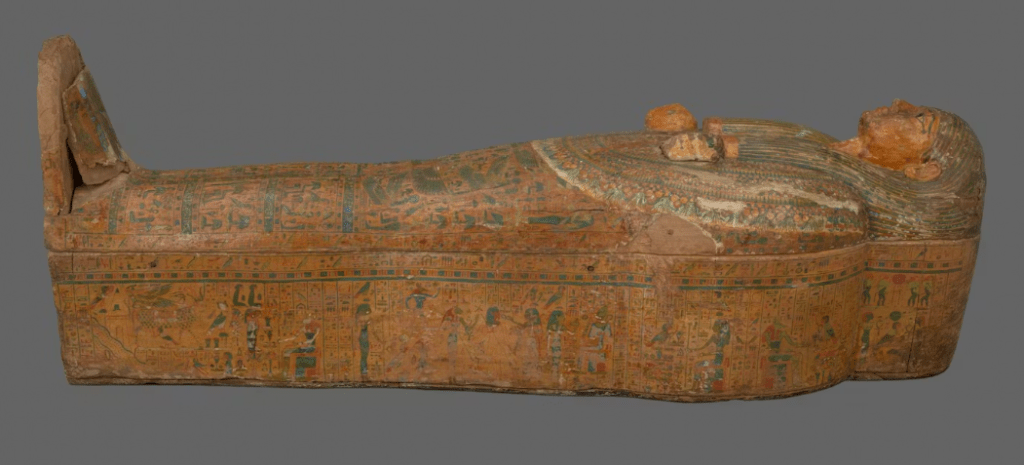
Conservation efforts are underway to stabilize the fragile wood, pigments, and papyri before any further analysis or public display. Officials plan to exhibit select artifacts in Luxor museums, boosting the region’s appeal as a global heritage destination.
This latest unearthing adds to a string of recent finds in the Theban Necropolis, underscoring Egypt’s enduring archaeological richness and the ongoing work to preserve its past amid modern challenges.
For the most current official images from this specific 2026 discovery, monitor the Egyptian Ministry of Tourism and Antiquities’ official Facebook or website, as they often release press photos under permissive terms for media.