Graham Platner’s Controversial Tattoo: A Political Redemption Story
By Darren Smith, Arts Reporter
May 28, 2026
In the rugged coastal communities of Maine, where oyster farming and working-class grit define daily life, Graham Platner has emerged as a compelling yet polarizing figure in the race for U.S. Senate. The 41-year-old Marine Corps and Army veteran, now the Democratic frontrunner challenging incumbent Sen. Susan Collins, built his campaign on populist promises of Medicare for All, economic justice, and standing up for rural America. Yet one indelible mark from his past—a tattoo obtained during military service—has thrust him into a national controversy that tests the boundaries of redemption, youthful indiscretion, and political viability.
Platner’s story begins not in the polished halls of Washington but on the battlefields of Iraq and a shore leave in Croatia. In 2007, as a young infantry sergeant fresh from deployments, Platner and fellow Marines found themselves in Split, Croatia, after a night of heavy drinking. Seeking camaraderie and a memento of their service, they entered a tattoo parlor and selected a skull-and-crossbones motif—common military imagery evoking danger and brotherhood. “We chose a terrifying-looking skull and crossbones off the wall because we were Marines,” Platner later recounted. What he did not realize at the time, he insists, was its striking resemblance to the Totenkopf, the death’s head symbol adopted by Nazi Germany’s SS paramilitary units.
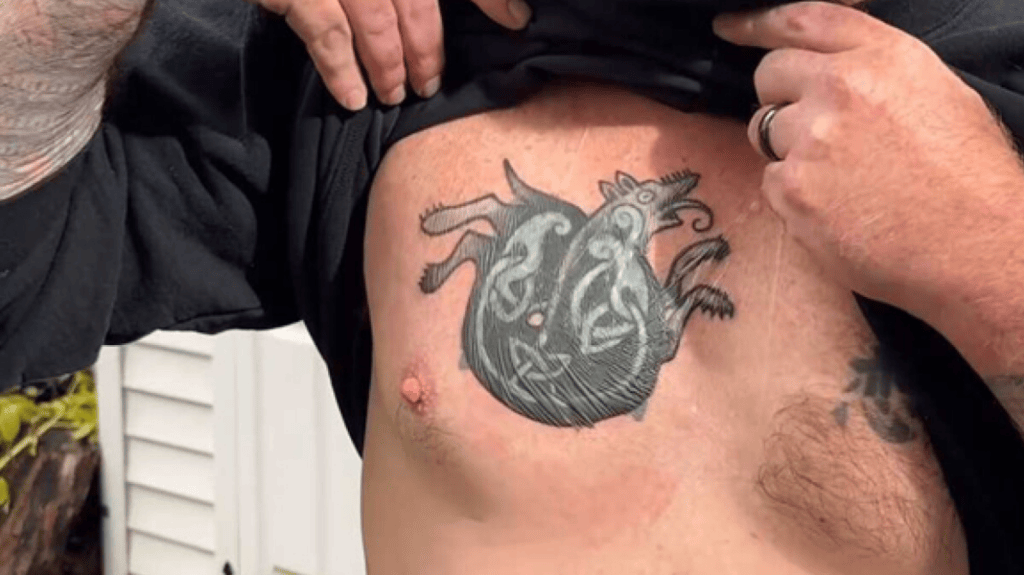
For nearly two decades, the tattoo remained on his chest, largely unnoticed in his life as an oyster farmer in Sullivan, Maine. That changed in October 2025 when, amid his burgeoning Senate campaign, opposition research brought it to light. Platner chose to confront the issue head-on. In a candid appearance on the Pod Save America podcast, he addressed the resurfaced video of himself shirtless at a family wedding and announced he had covered it up. “I was appalled to learn it closely resembled a Nazi symbol,” he stated. “I altered it… into something that isn’t deeply offensive to my core beliefs.”
Platner’s explanation resonated with many supporters who view him as an authentic voice for forgotten Americans scarred by war and economic hardship. Backed by progressive heavyweights like Sen. Bernie Sanders and Sen. Elizabeth Warren, his campaign emphasizes combat trauma, military culture, and personal growth. “Much of it was because of the culture I had come out of,” he told interviewers, pointing to the rough environment of Marine life where edgy symbols sometimes blurred lines without deeper ideological intent.
Yet critics, including some within his own party, remain unconvinced. Rep. Jake Auchincloss (D-Mass.), who is Jewish, called the tattoo and Platner’s commentary “personally disqualifying.” Questions linger about whether Platner truly remained unaware of the symbol’s associations for 18 years, with some reports citing acquaintances suggesting earlier awareness. Republican opponents seized on the imagery, while even defenders acknowledge the optics.
The episode highlights broader tensions in American politics: how society weighs personal evolution against symbols of hate, especially for veterans whose service often exposes them to gritty subcultures. Platner has repeatedly apologized, framing the incident as a mistake born of youth and inebriation rather than ideology. “I am a lifelong opponent of Nazism and antisemitism and racism in general,” he affirmed. His campaign released footage from the decade-old wedding to demonstrate transparency.
Despite the backlash, Platner’s polling strength endures. A recent University of New Hampshire survey showed him leading Collins by double digits, bolstered by strong support in rural and working-class precincts. Voters drawn to his unfiltered style see the tattoo saga as a distraction from pressing issues like healthcare costs, housing affordability, and veterans’ mental health. “Every second we spend talking about a tattoo I got in the Marine Corps is a second we don’t talk about Medicare for All,” Platner has argued.
Political analysts note parallels to other candidates who survived past scandals by owning mistakes and pivoting to policy. Defenders like Sen. Chris Van Hollen (D-Md.) emphasize second chances: “People should have second chances.” Platner’s journey—from Marine to oysterman to candidate—embodies a narrative of redemption that appeals in an era skeptical of polished politicians. Yet the controversy underscores challenges for the Democratic Party in balancing inclusivity with vigilance against hate symbols.
As the June 9 primary approaches, Platner continues campaigning across Maine’s small towns, hosting overflowing town halls where he discusses economic populism over personal history. He has covered the tattoo, issued apologies, and invited scrutiny of his record. Whether voters ultimately forgive—or view the episode as disqualifying—will shape not only Maine’s Senate race but conversations about forgiveness in public life.
Platner’s case serves as a reminder that tattoos, like political candidacies, carry stories etched in skin and memory. In an age of rapid digital judgment, his experience tests whether America can distinguish between a drunken youthful choice and enduring character. As he pushes forward, the former Marine maintains he is committed to representing Mainers who value authenticity over perfection.
What do you think about redemption in politics? Share your thoughts below, follow the campaign for updates, or engage on social media and local forums. Informed civic participation strengthens our democracy—stay engaged and vote on June 9.
The cover image in this article was AI-generated.