Final Day for Major Art Exhibitions: What You Need to Know
By Darren Smith, Arts Reporter
April 12, 2026
NEW YORK — Several significant exhibitions across major institutions reach their final day today, offering last opportunities for visitors to engage with pivotal works in contemporary, modern, and new media-adjacent practices before the spring calendar shifts toward fresh openings.
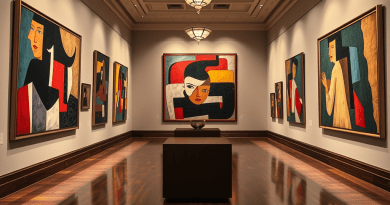
At The Museum of Modern Art (MoMA), Wifredo Lam: When I Don’t Sleep, I Dream concludes its run after drawing critical acclaim as the most comprehensive U.S. retrospective of the Cuban artist’s career. The exhibition traces Lam’s evolution from early European influences through his groundbreaking synthesis of surrealism, modernism, and Afro-Cuban spiritual traditions, featuring over 200 paintings, drawings, and sculptures. Key pieces like La Jungla (1943) underscore Lam’s role in expanding modernist vocabularies to include diasporic perspectives and hybrid identities.
A member “Last Look” event today allows extended viewing, highlighting the show’s enduring relevance amid ongoing conversations about global modernism and cultural hybridity in contemporary practice.
Curator Christophe Cherix noted in institutional materials, “Lam’s work invites us to see the world anew, blending personal mythologies with broader political and cultural currents that resonate strongly today.”
Across town at the Swiss Institute, two solo exhibitions also close: Tiran Willemse: Dweller, the first solo presentation by the artist, dancer, and choreographer exploring themes of embodiment, movement, and spatial occupation, and Saodat Ismailova: Amanat, the Uzbek filmmaker and artist’s inaugural U.S. institutional solo show. Ismailova’s work, which will travel in expanded form to LUMA Arles and Kunsthalle Bern, delves into memory, landscape, and Central Asian cultural narratives through film and installation.
These closings reflect the rapid cycle of institutional programming, where tightly focused presentations give way to new commissions and surveys. In the broader context, today also marks the final day of EXPO Chicago at Navy Pier, where galleries presented contemporary and modern works to collectors amid reports of measured but intentional sales activity. While not a traditional museum exhibition, the fair’s conclusion signals the end of a key early-year marketplace moment for living artists, including those working in digital and hybrid media.
The convergence of these closings underscores a transitional moment in the 2026 art calendar. With the Whitney Biennial 2026 continuing through August and new shows on the horizon—including explorations of technology, the body, and identity—curators and collectors are already pivoting toward summer programming. The Lam retrospective, in particular, has sparked renewed interest in historical figures whose practices inform current debates around cultural appropriation, spiritual abstraction, and the body as a site of resistance and transformation—topics that intersect with body art practices and digital explorations of identity.
Market observers note that strong institutional retrospectives like Lam’s often bolster secondary-market interest and prompt gallery re-examinations of underrepresented modernists. For digital and new media artists, such closings serve as reminders of the need for sustained institutional engagement beyond trending formats like generative or NFT-linked works.
Visitors seeking final views should check venue websites for exact hours, as some extend into the evening. These endings clear space for emerging voices while reinforcing the cyclical nature of exhibition-making, where reflection on past achievements fuels future innovation.
In an era of accelerating digital dissemination, physical closings retain unique urgency, compelling audiences to experience scale, texture, and presence in person—qualities that remain central even as artists increasingly blend physical and virtual realms.
Darren Smith is an Arts Reporter at Art Chain News covering contemporary art, digital art and NFTs, body art, and the intersections between these fields.
This article is based on exhibition statements, direct reporting, and institutional analysis.