Dutch Woman Begins Painful Removal of 250 Forced Tattoos
By Darren Smith, Arts Reporter
April 14, 2026
ROTTERDAM, Netherlands — A 52-year-old Dutch woman named Joke has begun a long and arduous journey to erase more than 250 tattoos forcibly inked across nearly 90 percent of her body by her former partner. The case has drawn international attention to the hidden horrors of coercive control and the complex realities of tattoo removal as a path to reclaiming autonomy.
Joke, from Rotterdam, alleges that over several years her ex-partner, identified in reports as Hans, used a cheap tattoo machine purchased online from AliExpress to repeatedly mark her skin with his name, initials, and degrading phrases such as “property of.” The tattoos extended across her face, neck, chest, and intimate areas, turning her body into what supporters describe as a canvas of control and humiliation.
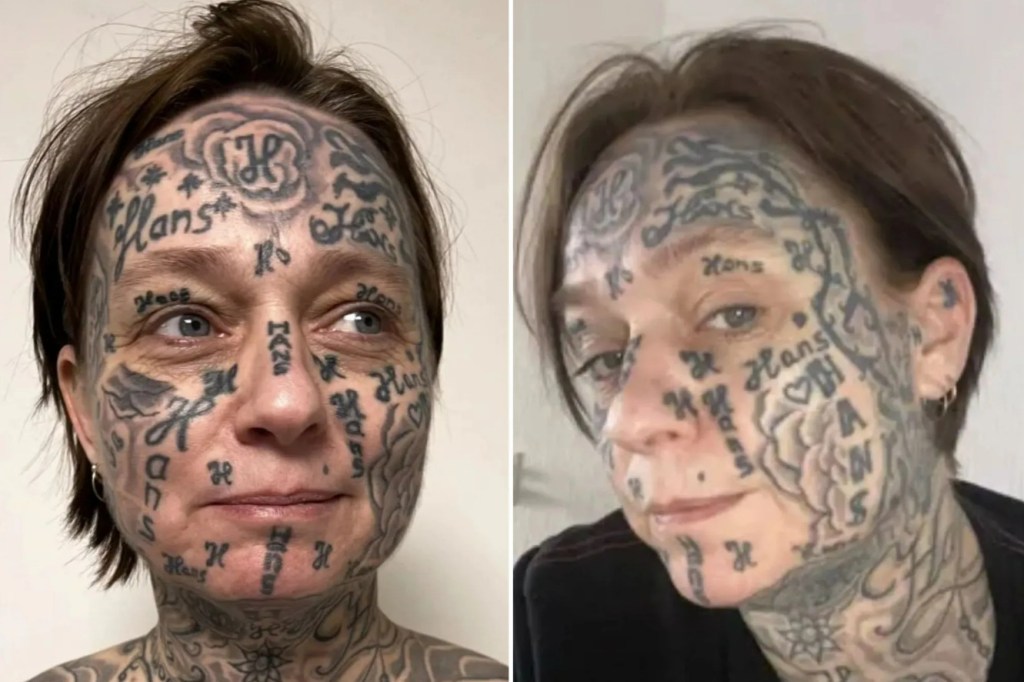
According to accounts shared through the Dutch organization Stichting Spijt van Tattoo, which assists individuals with unwanted or regretted ink, the abuse escalated gradually. What began as isolated sessions reportedly evolved into hours-long procedures during which Joke lived in fear and emotional dependence. She has described turning to alcohol and medication to cope with the pain and psychological toll.
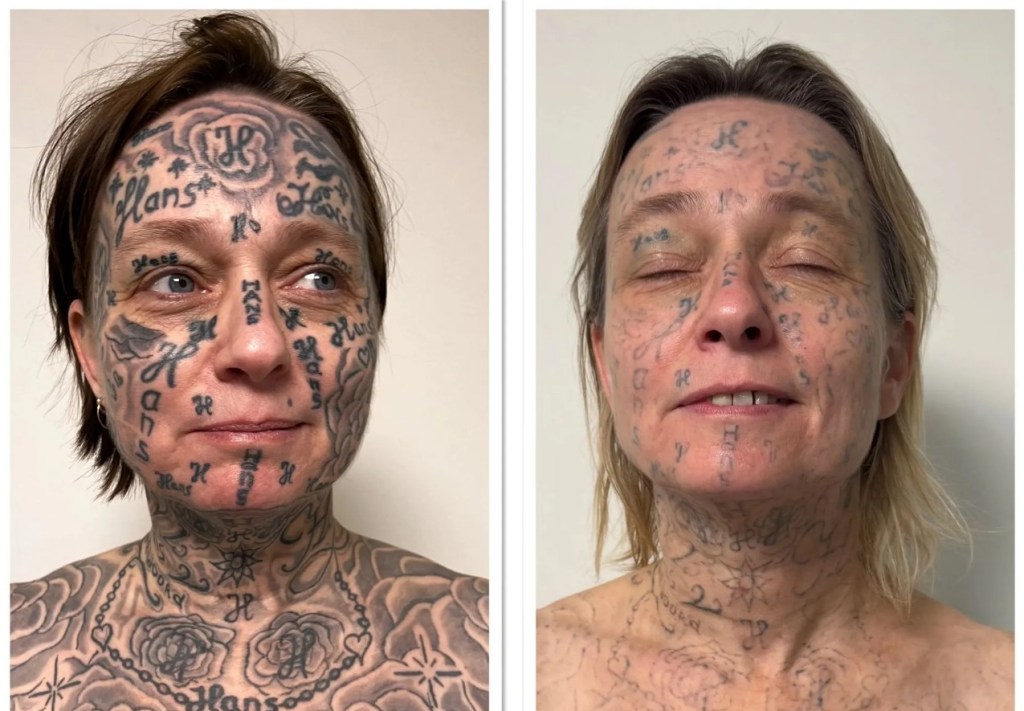
The organization reports that the markings covered approximately 90 percent of her body surface. Many tattoos featured variations of “Hans” or “H,” often intertwined with decorative elements or possessive language. Photos released as part of a public awareness campaign show extensive black ink dominating her facial features and torso before treatment.
Tattoo removal experts note that laser treatments for such extensive coverage are physically demanding and expensive. Sessions can cause blistering, swelling, and significant discomfort, with multiple treatments required per tattoo due to ink depth, color, and skin sensitivity—especially on the face and neck. The total estimated cost for Joke’s full removal process approaches €30,000 (approximately $34,000 USD), prompting a crowdfunding campaign that quickly raised over €22,000 in its initial days.
Andy Han, founder of Stichting Spijt van Tattoo, has highlighted Joke’s case as emblematic of a broader issue: coercive tattooing as a form of domestic abuse. The foundation, which translates roughly to “Regret of Tattoo,” provides both financial and emotional support. Han has stated that the abuse often intensifies over time, with perpetrators using the permanence of ink to isolate victims and assert dominance.
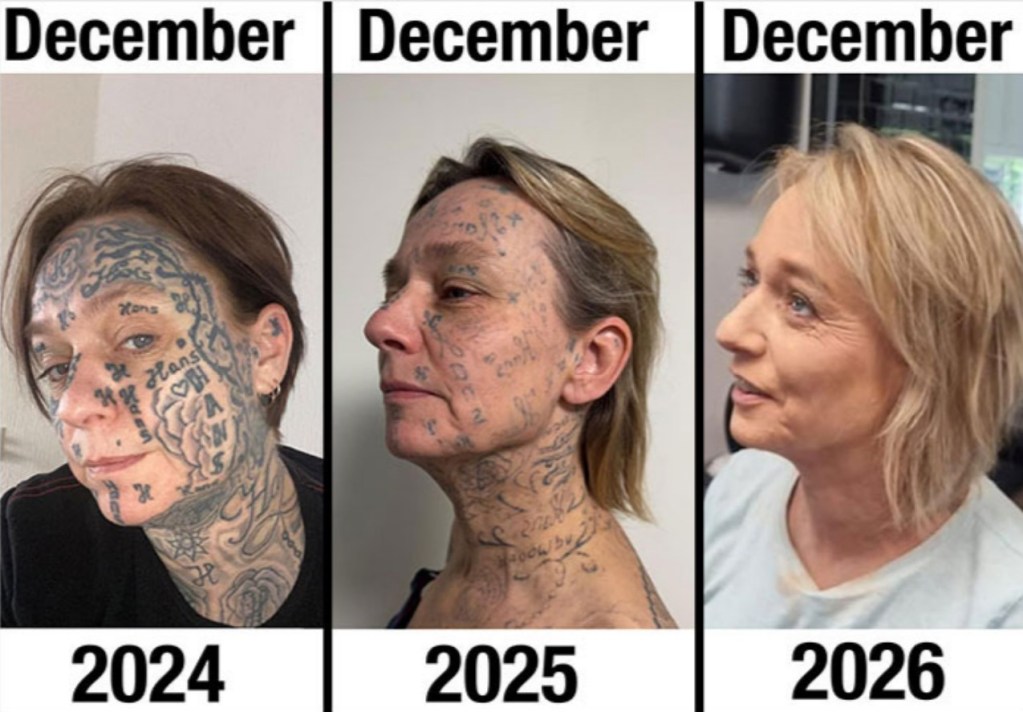
Joke has emerged as the public face of the organization’s campaign, sharing her story to encourage others in similar situations. In statements relayed through the foundation, she expressed hope that by the end of 2026 she will be free of visible ink. Significant progress has already been made on her face, with many observers noting a striking transformation in recent images.
Medical professionals emphasize that while laser technology has advanced—with devices like PicoSure offering faster fading for certain inks—complete removal is not always guaranteed, particularly with dense, amateur-applied black ink. Scarring, texture changes, and hypopigmentation remain risks, especially after hundreds of sessions.
Joke’s story has resonated widely on social media and in international outlets, sparking discussions about the intersection of body autonomy, domestic violence, and the tattoo industry’s ethical responsibilities. Advocates call for greater awareness among artists to recognize signs of coercion and for legal systems to treat forced tattooing as a prosecutable element of abuse patterns. Dutch police reportedly received complaints involving stalking and threats, though outcomes remain unclear in public reports.
As Joke continues her treatments, her message remains one of resilience: those deeply wounded can rise again. Her willingness to share graphic images of both the abuse and the removal process underscores a commitment to turning personal trauma into public education.
This case serves as a sobering reminder that tattoos, often celebrated as expressions of personal identity and art, can in extreme circumstances become instruments of harm. Support organizations like Stichting Spijt van Tattoo play a vital role in helping survivors reclaim their bodies and narratives.
Darren Smith is an Arts Reporter at Art Chain News covering contemporary art, digital art and NFTs, body art, and the intersections between these fields.