Desert Motel Becomes Gallery Haven: High Desert Art Fair Offers Intimate Alternative to Big-City Fairs
PIONEERTOWN, Calif. — In the shadow of Joshua Tree National Park, where the Mojave stretches under vast skies, the High Desert Art Fair returns this weekend as a refreshingly human-scaled counterpoint to the polished spectacle of major international art fairs.
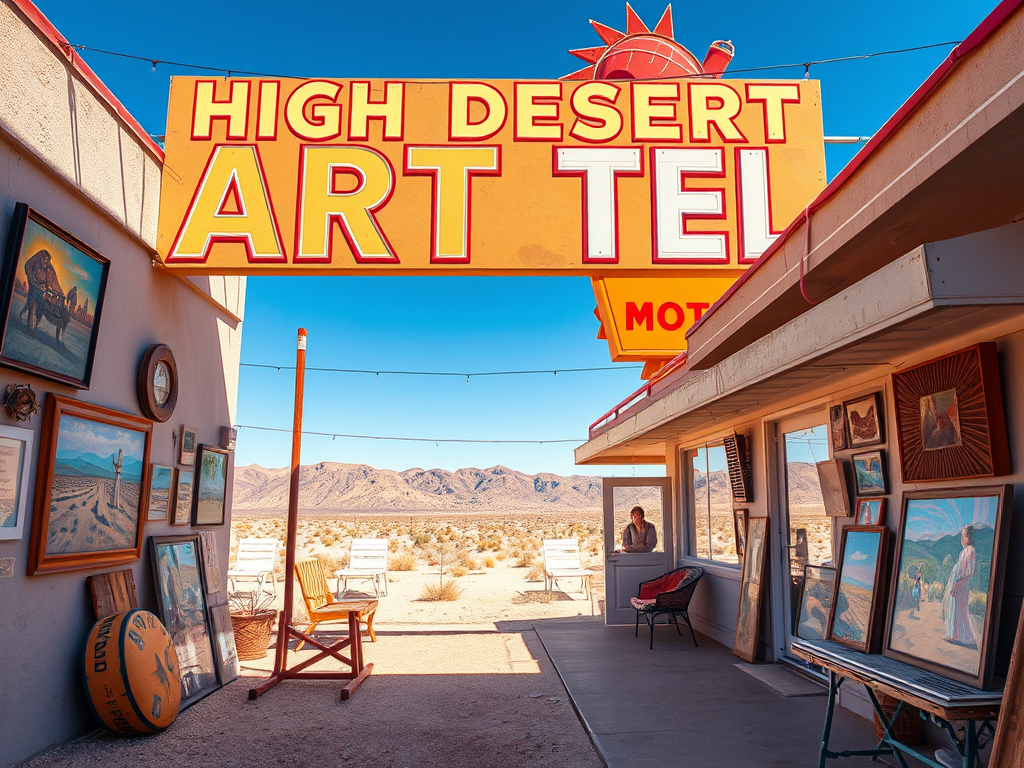
Now in its fifth year, the event transforms the historic Pioneertown Motel — a mid-century motor court once tied to Hollywood Westerns — into a walkable campus of contemporary art. From March 28 to 29, each of the motel’s 19 rooms will open as a pop-up gallery, hosting 20 carefully selected exhibitors ranging from Los Angeles powerhouses like Fahey/Klein Gallery to desert-based voices including Boxo Projects and Yucca Valley Material Lab.

Organizers Nicholas Fahey and Candice Lawler have deliberately rejected the crowded, transactional feel of events like Art Basel or Frieze. “It’s easier to get a Malibu collector to Joshua Tree for the weekend than to Hollywood on a Saturday,” Fahey noted in a recent interview. Here, visitors wander sun-drenched courtyards between exhibitions of photography, painting, sculpture and publishing projects, pausing for artist talks under open skies or spontaneous conversations with makers.
The programming expands beyond booths: immersive installations spill into shared spaces, while a Saturday music showcase at the legendary Pappy & Harriet’s features high-profile guests, including artist Shepard Fairey as DJ and a special performance by Mark Mothersbaugh. Additional architectural tours, dinners and pop-ups knit together L.A. and high-desert creative communities.
In an era when many fairs feel increasingly corporate, the High Desert Art Fair prioritizes intimacy, place and genuine discovery. Tickets for the daytime fair are $33.85, with the full weekend experience encouraging overnight stays amid the dramatic landscape that has long drawn artists seeking clarity and inspiration.
As Pioneertown briefly becomes an arts mecca, the fair quietly cements the high desert’s emergence as a vital cultural destination — proving that sometimes the most compelling art experiences happen far from the white-cube crowds.