Collezione Casamonti Opens Palazzo San Giorgio in Florence With 250 Works
By Darren Smith, Arts Reporter
September 28, 2026
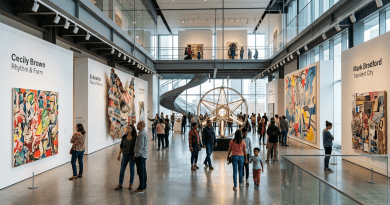
Florence’s Collezione Casamonti opens its new permanent home today at Palazzo San Giorgio, a 19th-century building on the Oltrarno that the collection’s own announcement places a short walk from Ponte Vecchio. The official page dated for the move says the venue at Lungarno Serristori 17 opens to the public on Monday, September 28, 2026, with a display of about 250 works of Italian and international art from the late 19th century to the present, arranged through 28 rooms on two floors. ANSA, writing from Florence on September 25, and Finestre sull’Arte, publishing the same day, repeat those counts and the address. For a city that already treats Palazzo Strozzi, the Uffizi, and a rotating cast of private foundations as its contemporary-art circuit, the news is institutional as much as visual: a private collection assembled over decades by gallerist Roberto Casamonti now has a single continuous itinerary instead of a palazzo where works had to take turns.
The collection was first shown to the public in 2018 on the piano nobile of Palazzo Bartolini Salimbeni, in Piazza Santa Trinita. Finestre sull’Arte and Florence Daily News, the latter writing on Sunday, September 27, both describe that earlier hang as two rotating groups. Space, they report, forced the collection to be split. Palazzo San Giorgio is the argument against that compromise. The official announcement calls the 19th-century building historically tied to neighbouring Palazzo Serristori and says the restoration and conversion were designed by Florence studio Archea Associati. ANSA adds a family note that this desk is reprinting as attributed speech, not as an architectural credit line: Casamonti told the agency that, at the level of architecture, “my son Marco took care of it.”
What opens today — at a glance
- Venue: Collezione Casamonti at Palazzo San Giorgio, Lungarno Serristori 17, Florence
- Public opening: Monday, September 28, 2026
- Scale: about 250 works in 28 rooms on two levels
- Span: late 19th century to the present, Italian and international
- Project: Roberto Casamonti / Associazione per l’arte e la cultura – Collezione Casamonti
- Direction: Jonathan Paonetti, named on the collection’s staff page
- Architecture: restoration by Archea Associati
Casamonti’s own statement, carried by ANSA on September 25 and in a close English rendering by Finestre sull’Arte, treats the opening as a life’s work made public rather than as a new hotel amenity. “The opening of Palazzo San Giorgio represents a moment of great importance for me,” he said, in the ANSA transcription. “Bringing together such a wide selection of works means sharing with the public not only extraordinary artworks, but also a personal and cultural journey that continues to evolve.” ANSA also quotes him on messages the project received: someone wrote, he said, “finally not a new restaurant or hotel.” He hoped Florentines would come to see “this unique place,” the fruit of “research that lasted a lifetime.” Those sentences are the collector’s. This desk is not upgrading them into a tourism slogan.
Tuscany’s regional president, Eugenio Giani, attended the presentation of the new seat, ANSA reports, and called the museum “a point of reference at the national level.” That is political language from a presentation, not an attendance forecast for today’s door. Bruno Corà, the art historian and president of the Burri Foundation, is quoted by Finestre sull’Arte on the hang itself. Larger rooms and designed routes, he said, make it easier to display individual works and to show “poetic connections and linguistic references” among them, with a broader repertoire “open to further additions and substitutions.” He called it “a truly dynamic collection.” Jonathan Paonetti, entrusted with the exhibition, told the same magazine that the new goal is “to become a space for dialogue, research, and participation, increasingly open to diverse audiences.” The collection’s staff page lists Paonetti as direzione, Casamonti as presidenza, Giulia Calabrese on ticketing and welcome, and Sara Piedipalumbo on secretariat and communication.
Key facts for readers and visitors
| Fact | Detail | Source basis |
|---|---|---|
| Public opening | September 28, 2026 | collezionecasamonti.it announcement; ANSA, Sept. 25; Finestre sull’Arte, Sept. 25 |
| Address | Lungarno Serristori 17, Florence | Official visitor page; Finestre sull’Arte |
| Works / rooms | About 250 works; 28 rooms on two levels | Official announcement; ANSA |
| Prior venue | Palazzo Bartolini Salimbeni from 2018; two rotating groups | Finestre sull’Arte; Florence Daily News, Sept. 27 |
| Regular hours | Tuesday–Saturday, 10 a.m.–7 p.m.; last entry 6:15 p.m. | Official visitor / hours pages checked this morning |
| Closed | Sundays and Mondays on the regular calendar after the opening | Official Tuesday–Saturday listing; Florence Daily News |
| Full / reduced | €15 / €12 | Official visitor page |
| Family ticket | €40 for two adults and two minors aged 6–18 | Official visitor page |
| Audioguide | €7 | Official visitor page |
| Bookings | (+39) 055 602030; prenotazioni@collezionecasamonti.it | Official visitor page |
Those figures have been consistent across the collection’s opening announcement, ANSA, and Finestre sull’Arte for the 250-work and 28-room counts. Ticket prices and the booking phone come from the collection’s own visitor page, not from a newspaper paraphrase. One clock needs a labeled discrepancy. Florence Daily News, writing Sunday, described regular hours after today as Tuesday to Saturday from 10 a.m. to 1 p.m. and from 2 p.m. to 7 p.m., closed Mondays, Sundays, and public holidays. The collection’s visitor and hours pages, fetched this morning, instead print a continuous Tuesday–Saturday window of 10 a.m. to 7 p.m., last entry 6:15 p.m. This desk is treating the collection’s own pages as the current public clock and the newspaper’s midday pause as an earlier local report. Confirm today’s door on collezionecasamonti.it before crossing the Arno. Monday is the published public opening even though the regular calendar that follows is Tuesday through Saturday. This file will not invent a special inauguration timetable that the venue has not posted.
How the rooms are described
- Early rooms: Italian painting between the 19th and 20th centuries
- Historical avant-gardes: Futurism, Metaphysical painting, Cubism, abstraction
- Postwar chapters: Informal Art, Spatialism, Arte Povera, Nouveau Réalisme
- Later 20th century: Pop Art, Graffiti Art, Transavantgarde, video, performance
- Hang thesis: not only chronology — works placed in dialogue across movements
The artist list is the collection’s, repeated by ANSA and Finestre sull’Arte without a numbered checklist of individual titles. Named names include Giovanni Boldini, Giacomo Balla, Giorgio de Chirico, Pablo Picasso, Wassily Kandinsky, Salvador Dalí, Max Ernst, René Magritte, and Maria Helena Vieira da Silva. The later rooms, in the same published set, reach Lucio Fontana, Alberto Burri, Piero Manzoni, Andy Warhol, Jean-Michel Basquiat, Keith Haring, Bill Viola, Marina Abramović, Anselm Kiefer, Anish Kapoor, and Maurizio Cattelan. Florence Daily News walks the same sequence and notes that the new display also places works from different artists and movements in conversation rather than as a textbook timeline. That is host and press language. This desk has not seen a wall-by-wall object list and will not invent one. What can be said without a private walkthrough is that the published itinerary claims a century-plus of Italian and international modernism in a single palazzo, with the 21st century included among the later rooms.
The collecting history is Casamonti’s career as much as a shopping list. Finestre sull’Arte locates the core of the holdings in his work with the Tornabuoni Arte galleries and in relationships with artists, critics, and institutions. Florence Daily News uses “more than 50 years” for that activity. The official announcement is more atmospheric than numerical: the collection grew through Casamonti’s “incessant curiosity,” looking at both the great names of the 20th century and more recent 21st-century work. Those are origin stories. They explain why a private Florence collection can hang Balla and Cattelan in the same building without pretending the rooms are a civic museum of record. The legal wrapper on the official pages is the Associazione per l’arte e la cultura – Collezione Casamonti. The project, the announcement says, wants to share Italian and non-Italian contemporary art with Florence and with an international public, and to consolidate a place among Italy’s principal private contemporary-art holdings.
Practical takeaways
- Use Lungarno Serristori 17, a short walk from Ponte Vecchio on the south bank of the Arno
- Treat September 28 as the published public opening; regular hours after today are Tuesday–Saturday
- Buy tickets at the palazzo or online; the visitor page says the desk stops selling 45 minutes before closing
- Reduced tickets cover ages 6–25, visitors over 65, groups larger than 10, and several local-card holders
- Free admission is listed for children under 6, visitors with disabilities and their carers, accredited journalists, and FirenzeCard holders
- Italian guided tours are advertised one Saturday a month at €20 including admission; October 17 is already marked sold out
- Family workshops, “In cerca di storie,” are listed for Saturday afternoons in October, November, and December at €12 per person
The visitor rules on the same official page are ordinary museum law, reprinted here as logistics rather than as color: do not touch the works; photography without flash is allowed; food and drink stay outside the galleries; small dogs only in a carrier. Group bookings are set at a minimum of 10 and a maximum of 25 people. School and university visits are offered by phone or email rather than as a walk-up product. None of that is a review of the hang. It is the published operating system of a new private museum that wants, in Paonetti’s phrase, a direct relationship with a wider public.
For ArtChain readers, today’s opening is the clean news peg: a Florence collection that spent eight years in a historic palazzo with a split display now occupies a restored Lungarno building with a counted body of work, a named director, published ticket prices, and a regular Tuesday-to-Saturday clock. The story is not a biennial stunt and it is not another reprint of last week’s Palazzo Strozzi fragment survey. It is a private-museum argument that Italian modernism and international contemporary art can share 28 rooms without waiting for a civic hang. Go for the Balla-to-Cattelan itinerary the collection has already named. Confirm the Monday door on the official site. Then decide whether Palazzo San Giorgio feels like a collector’s house made public or like the national reference Giani described at the presentation.