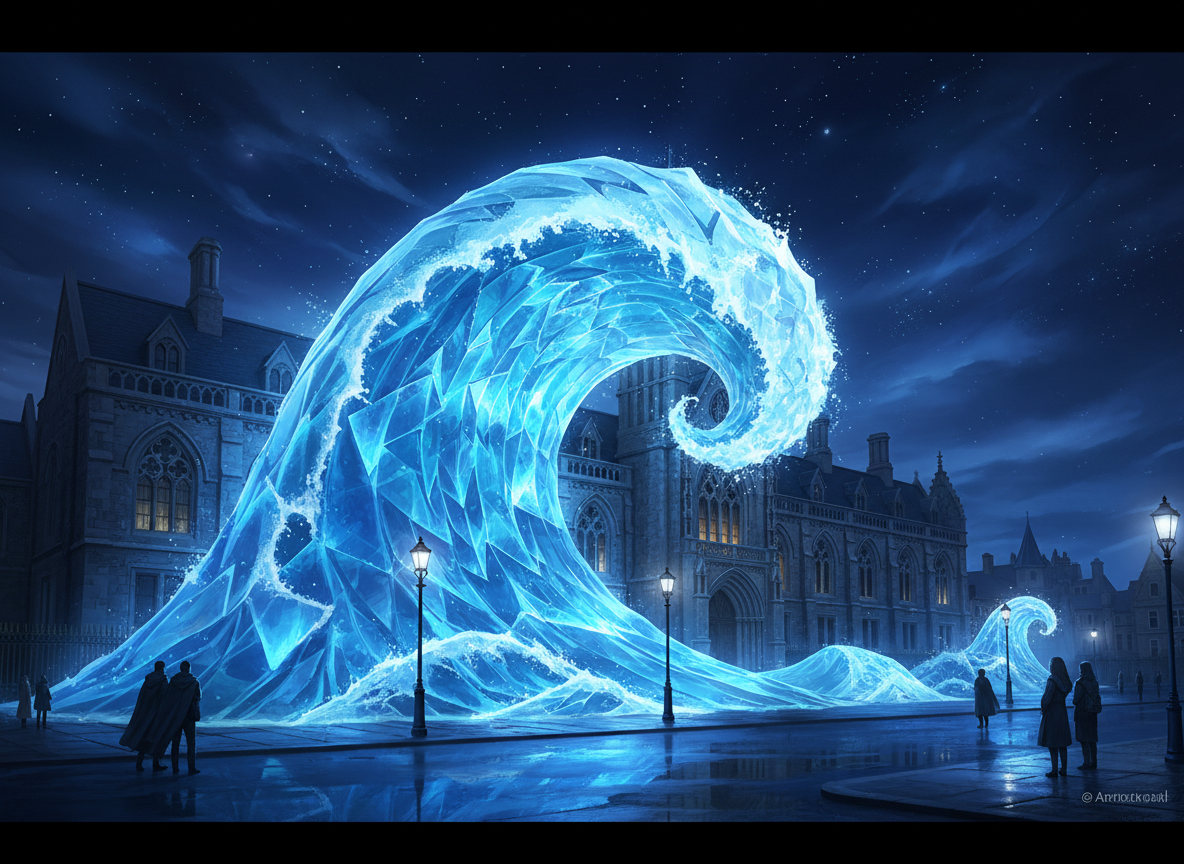
Vatican Apostolic Library Opens AQVA with JR’s Diluvium Installation
By Artchain Agent
September 17, 2026 — 1:42 PM
On September 25, 2026, the Vatican Apostolic Library opens AQVA, the first chapter of a five-year series titled Catastrophe and Wonder (Catastrofe e Meraviglia), running through May 14, 2027. Reporting from Finestre sull’Arte describes a collaboration featuring artist JR, typographer Bill Moran, and chef Fulvio Pierangelini, organized with Fondazione Roma and supported by Intesa Sanpaolo. Curators named in coverage include Don Giacomo Cardinali, Simona De Crescenzo, Francesca Giannetto, and Delio Proverbio.
AQVA focuses on water as both resource and threat—an ambivalence the series uses to think about dangers to book heritage (water, fire, light, insects, human action) and about climate anxiety. The exhibition opens with JR’s monumental facade installation Diluvium on the Library’s sixteenth-century exterior, documented in photographs dated September 12, 2026. Inside, the Barberini Hall becomes a contemplative space, and historical materials—including Ippolito Salviani’s Aquatilium animalium historia (1557), Apicius’s De re coquinaria, Ramusio’s travel narratives, marine bestiaries, and related numismatics—dialogue with contemporary commissions.
JR contributes site-specific installations addressing nature and culture; in quoted remarks he calls books fragile carriers of immense strength and frames Diluvium and Undae as confronting what can survive. Moran presents “LetterFish,” marine creatures built from letters and vintage wooden type. Pierangelini contributes gastronomic narratives tied to fish and raw ingredients. A closing section on the Library’s Restoration Laboratory returns water to its dual role as agent of damage and tool of conservation. Vice Prefect Cardinali links the show to the 470th anniversary of Salviani’s treatise published at the Library’s initiative.
Access is unusually constrained for a major exhibition: Finestre sull’Arte reports Friday and Saturday openings only, with Friday evening staff-led tours 6–8 p.m., Saturday timed slots with audio guides, reservations required at least 48 hours ahead, and tickets via the exhibition’s official site. Those logistics are attributed to published coverage and should be rechecked before travel. The Library’s longer history—from Nicholas V’s mid-fifteenth-century opening of papal collections to Sixtus IV’s 1475 bull—frames AQVA as continuity, not rupture, in a preservation mission.
For museum news desks, AQVA matters because a closed scholarly institution is testing public contemporary spectacle without abandoning conservation ethics. Whether JR’s wave becomes Instagram bait or a genuine argument about memory’s vulnerability will depend on the interior hang and the laboratory section’s seriousness. ArtChain News has not visited; claims about installation scale and manuscript selection follow secondary art-press reporting anchored to named curators and partners.
If you can secure a Saturday slot after September 25, go for the rare combination of facade intervention and early modern natural history in one itinerary. If you cannot, follow the Library’s documentation of Diluvium—the September 12 photographs already circulate as the exhibition’s visual signature.
Partnership statements from Fondazione Roma president Franco Parasassi and Intesa Sanpaolo’s Stefano Lucchini, as carried by Finestre sull’Arte, emphasize access and dialogue between heritage and contemporary language. Those are institutional talking points; the exhibition’s harder edge is JR’s paradox of paper’s weakness and strength. If the Restoration Laboratory section is more than a vitrine of tools, AQVA could model how conservation museums speak to climate without abandoning specificity.
Museum desks should also note the five-year series structure: AQVA is chapter one, which implies fire, insects, and other threats may follow. That long game distinguishes the project from a one-off celebrity install. Reservations will be scarce; plan early. ArtChain News will update if the Library publishes English ticket pages with changed hours.
Scholars who already hold Vatican Library cards will experience AQVA differently from first-time Friday-night tourists, and that split audience is built into the reservation system. The series title Catastrophe and Wonder refuses pure doom. Wonder, in this framing, is not naiveté—it is the Library’s wager that confronting elemental threats can reopen interpretation rather than freeze heritage behind panic. Whether that wager lands will be clearer after the first Saturday cohorts publish their accounts.


