Sustainability in Art: Tate Britain and Turner Contemporary Lead the Way
By Darren Smith, Arts Reporter
July 25, 2026
In an era when cultural institutions are increasingly measured by their environmental footprint as much as their artistic output, Tate Britain and Turner Contemporary are demonstrating how galleries can extend their missions far beyond exhibition walls. Both institutions are advancing concrete projects that weave sustainability into the fabric of public space and public discourse, offering models for how art organizations can respond to the climate crisis with creativity and practicality.
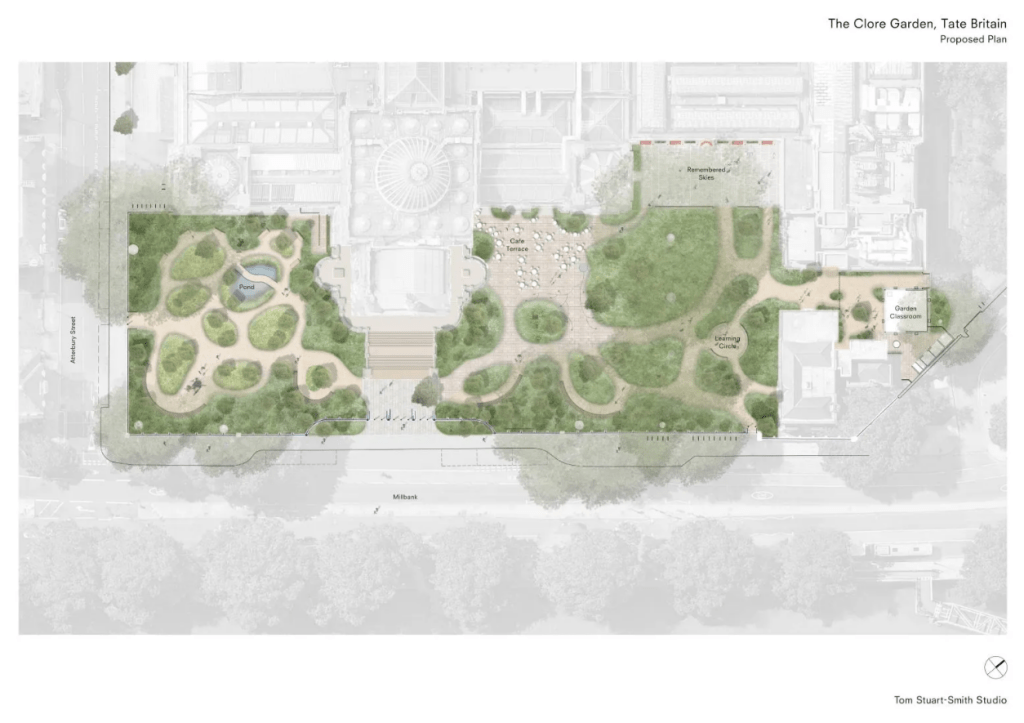
At Tate Britain on London’s Millbank, construction is well underway on the Clore Garden, a transformative green space designed by celebrated landscape architect Tom Stuart-Smith in partnership with the Royal Horticultural Society. Funded primarily by the Clore Duffield Foundation with additional support from The Julia Rausing Trust, the garden is scheduled to open to the public in early 2027. It will replace a largely paved area that once served as a taxi rank and underused hardstanding with a biodiverse landscape spanning roughly an acre and a half. Stuart-Smith has described the site’s proximity to the Thames as virtually frost-free, allowing for an “exotic” planting scheme that prioritizes drought-resistant species capable of thriving amid rising urban temperatures. Visitors can expect Mediterranean figs, Japanese sago palms, Persian lilac, and the glossy evergreen Schefflera shweliensis native to the Eastern Himalayas, alongside herbaceous borders, a wildlife pond, and trees chosen for year-round interest.
The design deliberately embeds art within nature. At its heart will stand Dame Barbara Hepworth’s Bicentric Form (1949), a sculpture from Tate’s national collection that first appeared as a highlight of the related show garden at the 2026 RHS Chelsea Flower Show, where it earned a prestigious gold medal. Pathways will reuse stone from the existing site, while a circular seating area incorporates recycled materials including crushed cockleshells from the Thames Estuary. A lightweight garden classroom by architects Feilden Fowles will host educational programmes exploring the links between art and ecology. Alex Farquharson, Director of Tate Britain, has emphasized that the project places “nature, art and community at its centre,” creating a restful public space that enhances the neo-classical gallery architecture while boosting local biodiversity. Mayor of London Sadiq Khan has praised the initiative as vital investment in green infrastructure that helps Londoners reconnect with nature.
Meanwhile, on the Kent coast, Turner Contemporary in Margate is leveraging its unique waterside location to confront marine environmental challenges head-on. In June 2026 the gallery, working with the UK National Commission for UNESCO, staged the inaugural One Ocean 2026 weekend (19–21 June). This free public programme of talks, workshops, artist and documentary film screenings, and community activities explored humanity’s relationship with the ocean and the urgent pressures facing marine ecosystems both locally and globally. Speakers included marine biologist and author Helen Scales, environmental justice researcher Dr Joycelyn Longdon, and ocean policy specialist Dr Nick Hardman-Mountford. Sessions addressed topics ranging from ocean health and human wellbeing to artistic approaches to ocean justice and Margate’s own coastal identity.
Conceived as a pilot, One Ocean is intended to evolve into a biennial event of international significance. Gallery leaders hope it will position Turner Contemporary as a global “ideas hub” for ocean health, biodiversity, and climate resilience while maintaining its core role as a centre for artistic excellence. The initiative builds on the gallery’s existing environmental commitments, which include zero waste to landfill, 100 percent low-energy LED lighting, collaboration with the Gallery Climate Coalition, regular beach cleans in partnership with local groups such as RISE UP. CLEAN UP., and efforts to encourage sustainable travel by train. Situated within a Marine Conservation Zone and near internationally important wetlands, the institution views its coastal setting as both an asset and a responsibility.
These parallel projects reflect a broader shift across the UK museum sector. Both Tate Britain and Turner Contemporary have long declared climate and ecological emergencies and implemented operational reductions in carbon emissions, waste, and energy use. Yet the Clore Garden and One Ocean mark a further step: turning outward to create tangible public benefits and foster deeper public engagement. The garden will offer Londoners a new accessible green haven in a densely built area; the ocean summit translates complex scientific and policy issues into accessible experiences that inspire care and action.
Critics of institutional “greenwashing” may note that such initiatives must be matched by continued scrutiny of collections care, international shipping, and visitor travel. Nonetheless, the specificity and ambition of these programmes—rooted in place, partnership, and artistic vision—suggest genuine commitment. Stuart-Smith’s planting strategy anticipates a warmer climate rather than merely mitigating current conditions. Turner Contemporary’s coastal programming acknowledges the gallery’s direct exposure to rising seas and changing ecosystems.
As cultural organisations worldwide grapple with their environmental responsibilities, the approaches taken by Tate Britain and Turner Contemporary offer practical, place-responsive examples. The Clore Garden will open its gates in 2027 as a living demonstration of art and nature in dialogue. One Ocean is already charting a course toward regular, high-profile gatherings that keep marine issues on the cultural agenda. Together they illustrate how galleries can move from internal sustainability targets to outward-facing contributions that enrich both cities and coastlines.
Readers interested in following these developments or supporting similar efforts are encouraged to visit the institutions’ websites, explore the original reporting on these projects at The Art Newspaper, and consider how local cultural spaces in their own communities might advance comparable eco-missions.
The cover image in this article was AI-generated.