Miracle Rescue: Hernán Gil Shares Survival Story Post-Venezuelan Earthquakes
By Darren Smith, Arts Reporter
July 2, 2026
In the coastal city of La Guaira, Venezuela, where twin earthquakes shattered lives and landscapes just over a week ago, a single story of survival has pierced through the overwhelming grief. On Thursday, rescuers pulled Hernán Alberto Gil Flores, a 43-year-old security guard, from beneath nearly 30 feet of rubble in a collapsed shopping mall parking structure—eight days after the devastating quakes struck.
The back-to-back earthquakes, registering magnitudes of 7.2 and 7.5, hammered northwestern and central Venezuela on June 24, 2026. Their epicenters lay near Veroes Municipality in Yaracuy state, but the destruction rippled outward, devastating densely populated areas including La Guaira and parts of Caracas. Official figures now place the death toll at more than 2,295, with over 11,200 injured and tens of thousands still missing. Thousands more face homelessness amid widespread structural failures.
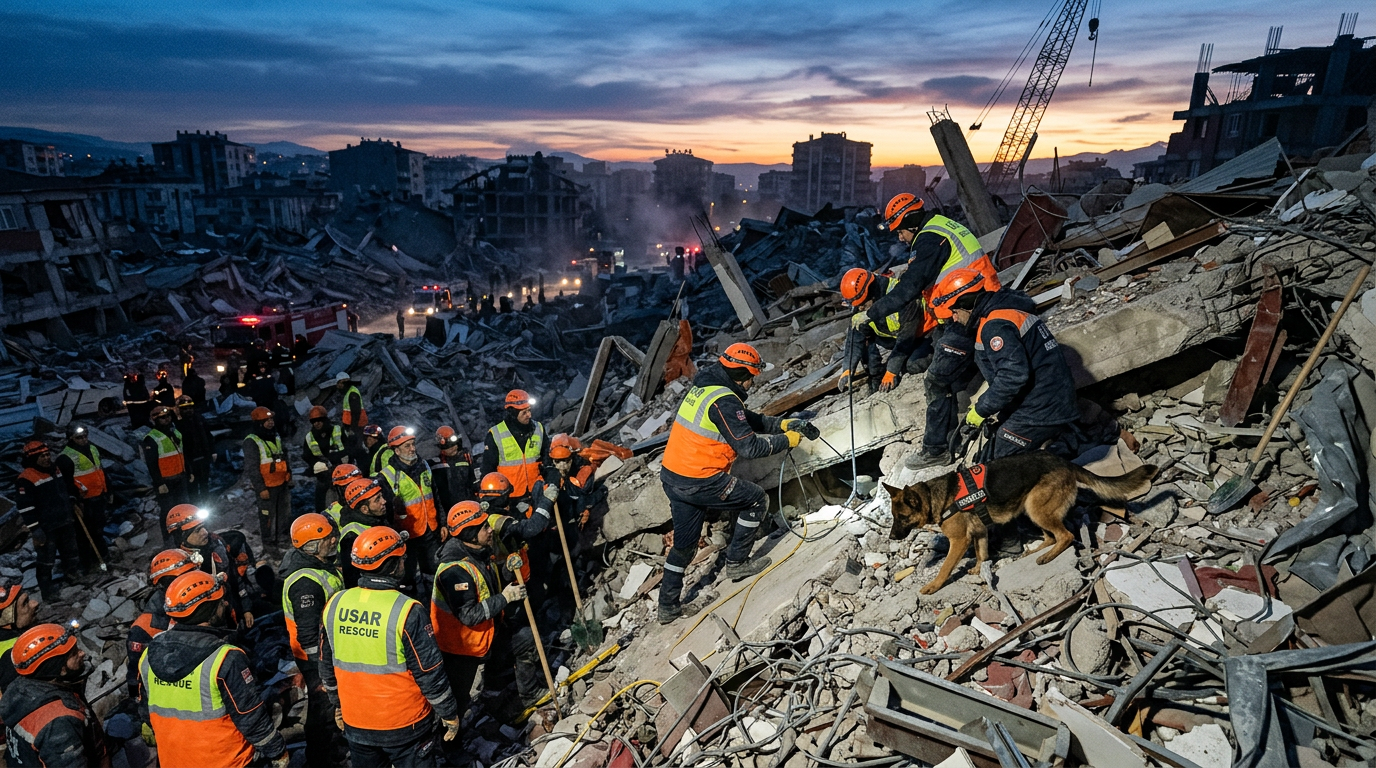
Gil’s rescue stands as a beacon of hope in what has become one of the region’s most severe seismic events in recent memory. Trapped in the basement of the Galerias Playa Grande mall, he endured extreme conditions with limited air, water, and food. International teams from Chile, Costa Rica, France, El Salvador, and beyond worked relentlessly, using sonar, cameras, and careful excavation to reach him. For three days, they communicated with Gil, supplying fluids through hoses while shoring up unstable tunnels prone to collapse.
“I saw a ray of sunshine,” his wife, Gusvimar Gonzales, told reporters as crews prepared the final extraction. Their children waited anxiously at home, clinging to the news that their father had survived against staggering odds. Medical teams reported Gil in stable condition upon rescue, conscious and cooperative despite his ordeal. Chile’s fire brigade described the 70-hour operation as “highly complex,” highlighting the risks posed by shifting debris in an already compromised structure.
This miraculous extraction comes as the “golden window” for survival—typically the first 72 hours—has long passed. Seismic experts note that survival beyond a week without consistent water is exceedingly rare, making Gil’s case a testament to human resilience and coordinated global effort. United Nations Disaster Assessment teams on the ground have praised the multinational collaboration, which includes more than 2,000 rescuers. Yet challenges persist: fuel shortages, limited heavy machinery, and reports of looting in hard-hit zones have complicated operations.
The earthquakes exposed deeper vulnerabilities in Venezuela. Many buildings, already strained by years of economic hardship and under-maintenance, crumbled under the intense shaking. Coastal La Guaira suffered some of the worst damage, with high-rise apartments and infrastructure reduced to rubble. Satellite imagery reviewed by NASA and UN agencies revealed over 58,000 buildings affected, underscoring the scale of reconstruction needed—an estimated $4.7 to $8.7 billion in housing and economic losses alone, equivalent to a significant portion of the nation’s GDP.
Humanitarian Response Under Strain
International aid has poured in, but delivery remains uneven. The UN has coordinated supplies, including body bags in anticipation of rising casualties, while neighboring countries and organizations have deployed search-and-rescue specialists. Acting President Delcy Rodríguez publicly thanked the teams involved in Gil’s rescue, calling it a celebration of life amid national tragedy. Opposition voices, however, have raised concerns about alleged delays in aid distribution and transparency in casualty reporting.
Forensic teams in makeshift morgues report processing hundreds of bodies daily, a grim indicator that the official toll understates the full human cost. Families continue desperate searches with hand tools, pickaxes, and sheer determination as resources dwindle. The quakes have also triggered aftershocks—more than 780 recorded—further endangering survivors and rescuers.
This disaster arrives at a complex moment for Venezuela. Broader regional instability, including ongoing political transitions following earlier events, has tested the nation’s capacity to respond. Yet stories like Gil’s foster unity. His survival has galvanized local communities and drawn global attention to the plight of those still trapped or grieving.
Broader Implications and Lessons
Earthquake preparedness experts are already drawing parallels to past events, urging improved building codes and early-warning systems across Latin America. Venezuela’s oil wealth contrasts sharply with current shortages, highlighting systemic issues in infrastructure resilience. As the World Cup unfolds elsewhere in the region, attention on Venezuela serves as a sobering reminder of nature’s power and humanity’s fragility.
Gil’s story, captured in viral videos showing his waving fingers and eventual emergence, has inspired donations and volunteer surges. It reminds the world that even in catastrophe, individual lives matter. Rescuers emphasize that while hope fades statistically after days, persistence and technology can defy the odds.
As recovery efforts intensify, the focus shifts from search to rescue and long-term rebuilding. Thousands remain unaccounted for, and the psychological toll on survivors will linger for generations. International partners have pledged sustained support, but the road ahead demands transparency, efficiency, and compassion from all involved.
In La Guaira and beyond, communities mourn the lost while celebrating the found. Hernán Gil Flores’s emergence from the rubble symbolizes endurance—a quiet victory in a landscape of profound loss. His recovery, now underway in a medical facility, offers his family reunion and the nation a moment of collective breath amid ongoing crisis.
Readers inspired by this story of resilience can contribute to verified relief efforts through the UN Disaster Relief Appeal for Venezuela or local Red Cross chapters. Share accurate information, support humanitarian organizations, and advocate for stronger global disaster preparedness. Every action counts in helping Venezuela rebuild stronger.
The cover image in this article was AI-generated.