Last Chance to See Keith Haring: East Village Exhibition Closing
By Darren Smith, Arts Reporter
May 31, 2026
As the final hours tick down on one of the most vibrant celebrations of street art turned gallery sensation this year, visitors are flocking to New York’s East Village for a last chance to immerse themselves in the energetic world of Keith Haring. The exhibition at The Brant Foundation Art Study Center, simply titled Keith Haring, closes today after a highly acclaimed run that has drawn art lovers, nostalgia seekers, and a new generation discovering the power of bold lines and social commentary.
Born on May 4, 1958, in Reading, Pennsylvania, and raised in nearby Kutztown, Haring discovered his passion for drawing early, influenced by cartoons and popular culture. He moved to New York City in 1978 to attend the School of Visual Arts, where he plunged into the pulsating downtown scene of punk clubs, graffiti, and experimental art. It was here, in the gritty streets and subways of the early 1980s, that Haring developed his unmistakable visual language—radiant babies, barking dogs, dancing figures, and pulsating energy fields—that would define an era.
The Brant Foundation’s exhibition zeroes in on those explosive formative years from 1980 to 1983, tracing Haring’s meteoric rise from anonymous chalk drawings in subway stations to international fame. Curated by Dr. Dieter Buchhart and Dr. Anna Karina Hofbauer, the show brings together landmark masterworks, many rarely seen, that capture the raw experimentation of his breakthrough period. These pieces reflect not just artistic innovation but also the social and political turbulence of the time, from the AIDS crisis (which would later claim Haring’s life) to urban decay, nuclear fears, and the vibrant queer culture of downtown Manhattan.
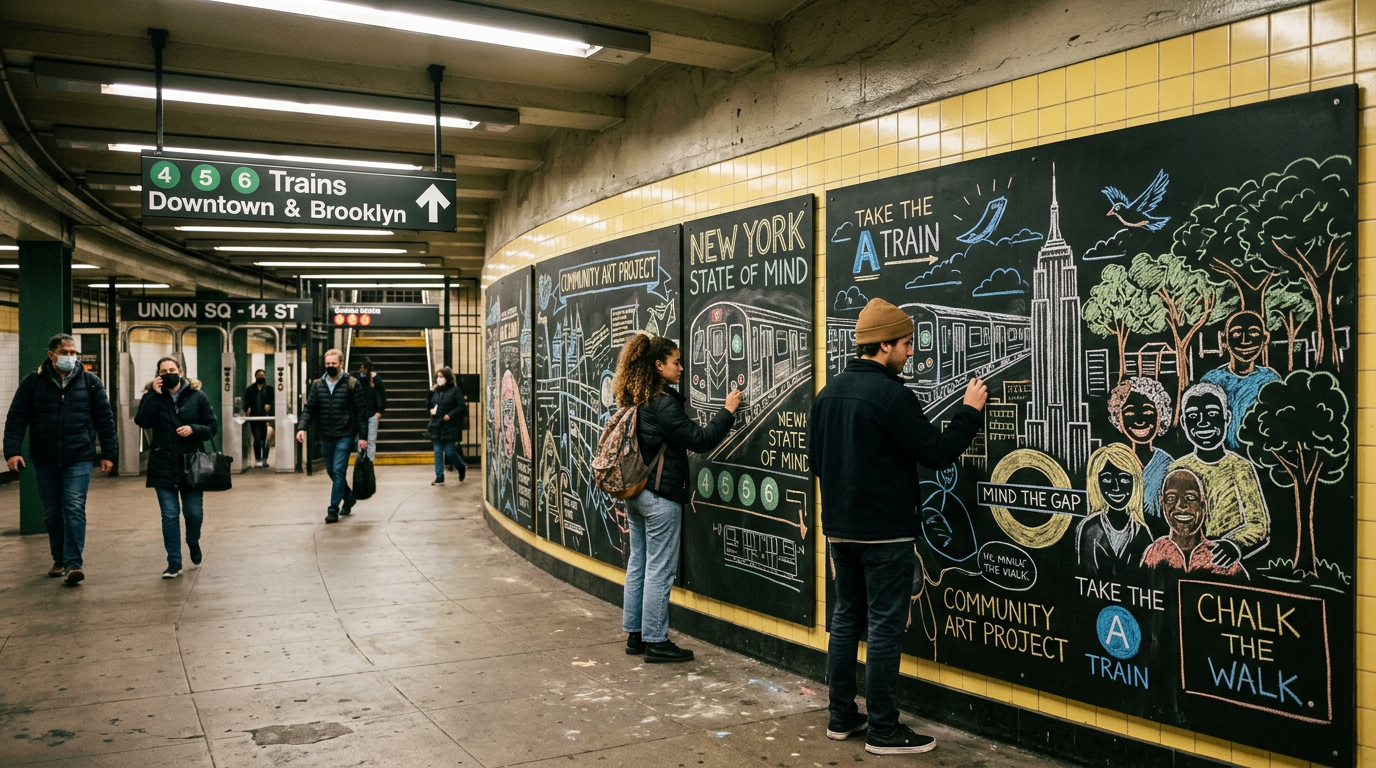
Haring’s subway drawings—thousands of them created on blank advertising panels using white chalk—became his signature guerrilla act of accessibility. He believed art is for everybody, a democratic ethos that rejected elitist gallery walls in favor of public spaces where everyday commuters could encounter joy and provocation. Several of these ephemeral works and related studio pieces are on view, offering a window into how Haring transformed fleeting moments into enduring icons. The exhibition includes highlights from his pivotal 1982 solo show at Tony Shafrazi Gallery, featuring the legendary Blacklight Room where Day-Glo colors glowed under ultraviolet light, immersing viewers in a psychedelic, participatory experience. Also featured are selections from his 1983 FUN Gallery exhibition, which bridged street art with the formal art world on the Lower East Side.
What makes this show particularly resonant in 2026 is its timing and location. Installed in the Brant Foundation’s historic East Village building at 421 East 6th Street—a former power substation once used as a studio by Walter De Maria—the exhibition sits mere blocks from where Haring lived, worked, and drew in the subways. Walking through the space feels like stepping back into 1980s New York: exposed brick walls, high ceilings, and the hum of creativity that once defined the neighborhood. Installation views reveal dynamic groupings of vibrant canvases, tarps, and drawings that pulse with movement even when static.

Haring’s influence extended far beyond fine art. He collaborated with fashion brands, designed Swatch watches, created murals for children’s hospitals, and opened the Pop Shop in SoHo to sell affordable merchandise, democratizing his imagery further. His activism was equally bold; he used his platform to fight against apartheid, advocate for safe sex, and raise AIDS awareness after his own diagnosis in 1988. He died on February 16, 1990, at just 31 years old, yet his legacy endures through the Keith Haring Foundation, which supports educational programs and organizations aligned with his vision.
Critics have praised the Brant show for avoiding the greatest-hits approach in favor of deeper context. As one reviewer noted, it transports viewers back to a time when Haring’s art felt urgent and alive, challenging the commercialization that sometimes overshadows his message today. In an era of digital emojis and social media visuals that echo his simplified forms, Haring’s work reminds us of the power of accessible symbols to convey complex emotions and calls to action.
The exhibition’s closing today marks not an end but a continuation of dialogue. Haring once said, “Art lives through the people who look at it.” With ticketed entry and timed visits, the Brant Foundation has managed crowds effectively while maintaining an intimate viewing experience. Some works contain mature imagery, reflecting the unfiltered spirit of the 1980s scene.
For those who missed it or wish to revisit, the Keith Haring Foundation website offers extensive archives, while major museums worldwide continue to hold his pieces in permanent collections. His public murals, from the Berlin Wall to Barcelona, stand as testaments to art’s role in community and protest.
As the sun sets on this chapter in the East Village, one thing is clear: Keith Haring’s radiant energy continues to illuminate contemporary culture. His lines still dance, his messages still resonate, and his belief in art’s universality feels more vital than ever.
Don’t let today’s closing be your final word—visit the Brant Foundation’s site now to learn about future programming, support the Keith Haring Foundation, or explore traveling exhibitions. Share your favorite Haring memory or discovery in the comments below, and keep the conversation—and the creativity—alive. Art, after all, is for everybody.
Cover image has been Ai generated


