Humain Web3’s AI-Human Model: Fast Content for Metaverse or Just Another Token Play?
By Darren Smith, Arts Reporter
April 12, 2026
LONDON — Humain Web3, the blockchain arm of Hum(AI)n Assets, markets itself as a platform where human storylines meet AI-generated visuals at accessible prices and speeds for independent artists. Yet in a 2026 digital art market still recalibrating after NFT volatility, its core offering — tokenized payments via the low-value $DOME token for AI-assisted content — raises questions about whether it advances genuine artistic collaboration or primarily serves platform economics in a struggling metaverse sector.
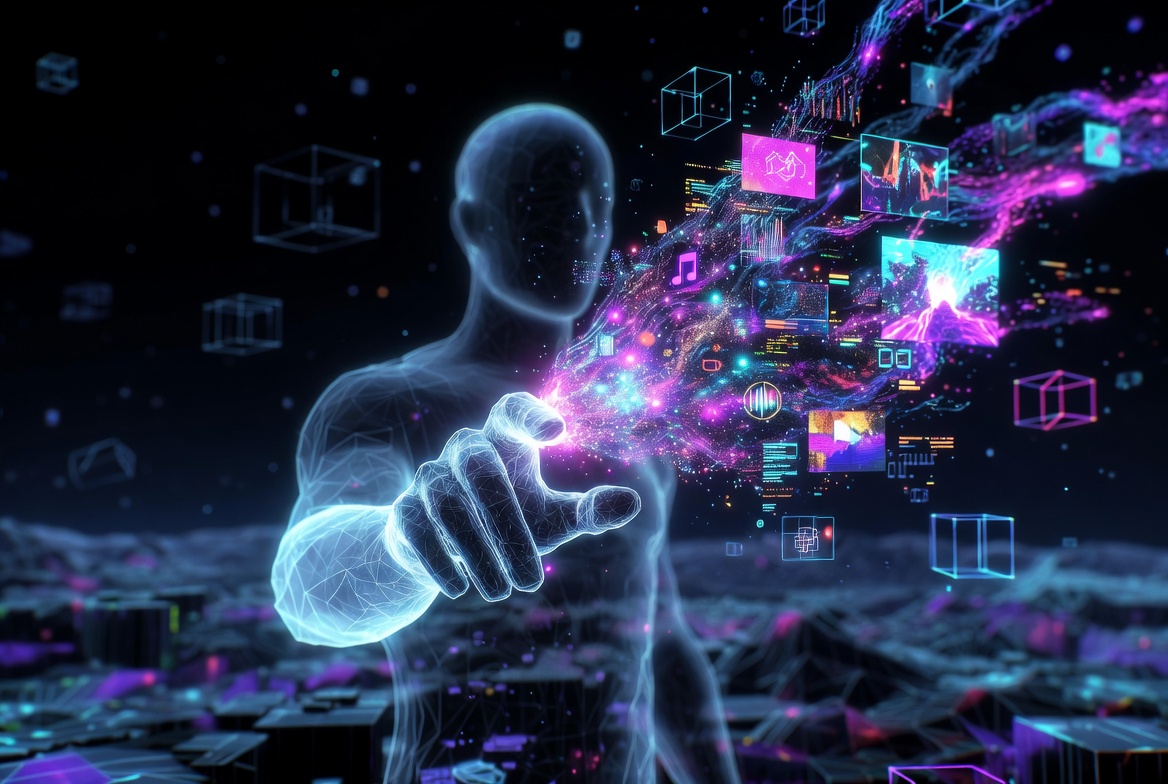
The project positions itself at the intersection of web2 scalability, web3 ownership, and generative AI. Humans supply concepts and narratives; AI handles rapid visual production. Users can pay with $DOME to access creative assets, with promises of rewards for consistent high-quality delivery. Related initiatives include metaverse tie-ins through Everdome (now linked to the rebranded Hum(AI)n Web3), such as “Meet the Artist” events aiming to connect creators and audiences in virtual spaces. Recent activity includes promotional collabs, like a Halloween AI costume generator, and a music video example for an indie band where AI delivered visuals for human concepts.
Market data tells a sobering story. As of early 2026, $DOME trades at fractions of a cent — around $0.0000027 — with a market cap under $300,000 and modest daily volumes. Price predictions for the remainder of 2026 hover in similarly depressed ranges, reflecting broader challenges in metaverse and utility tokens post-2022 boom. NFT art sales have shown selective recovery, with some high-profile AI-involved works performing better than pure generative experiments, but overall volumes remain far below 2021 peaks. Broader NFT market projections for 2026 estimate growth to around $60 billion globally, driven more by gaming and utility than standalone digital art drops.
A neutral perspective comes from observers of AI-web3 tools who note efficiency gains for smaller creators. One platform participant described the model as enabling “storyline and concepts by humans, visuals through AI” delivered at a pace and price suited to independents, potentially lowering barriers compared to traditional commissions.
Skeptics, however, point to persistent gaps. Independent digital art analysts highlight that many such platforms prioritize token utility and community incentives over verifiable long-term artistic impact or collector demand. While projects like Botto (a community-governed AI artist with millions in cumulative sales through iterative human feedback) or works by Claire Silver and Refik Anadol (who integrate AI as a deliberate tool in established practices) have achieved measurable auction results and institutional interest, Humain Web3’s output appears more oriented toward branded content and promotional assets than singular, authorship-driven artworks. No major auction house records or significant secondary market traction for Humain-specific pieces appear in current 2025-2026 reports.
Deeper issues emerge around power dynamics and contradictions. Who truly benefits when AI accelerates production while human input is framed as the “story” layer? Platforms gain transaction fees and token engagement; independent artists may receive faster turnaround and micro-rewards, but often without strong IP protections or resale royalties that hold value in a thin market. Ethical concerns around training data, authorship dilution, and the displacement of skilled labor persist across the AI art sector, as evidenced by gallery surveys showing only marginal acceptance of pure AI outputs as legitimate media. In the broader 2026 context — where digital art portfolios among high-net-worth collectors have grown modestly but remain selective — projects emphasizing speed and affordability risk flooding channels with disposable assets rather than building durable cultural value.
Representation gaps also surface. While marketed toward independent creators, the model’s reliance on proprietary AI tools and token-gated payments can favor those already embedded in web3 communities over outsiders. Metaverse elements, such as Everdome’s artist series, echo earlier hype cycles that delivered limited sustained engagement once initial novelty faded.
Humain Web3 exemplifies the recalibration underway in AI-human-web3 experiments: efficiency rhetoric collides with thin liquidity, modest adoption, and unresolved questions of artistic substance. As the sector matures, the test will not be promotional volume or token unlocks, but whether these tools produce work with lasting collector interest, critical scrutiny, or institutional weight — or simply accelerate the cycle of low-stakes digital content.
Darren Smith is an Arts Reporter at Art Chain News covering contemporary art, digital art and NFTs, body art, and the intersections between these fields.
This article is based on direct examination of materials, market data, background interviews, and independent analysis.