Artist-Endowed Foundations: A $9 Billion Cultural Revolution
By Darren Smith, Arts Reporter
May 1, 2026
In the rarefied world of artist-endowed foundations, where legacies are preserved not just in paint and bronze but in balance sheets and endowments, a remarkable transformation has taken place. According to new data from the Aspen Institute’s Artist-Endowed Foundations Initiative (AEFI), these nonprofit entities now collectively control approximately $9 billion in assets—nearly triple the $3.5 billion reported in 2011 and a 17% increase from the $7.7 billion tallied in 2018.
This surge reflects more than market appreciation or savvy investing. It signals a profound shift in how America’s cultural giants secure their artistic immortality, channeling vast wealth into public good while navigating the complexities of estate planning, philanthropy, and the volatile art market.
At the pinnacle sits the Cy Twombly Foundation, commanding a staggering $1.5 billion in assets, including artworks and real estate. This figure alone underscores the explosive growth in value of postwar American art. Twombly, the Virginia-born artist celebrated for his lyrical, graffiti-like scribbles and monumental canvases evoking classical mythology, died in 2012. His foundation has since become a powerhouse, funding exhibitions, scholarship, and preservation efforts that keep his ethereal works in the public eye.

The Power of Five: Concentration of Wealth
The numbers tell a story of concentration. Just five foundations—those of Cy Twombly, Alexander Calder, Joan Mitchell, Helen Frankenthaler, and Robert Rauschenberg—account for well over half of the total $9 billion. Each of the latter four holds more than $500 million.
Lower in the tier but still formidable are the foundations dedicated to Willem de Kooning, Andy Warhol, Andrew Wyeth, and Josef & Anni Albers, with endowments ranging from $255 million to $416 million. These entities, mostly tied to artists born before 1931 and primarily based on the U.S. East Coast, have benefited enormously from the skyrocketing values of Abstract Expressionism, Color Field painting, and Pop Art.
This consolidation raises important questions. Is such wealth concentration healthy for the broader arts ecosystem? Or does it ensure that the most significant 20th-century works remain accessible rather than disappearing into private collections?
Alexander Calder’s foundation, for instance, safeguards the legacy of the inventor of the mobile—those joyful, kinetic sculptures that redefined sculpture’s relationship with space and movement. His works’ enduring appeal in both museum and corporate settings has driven substantial asset growth. Similarly, Joan Mitchell’s vibrant, emotionally charged abstractions and Helen Frankenthaler’s innovative soak-stain techniques continue to command premium prices, bolstering their respective foundations’ capacities for grants and programming.
From Artist to Steward: The Rise of Endowed Foundations
The modern artist-endowed foundation phenomenon gained momentum in the 1990s and accelerated in the new millennium. As Christine J. Vincent, AEFI director, has documented, hundreds of artists have established these nonprofits to protect and promote their oeuvres after death.
Unlike traditional museums, whose endowments (often exceeding $1 billion at institutions like MoMA) typically exclude the value of collections, artist foundations integrate art holdings directly into their asset calculations. This accounting difference highlights their unique hybrid nature: part museum, part grantmaker, part estate manager.
The growth trajectory—from $3.5 billion in 2011 to $9 billion today—mirrors broader economic trends. The U.S. art market has seen record auctions, with blue-chip postwar and contemporary works achieving unprecedented prices. Inflation in the art sector, combined with strategic acquisitions and real estate holdings (such as the Twombly Foundation’s Manhattan properties), has compounded this wealth.
Yet growth brings challenges. Foundations must balance preservation with accessibility, manage volatile art valuations, and fulfill philanthropic missions amid scrutiny over governance and tax benefits.
Case Studies in Legacy Building
Consider the Robert Rauschenberg Foundation. Rauschenberg, a titan of postwar innovation who blurred boundaries between painting, sculpture, and performance, left a foundation that actively supports artists through residencies and grants while stewarding his Combines and silkscreen works. Its substantial assets enable ambitious programming that extends Rauschenberg’s collaborative spirit into the 21st century.
Helen Frankenthaler’s foundation has been instrumental in advancing scholarship on Color Field painting. Frankenthaler’s technique of pouring thinned paint directly onto unprimed canvas influenced generations; her foundation ensures that legacy endures through exhibitions and research.
These organizations do more than hoard wealth. Many distribute grants to emerging artists, underwrite exhibitions at smaller institutions, and digitize archives for public access. In an era when public funding for the arts remains precarious, private foundations like these have become vital lifelines.
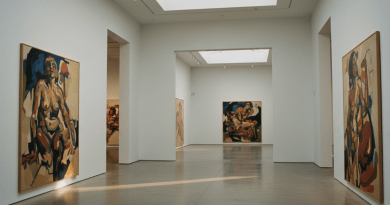
Interior view of a major museum gallery showcasing modern and contemporary works, representative of the public impact of artist foundations. (Image credit: museum photography)
Criticisms and Concerns
Not all observers celebrate this unchecked growth without reservation. Some worry that mega-foundations exacerbate inequalities in the art world. While Twombly, Calder, and company thrive, countless mid-career and underrepresented artists lack similar safety nets. The concentration of resources among a handful of (predominantly white, male, mid-20th-century) artists risks skewing the historical narrative.
Tax implications also invite debate. These foundations enjoy nonprofit status, offering estate tax advantages to artists’ heirs while directing resources toward cultural purposes. Critics argue for greater transparency in operations and impact measurement. Proponents counter that without such structures, masterpieces might be sold off piecemeal or locked away privately.
Governance issues occasionally surface, yet overall, the sector demonstrates responsible stewardship, with assets deployed for exhibitions, publications, conservation, and artist support programs. For detailed financials, see the ProPublica Nonprofit Explorer entry for the Cy Twombly Foundation.
Broader Economic and Cultural Context
This $9 billion milestone arrives at a pivotal moment. The global art market has shown resilience, with U.S. leadership particularly strong in high-value segments. Foundations benefit from this environment while contributing to it through loans, exhibitions, and acquisitions that stimulate activity.
Moreover, as more artists and collectors age, additional foundations are likely to emerge. The AEFI’s ongoing research will be crucial in tracking this evolution and advising best practices.

The cultural return on investment is substantial. Foundations preserve irreplaceable works, foster scholarship, and democratize access. A visitor to a Twombly exhibition or a grant recipient from a Rauschenberg program experiences the direct fruits of these endowments. Explore more at the official Cy Twombly Foundation site.
Looking Ahead: Sustainability and Equity
As artist foundations wield increasing financial clout, questions of sustainability and equity loom large. How can they diversify boards and grantmaking to better reflect today’s multicultural art landscape? What role should they play in addressing climate impacts on collections or supporting artists facing economic precarity?
The Aspen Institute’s initiative provides a valuable framework for addressing these issues through research, convenings, and policy guidance. Its latest findings celebrate growth while implicitly calling for responsible expansion.
In an age of private wealth’s outsized influence on public culture, these foundations represent both opportunity and obligation. They hold billions not merely as financial assets but as cultural trust funds for future generations.
The near-tripling of net worth to $9 billion is no mere accounting footnote. It is a testament to the enduring power of artistic vision and the foresight of those who translate creative genius into institutional longevity. As the sector matures, its leaders must ensure this wealth serves art, artists, and audiences broadly—not just the already privileged corners of the ecosystem.
The story of artist foundations is ultimately optimistic: a quiet revolution where personal legacies fuel collective inspiration. In safeguarding the past, they invest in the future of creativity itself.