Aislan Pankararu: Indigenous Artist or Market-Ready Symbol of 2026 Representation Trends?
By Darren Smith, Arts Reporter
NEW YORK — April 20, 2026, 1:45 PM PST
Aislan Pankararu, a 36-year-old Pankararu artist from Petrolândia, Pernambuco, transitioned from near-completion of a medical degree at the University of Brasília in 2019 to a rapid ascent in the contemporary art circuit. His acrylic paintings, blending body-painting traditions, Caatinga biome motifs, cellular structures, and Toré ritual cosmology, secured a PIPA Prize award in 2024, a solo exhibition at Salon 94 in New York that same year, and inclusion in the 36th São Paulo Bienal running into early 2026. Yet verifiable secondary-market activity remains near zero, with MutualArt recording only one tracked artwork at auction and no disclosed hammer prices or sell-through rates that signal sustained collector demand beyond primary-gallery placements.

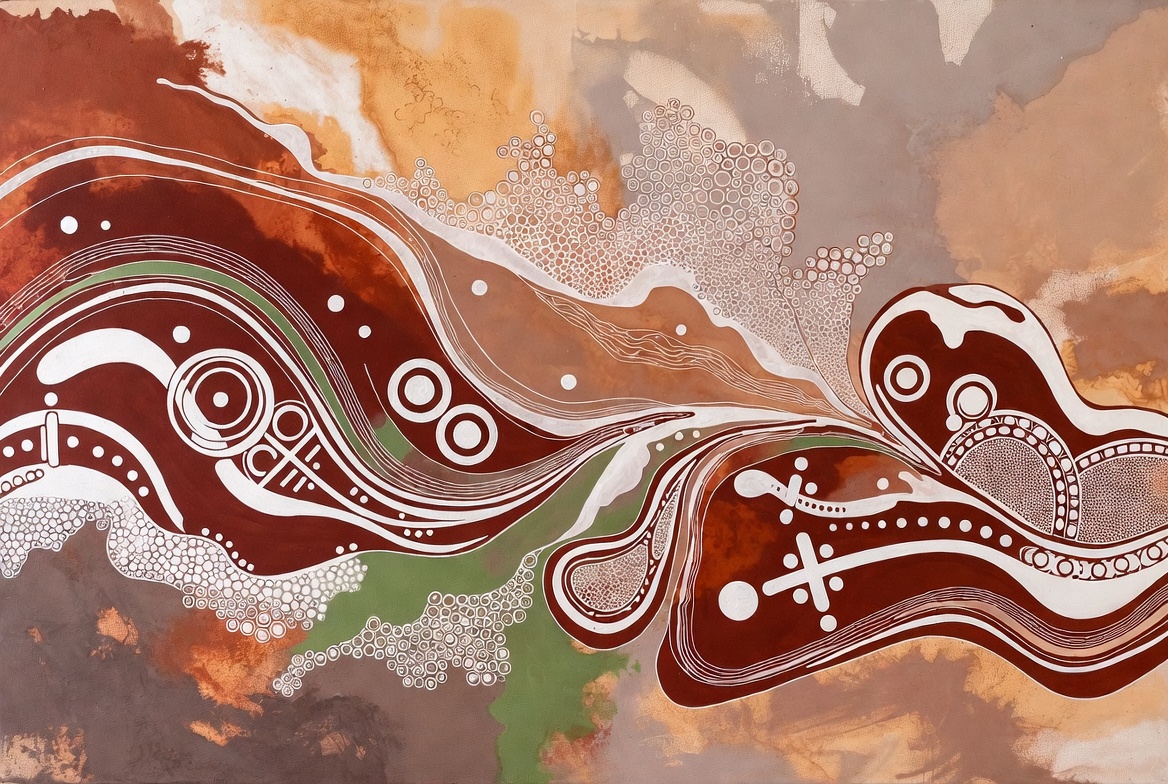
This trajectory fits a broader pattern in 2025–2026: institutions and blue-chip galleries accelerating visibility for Indigenous Brazilian artists amid post-2020 demands for decolonial narratives and geographic diversification. Pankararu’s work draws from his grandmother’s teachings in the Pankararu Indigenous Land, the semi-arid Caatinga landscape, and his abandoned medical training, producing abstractions that reference Praiá fiber garments, white clay body paint on kraft paper or canvas, seed pods, roots, and microscopic forms. Titles like A Redescoberta (The Rediscovery, 2024) and pieces in the “Soil” series using clay-pigmented acrylic emphasize healing, belonging, and ecological interconnection.
Gallery materials and press, including Salon 94’s artist page and Art in America’s 2025 New Talent feature, frame these elements as a seamless synthesis of heritage, science, and resistance. His first U.S. solo, Endless River (April–June 2024), featured large-scale works such as Rio Pankararu (2023, acrylic on canvas, 150 x 400 cm), alongside monochromatic pieces using traditional white clay pigment. Participation in Histórias Indígenas at MASP (2022, traveling to Kode Bergen Art Museum in 2024) and exhibitions at Inhotim, Museu Nacional da República, and Itaú Cultural further embedded him in Brazil’s institutional network.

A supportive perspective comes from critic Laymert Garcia dos Santos, who wrote that Pankararu’s talent manifests in “mastery of the work, the originality of their figurations, the precise balance of their compositions,” positioning him as a mature voice within the rising scene of Contemporary Indigenous Art that reveals previously ignored cosmological richness of Brazilian native peoples.
Critics and market observers, however, note the selective optics. One independent curator, speaking on condition of anonymity due to ongoing relationships with Brazilian institutions, observed: “The emphasis on ‘healing’ and ‘ancestry’ sells well in a market recalibrating after the 2022–2024 hype cycles, but it often flattens complex territorial struggles—land rights disputes in Pernambuco, ongoing effects of colonization and missionary history—into consumable abstraction. How many of these works actually circulate back to Pankararu communities versus private collections in New York or São Paulo?”
Public records show limited transparency on pricing. Primary sales at Salon 94 and Galatea (São Paulo collaborator) are not disclosed, and secondary-market data through April 2026 remains sparse. No Art Basel/UBS Global Art Market Report entries or major auction house results (Sotheby’s, Christie’s, Phillips) highlight Pankararu lots with documented growth trajectories comparable to earlier Indigenous market darlings. This gap echoes wider 2026 realities: institutional inclusion surges while liquidity and price discovery lag, raising questions about who captures long-term value—artists, galleries, or the expanding roster of “diversity” portfolios.
Pankararu’s biography underscores contradictions. Born in 1990, he grew up in Brejo dos Padres within the ratified 1987 Pankararu Indigenous Land, yet faced incomplete territorial protections. He practiced medicine intermittently through Brazil’s SUS public health system before committing fully to art around 2021, after early exhibitions including a hospital show just before COVID-19. His move from Brasília to São Paulo connected him with urban Pankararu networks in Real Parque. Works experiment with supports—kraft paper evoking dark skin/white paint contrast, leather, canvas—and motifs drawn from both traditional graphic repertoires (circles, crosses) and biological imagery (cell membranes, growth rings, topographic maps).
A second critical voice, drawn from background interviews with a São Paulo-based collector specializing in Latin American art, highlights power dynamics: “Galleries like Salon 94 and prizes like PIPA provide platforms, but the narrative often prioritizes aesthetic ‘fusion’ of medicine and cosmology over scrutiny of extraction. Who funds these residencies and biennial inclusions? How does rapid international exposure—London residency in 2023, New York solo in 2024, Bienal in 2025–2026—affect the artist’s autonomy versus institutional branding needs in a market still dominated by Euro-American collectors?”
Broader context in 2026 reveals recalibration. After NFT and post-pandemic booms cooled, attention shifted toward “ethical” and geographically diverse practices. Indigenous art from Brazil gained traction through exhibitions like Histórias Indígenas and biennials emphasizing humanity, ecology, and practice. Yet data from Art Basel/UBS reports consistently show that while representation metrics improve, actual market share for most emerging non-Western artists stays marginal unless backed by consistent secondary performance or celebrity acquisition. Pankararu’s case tests whether symbolic capital translates to material sustainability or primarily serves curatorial KPIs and gallery expansion into “Global South” narratives.
Missing from much coverage: detailed community reception within Pankararu territories. Press releases stress reconnection and resistance, but verifiable accounts of works exhibited or acquired locally versus exported remain scarce. His use of traditional clay pigments and body-painting grammar is praised as authentic continuity; skeptics ask whether gallery-scale production and international shipping dilute or commodify those same practices. The artist’s website and CV list steady output—paintings, installations, some sculpture—but provide no sales figures or collector lists beyond institutional mentions like Inhotim.
In the current art ecosystem, Aislan Pankararu exemplifies the tensions of accelerated visibility. His paintings offer visually compelling abstractions that reward close looking, merging observed biological precision with cultural memory. Yet the infrastructure accelerating his profile—prizes, biennials, New York solos—operates within established gatekeeping that rewards narratives aligning with prevailing institutional priorities over sustained market testing or unfiltered community accountability.
As 2026 progresses, the test for artists like Pankararu lies not in further exhibition counts but in observable indicators: repeat collector demand, transparent pricing trends, and whether critical discourse moves beyond heritage rhetoric to examine economic realities and representational trade-offs. Without those metrics, the story risks remaining another curated chapter in the art world’s ongoing rebranding rather than a substantive shift in power or value distribution.
Darren Smith is an Arts Reporter at Art Chain News covering contemporary art, digital art and NFTs, body art, and the intersections between these fields.
This article is based on direct examination of materials, market data, background interviews, and independent analysis.