11×11 Pixel Art Experiment: A Game Changer in Web3
By Darren Smith, Arts Reporter
August 5, 2026
In the quiet hours of late July, as Ethereum marked its eleventh birthday, a deceptively simple experiment unfolded on the blockchain and quickly revealed something larger than a single drop. Jack Butcher, the artist behind Visualize Value and a steady architect of networked digital culture, opened a 24-hour window for anyone to mint an 11×11 pixel artwork. What began as a birthday gesture in collaboration with ethlabs_org has since grown into one of the clearest recent signals of sustained energy in web3 art.
The mechanics were deliberately stripped back. Participants paid only gas fees—described by Butcher himself as “just gas, should be pennies”—and used a constrained tool on networked.art/11×11 to create unique 11-by-11 pixel compositions. There were no expensive mint prices, no complicated allowlists, and no artificial scarcity engineered for speculation. The canvas stayed open for a full day. When the window closed on July 31, more than 34,000 unique pieces had been minted. That number alone would have been notable in the current climate of thinner NFT volumes. The way the community treated those pieces afterward has been more revealing still.
Originals remain fully transferable. Editions are soulbound. Secondary trading found a home almost immediately on OpenSea’s elevenbyeleven collection. Collectors and creators began treating the works less as isolated tokens and more as nodes in an expanding graph. Leaderboards appeared on the platform. Artists shared their grids, refined them, and invited others to mint adjacent pieces so that visual conversations could form across wallets. The language Butcher used afterward was consistent with the project’s deeper ambition: a living network of internet objects that connect people to new ideas and to one another.

That ambition did not stop when the mint clock ran out. Within hours, Butcher invited the community to generate additional 11×11 works solely with the same tool and submit them for a curated Opepen set. Submissions climbed past 250, then 444, and eventually reached 3,133 pieces from 139 artists. Curating those down to a final selection of 80 proved difficult; entire high-quality sets were left on the cutting-room floor. The process itself became part of the story—collective authorship under tight formal constraints, the same minimalist discipline that has long defined Butcher’s practice.
The broader context makes the momentum more significant. Digital art trading volumes have spent much of 2026 at multi-year lows. Speculative capital has largely moved on. What remains is a quieter, more intentional layer of practice: artists who treat the chain as both medium and social fabric, collectors who value provenance and participation over rapid flips, and platforms that prioritize connection over extraction. Networked.art positions itself precisely in that space. It is not another marketplace chasing the next cycle; it is an attempt to make the objects themselves carry relationships—between creators, between pieces, and between the people who hold them.
Butcher has spent years refining this approach. From Checks to Opepen and now the 11×11 experiment, the through-line is consistent: reduce the barrier, tighten the formal rules, and let the network do the rest. The birthday collaboration with ethlabs_org added a symbolic layer. Eleven years of Ethereum, eleven-by-eleven grids, a public invitation timed to the anniversary. The gesture was light, almost playful, yet the response was serious. Artists who had never minted before found themselves inside a permanent record. Collectors who arrived for the novelty stayed for the emerging structure. Secondary activity, while modest by 2021 standards, has been steady enough to keep attention circulating rather than dissipating.
What stands out is the absence of manufactured urgency. There was no countdown marketed as a last chance at riches. There was simply an open tool, a short window, and an invitation to participate. The resulting density of unique works—34,000 in a day—demonstrates that creative energy has not left the space; it has simply become more selective about the conditions under which it appears. When the conditions feel generative rather than extractive, people show up.
In the days since the mint closed, the conversation has continued on Jack Butcher’s channel and across the networked.art site itself. Artists continue refining grids. Collectors arrange their holdings into visual neighborhoods. The Opepen curation process has kept the collaborative spirit alive. None of this guarantees a return to previous market peaks, nor should it. The more durable signal is that a constrained, low-friction, network-oriented art experiment can still command genuine attention and sustained participation in 2026.
For anyone watching the intersection of art and blockchain, the 11×11 mint offers a clear data point. Scale is still possible when the design prioritizes access and connection. The pieces themselves are small—literally eleven pixels on a side—but the graph they form is already larger than the sum of its parts. That may be the most useful lesson the project leaves behind: in a quieter market, the work that endures is the work that keeps making new links.
Explore the full collection, create your own constrained grid, or simply observe how the network continues to expand at networked.art. The canvas may have closed, but the connections are still forming.
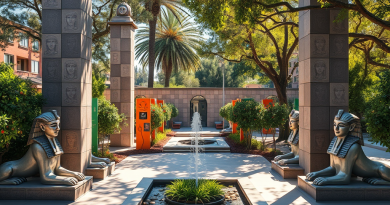
The cover image in this article was AI-generated.